
A Pivotal Moment for Stable China-U.S. Relations
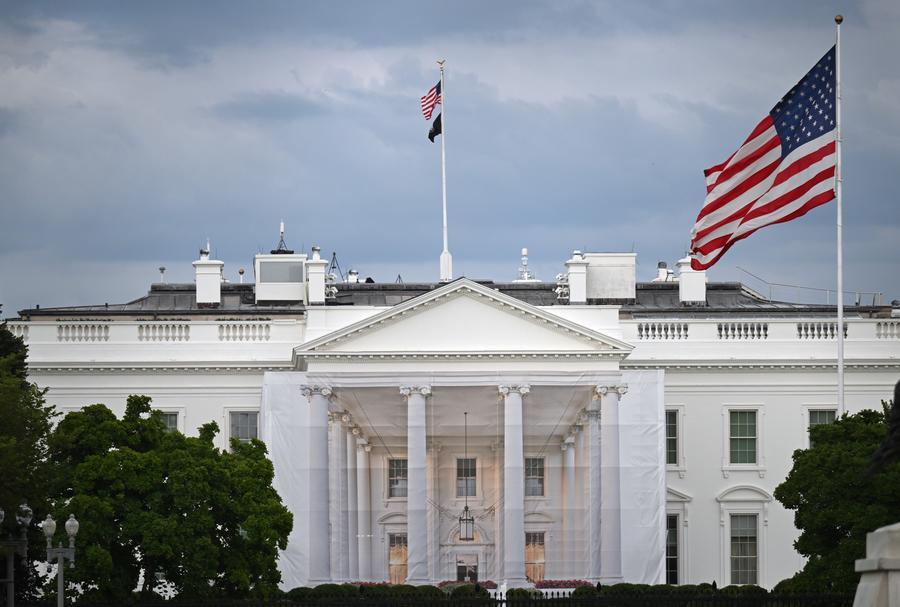
BEIJING, (Xinhua) — China-U.S. relations are once again approaching a pivotal moment that has drawn keen global attention, as Chinese President Xi Jinping travels to the United States at the invitation of U.S. President Donald Trump.
Xi’s state visit comes just months after Trump’s China trip in May. The exchange of visits between the two heads of state within six months is of historic and milestone significance.
It would be unrealistic to expect a single meeting to resolve all the problems in China-U.S. relations, but the upcoming Xi-Trump summit itself is a key step forward, providing both sides with a crucial opportunity to make 2026 a historic year that opens a new chapter in China-U.S. relations.
During their last meeting in May, the two heads of state agreed to build a constructive China-U.S. relationship of strategic stability. The consensus charts a clear course for bilateral ties at a time when the two major countries in the world are seeking a right way for them to get along.
This time, the two sides can build on that vital mutual understanding and steer the giant ship of China-U.S. ties toward a steady course in the years ahead.
Despite Washington’s protectionist trade policy against China in recent years, economic and trade cooperation remains a major pillar for the development of the relationship between the world’s top two economies.
At present, more than 7,000 Chinese enterprises operate in the United States, and U.S. companies have established more than 84,000 enterprises in China. Two-way trade and investment have provided strong support for millions of jobs in the United States.
Even as some U.S. politicians clamor for “decoupling from China,” a survey of its members conducted this year by the U.S.-China Business Council found that 95 percent of U.S. respondents described their China operations as “somewhat to very important” to maintaining global competitiveness. The presence of prominent business leaders in Trump’s delegation on his May trip to China likewise spoke volumes about their eagerness to seize the opportunities created by China’s development.
Differences and frictions are inevitable between two major economies, but they can be addressed through consultations on an equal footing. Since 2025, China and the United States have held multiple rounds of economic and trade talks. Through dialogue based on equality, mutual respect and mutual benefit, the two sides have made progress in stabilizing economic and trade relations.
The lesson is hard to ignore: both sides have far more to gain by looking at the bigger picture and keeping their long-term interests in view. Turning trade and economic ties into instruments of political or security maneuvering does not make either side safer or stronger; it merely fractures supply chains, distorts markets and ultimately drives up costs for businesses and consumers.
Moreover, keeping dialogue open and expanding practical cooperation, by contrast, can provide greater certainty for the two economies and the wider global community.
A more stable China-U.S. relationship does not mean the absence of competition. When competition does happen, it must be a healthy one where both sides learn from each other, pursue excellence together, and compete fairly in compliance with rules.
Apart from managing their competition, Washington needs to join Beijing in adhering to another fundamental principle to prevent the giant ship of China-U.S. relations from capsizing: respecting each other’s core interests and major concerns, particularly the Taiwan question, the most important issue in China-U.S. relations.
Safeguarding peace and stability across the Taiwan Strait is the biggest common denominator between China and the United States. If the Taiwan question is handled properly, the bilateral relationship will enjoy overall stability. Otherwise, the two countries will have clashes and even conflicts, putting the entire relationship in great jeopardy.
Washington must match its stated commitment to the one-China policy with concrete actions, and respect Beijing’s four red lines concerning the Taiwan question, democracy and human rights, China’s path and system, and China’s development right.
China, as it pursues national rejuvenation, will never seek hegemony, nor will it give up its legitimate rights and interests. No one should expect China to accept outcomes that come at the expense of its own interests.
A stable China-U.S. relationship also rests on strong ties between the two peoples. It underscores the need for stronger people-to-people exchanges between the two countries.
The recent reunion in China of retired American teacher Ronald Sakolsky and his Chinese friend Yin Yuzhen rekindled their friendship and renewed a shared commitment to planting trees and combating desertification. This is just one of countless examples showing that friendship and cooperation between China and the United States remain the shared aspiration of the two peoples.
Looking back, the history of China-U.S. relations is replete with examples of the two countries working together in the face of common challenges.
From jointly fighting terrorism, responding to the global financial crisis, combating Ebola to addressing climate change, China and the United States have repeatedly shown that coordination and cooperation between the two countries can serve both their own interests and those of the wider world.
For China and the United States, keeping the world’s most important bilateral relationship on a steady course is more about themselves: it is about whether the two major countries can work together to bring greater stability and hope to a turbulent world.