
Can the South Compose Poetry?
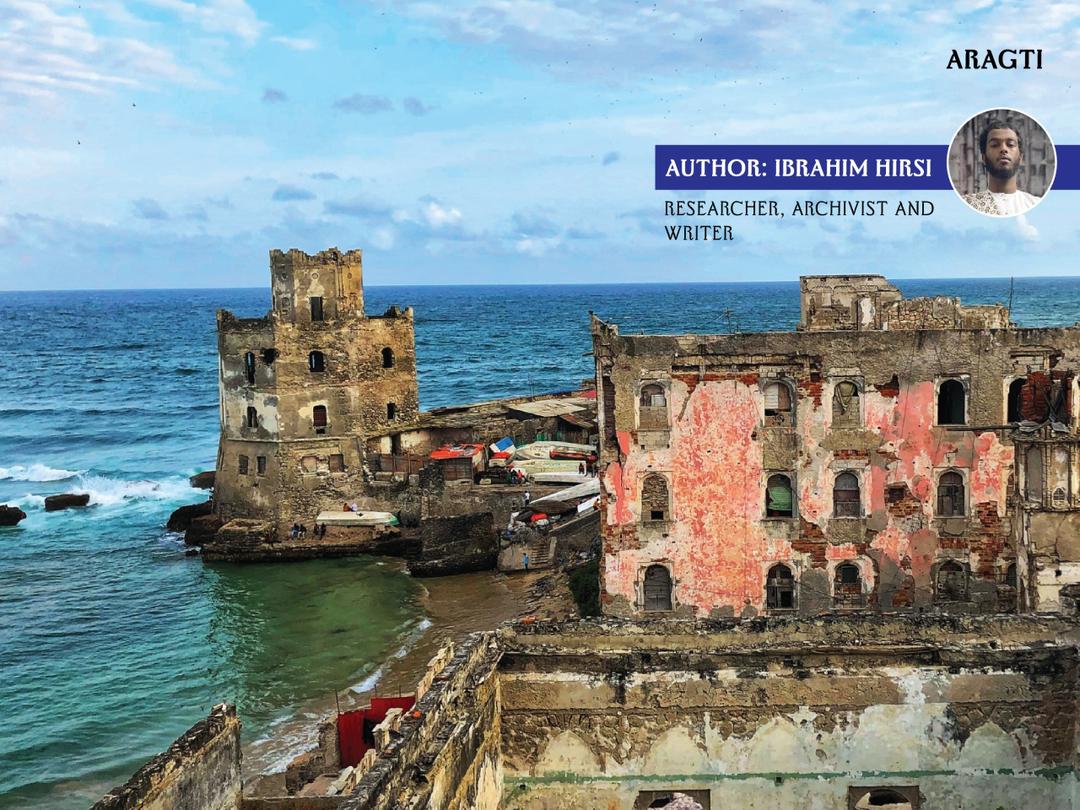
By Ibrahim Hirsi
Somali poetry has long occupied a central place in Somali cultural life, serving as a primary mode of expression within an overwhelmingly oral society. It encompasses a vast range of forms and functions, including lullabies, work songs, dance songs, religious verse, praise poetry, and political commentary. Despite this diversity, the dominant trends in the collection, study, and canonisation of Somali poetry have disproportionately centred works produced by nomadic pastoralist communities, particularly those from the north. This imbalance is neither accidental nor purely aesthetic; it is rooted in historical, political, and ideological processes that have shaped both Somali Studies and state cultural institutions.
These debates around poetry did not emerge in a vacuum. They coincide with, and are entangled in, racialising discourses of otherness that seek to fragment Somali identities for political ends. Such narratives attempt to draw boundaries within Somali society by elevating certain cultural forms while marginalising others. It is therefore necessary to begin deconstructing these narratives and the assumptions that sustain them.
Poetry offers a particularly revealing site for this intervention. It has often been mobilised to differentiate and divide Somalis, yet it is simultaneously regarded as the highest expression of Somali culture and language. To exclude communities from recognised poetic traditions is, in effect, to symbolically exclude them from Somalinimo itself. Examining poetic hierarchies thus allows us to see how belonging is culturally produced and policed.
The question “Can the South compose poetry?” rests on a sleight of hand that converts political and colonial distinctions into literary ones. In the first instance, northern Maxaa poetry was established as the normative standard of Somali poetic expression, against which southern Maxaa and non-Maxaa traditions were rendered invisible, regardless of where they were produced. Following the collapse of the Somali state, this earlier hierarchy was rearticulated through colonial geography, as the former division between British Somaliland and Italian Somaliland was increasingly mapped onto Somali literary culture. Through this process, poetic difference was territorialised, producing cultural borders where none had previously existed and collapsing all poetry associated with the “South”, including that composed by northern Maxaa speakers, into a homogenised and marginalised category.
By critically analysing Somali poetic canons and the narratives surrounding them, we can better understand how Somali identity is shifting, why these shifts are occurring, how they are being actively shaped, and the political interests that drive them. Poetry, in this sense, is a key archive through which power, identity, and exclusion are negotiated.
Through this essay I will explore how this ‘sleight of hand’ takes place, why southern poetries are dismissed by way of Banaadiri poetry as a case study and the logics of understanding in the elevation of certain poetic traditions.
The South and the North: A False Dichotomy
To answer the question “Can the South compose poetry?” We must first ask what is meant by the South. The term is often deployed vaguely and inconsistently, shaped by political positions, ideological commitments, and selective readings of history. Rather than clarifying cultural or literary realities, it frequently obscures them.
One common definition of the South relies on colonial boundaries: British Somaliland as the “North” and Italian Somaliland as the “South.” This framing is immediately problematic. It imposes borders where none traditionally existed. The same clans live on both sides of these colonial divisions; they speak the same dialects, maintain close kinship ties, and share cultural practices. In discussions of poetry, this point is especially important. Many clans classified as either “northern” or “southern” participate in the same poetic traditions. To separate them on the basis of an imposed colonial border is therefore analytically incoherent.
Another definition understands the South geographically, roughly as the region extending from Beledweyne southwards. In this area, people speak various forms of southern Maxaa Somali alongside other dialects and languages, and we see a greater prevalence of agricultural, fishing, and agro-pastoral livelihoods than in much of the north. Yet this definition, too, runs into difficulty. Northern Maxaa has long been spoken in parts of the south and has become even more widespread following its standardisation as the national dialect. Geography alone, then, cannot sustain a meaningful cultural or poetic divide.
A more precise approach might define the South linguistically. Somali linguists and dialectologists have examined the relationships among Somali varieties, and one could argue that speakers of southern Maxaa and non-northern dialects might collectively be labelled “southern,” given their geographic proximity. Even this framework, however, is far from straightforward. Several clans span both regions. The Dir, for example, live in Awdal and Djibouti at the northern edge of the Somali Horn, where northern Maxaa predominates, but are also found in the south, particularly along the Lower Shabelle coast, where they speak southern Maxaa varieties. Moreover, individuals may be born and raised in one region and speak its dialect while belonging to families whose origins lie elsewhere entirely.
So what, then, is the South?
Ultimately, the term is analytically weak. On its own, it tells us very little beyond the political or ideological lens through which it is being used. When applied uncritically, especially in discussions of culture and poetry, it produces artificial divisions and reinforces a false dichotomy that fails to reflect the lived linguistic, cultural, and poetic realities of Somali society.
At this point, one might ask: if the North–South distinction is so unstable, which poetic traditions are being privileged, which are marginalised, and why is “the South” so often invoked in these debates? The answer lies precisely in the term’s vagueness. “The South” functions as a convenient obfuscation. Because it can mean different things to different people, it allows for sweeping and often contradictory claims. Diverse communities can be selectively grouped together so that characteristics of one are attributed to all, in service of particular political or cultural arguments.
In my own research on Somali poetry, I focus primarily on Banaadiri communities, a cluster of groups in the south who speak distinct dialects, inhabit a specific coastal region, and articulate a shared identity. These communities possess rich and complex poetic traditions that have been especially dismissed or excluded from the canon. Yet it is crucial to note that not all communities labelled as “southern” have experienced this marginalisation. Poets from Bari, for instance, including figures such as Cismaan Yuusuf Kenadid, have been widely recognised and featured in government-published collections. Likewise, poets such as Careys Ciise, from the Kismaayo region in the far south, have found canonical inclusion. What these recognised figures share is the fact that they composed in northern Maxaa dialects.
The issue, then, is not whether “the South” can compose poetry, but which dialects, communities, and identities have been deemed worthy of recognition, and how the false North–South dichotomy continues to obscure those exclusions. When interlocutors claim that “the South does not produce poetry,” they deploy the term with full awareness of prevailing attitudes toward non-Maxaa and southern Maxaa poetic traditions. In this framing, it becomes irrelevant that many communities in the south also speak northern Maxaa. Northern Maxaa poetry produced in the south is effectively dismissed or collapsed into a homogenised category through sleight of hand alongside non-Maxaa and southern Maxaa traditions. By way of this process, divergent canons begin to emerge and new narratives are concocted.
This process enables the construction of cultural borders where none previously existed. By mapping the colonial division between British Somaliland and Italian Somaliland onto literary production, poetic difference is territorialised and the North–South dichotomy is naturalised as self-evident. Northern Maxaa speakers in southern regions are symbolically severed from shared literary lineages, while southern Maxaa and non-Maxaa traditions are further marginalised or erased. What emerges is a dual process: the fragmentation of northern Maxaa poetry through the imposition of colonial geography, and the systematic exclusion of other southern poetic traditions altogether. The question that follows is why have these traditions been rendered invisible. To address this, I turn to Banaadiri poetry as a case study, examining how and why its rich poetic corpus has been excluded from the Somali literary canon.
Why Banaadiri Poetry is Ignored
Ahad M. Ali’s Somali Oral-Poetry and the Failed She-Camel State offers a foundational critique of this tradition. Ali argues that early Somali Studies, largely driven by non-Somali scholars, mistakenly treated nomadic pastoralist poetry as representative of Somali culture as a whole. This selective focus produced an incomplete and distorted understanding of Somali social and cultural life. As Ali notes, “ever since the earlier publications by non-Somali scholars, a generalisation concerning the life and culture of the whole of Somalia became the holding pattern for Somali studies” (Mumin Ahad 22).
This narrow conception of Somali culture was further entrenched after independence. Political elites who came to dominate the postcolonial state largely originated from nomadic pastoralist backgrounds, and their cultural preferences were institutionalised through state bodies such as the Somali Academy of Arts and Sciences. Tasked with collecting, preserving, and disseminating Somali history and culture, the Academy overwhelmingly privileged pastoralist literary forms. Its publications included only a negligible amount of literature from southern farming, fishing, and agro-pastoralist communities. School textbooks produced by the same institution similarly marginalised certain southern literary traditions, reinforcing the perception that certain southern Somali poetry was unrefined, secondary, or even nonexistent. Ali Jimale Ahmed captures this attitude vividly:
“I remember literary discussions I had with some members of the Somali Academy of Arts and Sciences in the early eighties; some of these ‘intellectuals’ were of the opinion that certain parts of the country did not have literature” (Ahmed 15).
The categorisation of poetry and its perceived function has also contributed to the exclusion of southern traditions. Within nomadic pastoralist northern maxaa speaking categorisation, the maanso genres, such as gabay, geeraar, and masafo, are widely regarded as the most elevated and “serious” forms of poetry. Until relatively recently, these genres were considered among the few legitimate vehicles for articulating political and social concerns. In contrast, hees poetry was often dismissed as light or functional verse, associated with labor or dance rather than intellectual or political engagement. This itself is a problematic assertion however we do not have the space to delve into that topic in this piece.Banaadiri poetry however, frequently operates within different genres and aesthetic frameworks. Forms such as the marjiib, walwaleey, sarac dheere, and hurdo diid fit into different systems. These differences in form, function, and categorisation are some of the reasons that certain poetic voices that do not conform to nomadic pastoralist norms have faced exclusion (Salaad 23).
To Understand Poetry
In discourses surrounding poetry. Interlocutors often cite the fact that some communities in the south may not well understand classical poetry of the north as proof of their lack of knowledge of the Somali. Conversely, they cite their difficulty in understanding classical Banaadiri poetry not as lack on their part but rather as ‘proof’ of a lack of poetic ability on the poet’s part . This logic is articulated within poetry itself. A striking example appears in a poem by Dheeg, which implicitly equates linguistic difference with the idea that one cannot speak Somali at all and is therefore culturally deficient.
Makhluuqaannu kullaniyo dadkuu, Mowle nagu beeray
Meeshii ay ka joogaan afkii, magaca Soomaali
Ayaan midhadh ka faallaynayaa, maqal jawaabtayda
Macalow Busuri iyo Muusiyo Xasaani
Ma ogtihiin mabruukiyo shariif, miiran bay helaye
Midhkii aan u sheego yaan haddana, dib u macneeyaaye
Madax dhego la’ baan la hadlayaa, magane yaw sheega
The poem is striking, and troubling, in its implications. Dheeg suggests that certain Somalis, despite bearing the name and identity of “Somali,” are incapable of fully understanding the language and therefore require translation or reinterpretation. Linguistic difference here becomes evidence of intellectual or cultural lack.
This logic reappears in the liner notes of Songs of the Freedom: New Somali Republic. Describing the song Madhaafaan, the notes state that it is sung in “classical Somali” and “not understood by all, particularly those speaking Southern Somali dialects.” The term “classical Somali” is deeply ideological. It implies that northern dialects represent the most authentic, correct, or prestigious form of the language, while southern dialects are positioned as inferior or incomplete.
Such a claim is linguistically untenable. Somali dialects developed across different regions, each with its own historical depth, internal variation, and literary traditions. To designate one dialect as “classical” is a political position. It mirrors the assumption embedded in Dheeg’s poem: that speaking a non-northern dialect is tantamount to not speaking Somali at all.
Southern Somali dialects, and the poetic traditions grounded in them, are thus framed as unrefined, childlike, and incapable of producing serious literature. This framing erases centuries of cultural production and reinforces a hierarchy that privileges nomadic pastoralist aesthetics while silencing alternative Somali voices.
To ask, “Can the South write poetry?” is therefore to expose the political foundations of Somali literary hierarchies. The more pressing question is why southern poetic traditions have been systematically ignored, dismissed, or rendered invisible. Re-centering these traditions is essential to any honest and comprehensive understanding of Somali literature, one that acknowledges plurality rather than enforcing a singular, pastoralist norm.
One of the classical poetic forms of the south was the marjiib, a couplet form metrically related to the short-line geeraar. The marjiib was frequently political and addressed social issues, often unfolding as poetic exchanges in which poets engaged one another through wit, critique, and playful ribbing.
For example:
Bun-diglow lee loo baclaasa jiri, baabuuti barkoo bislaanin
Bandhawow Baxar-Suufi ninkii boqoley, baray baas aas noo bilaabay
AwKaraama Cabdi
Bisin kuuma bilaabna baabka Quraan, Burdo kuu barakaysan maayKaxan kayd ma galaayo waa la kasaam wax ma kaafiyo Koombilowo.
Kitaab meesheed ka soo kacsateen, Kiinkooy la kalaankalaayo Maki Xaaji Banaadir.
Taxsi tag male waa tariinboohaa, toman jeer aas taagsahaa
Nin tarbuush tabsanoo istaagaayo, talliheennin maxaas taraa?
Unknown
Ibsi iibso akhyaarnimaan u ekaw, aragaada ha loo arwaaxo
Akhyaarnimo iib-mallaay ma ehee, awal waa la akhbaarsadaa
Laashin Ool
If these poems were presented to a celebrated poet and literary figure such as Abwaan Dheeg, someone considered an expert in the Somali language, he might well struggle to fully grasp them. This would not mean that he “does not understand Somali.” Rather, it would indicate limited familiarity with southern poetic registers, meter and conventions. It is precisely this layered diversity of styles and traditions that makes Somali poetry as complex as it is, and it is this complexity that collapses when one dialect or mode of expression is treated as the norm against which all others are measured.
Conclusion
The question “Can the South compose poetry?” is not a genuine literary inquiry but an ideological one, produced through the projection of political hierarchies onto Somali literary culture. Prior to 1991 and still to this day, dominant literary narratives privileged northern Maxaa poetry as the standard of Somali poetic expression, marginalising southern Maxaa and non-Maxaa traditions. Following the collapse of the Somali state, this earlier hierarchy was reworked through colonial logic, as the former division between British Somaliland and Italian Somaliland was increasingly mapped onto literary culture.
Within Somaliland’s post-1990s nationalist discourse, northern Maxaa poetry composed within its borders came to be mobilised as evidence of a distinct cultural tradition, with poetry, long treated as the primary medium of Somali cultural production, occupying a central place in arguments for secession. In this process, northern Maxaa poetics itself was internally redefined and territorially bounded, while shared literary lineages across regions were obscured or severed. This process entrenched the marginalisation of southern poetic traditions while actively producing cultural borders where none had previously existed. The resulting literary geography masks the historical plurality of Somali poetic practice and reveals how poetry has been instrumentalised to naturalise political division.
The author is a researcher, archivist and writer