
Drought Forces 75,000 Somali Children Out of School as Crisis Deepens
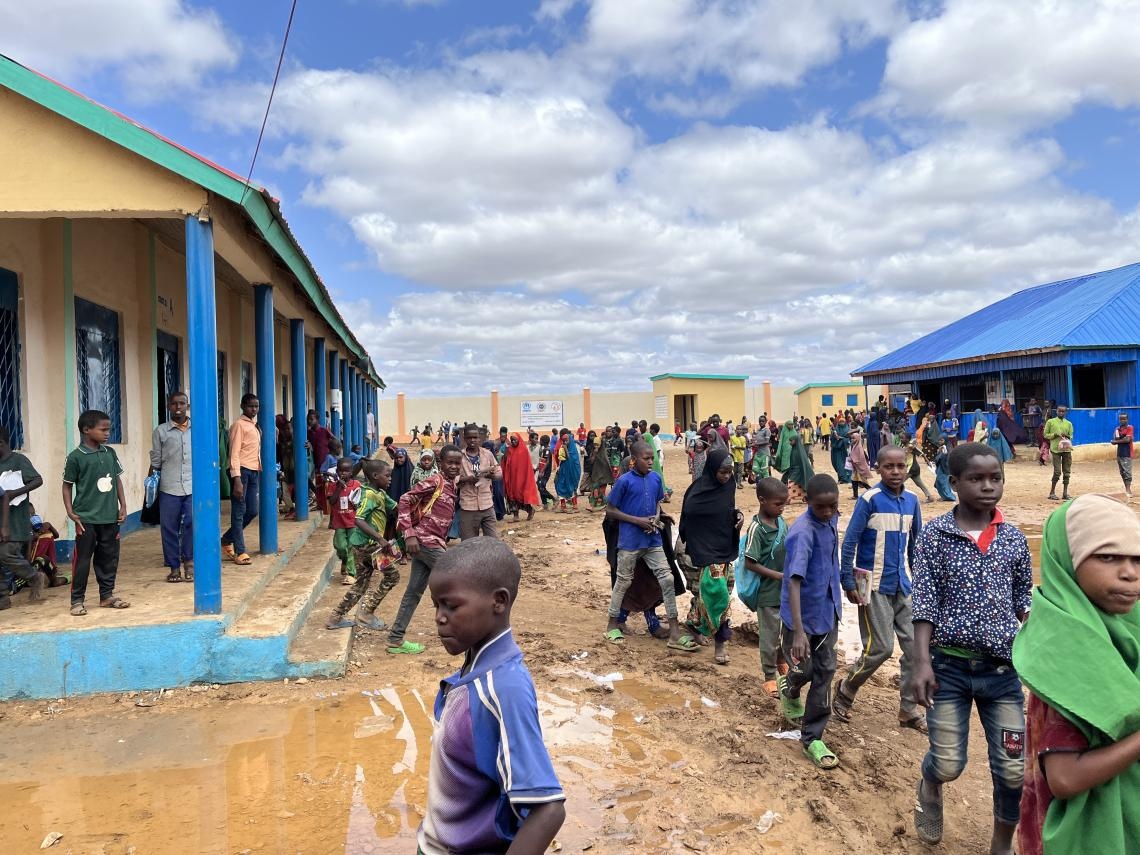
GOOBJOOG NEWS|SOMALIA: At least 75,000 children across Somalia have been forced out of school as a deepening drought disrupts livelihoods, displaces families, and shuts down learning institutions, according to the latest assessment by the UN Office for the Coordination of Humanitarian Affairs (OCHA).
The impact on children is most visible in drought-affected regions where families are migrating in search of water and pasture, leaving schools empty or unable to function. OCHA reports that school attendance has sharply declined in regions including Togdheer, Sanaag, Awdal, Sool, Woqooyi Galbeed, Bari, Nugaal, Gedo, and Lower Juba, with many children pulled out of class to help families cope with the crisis.
In some areas, the situation has gone beyond absenteeism. More than 34 schools have closed in parts of Bari and Mudug due to water shortages and population movements, while 20 additional schools shut down in Gedo, Middle Juba, and Lower Juba, affecting over 3,300 students, OCHA says.
The closures are closely linked to the collapse of water infrastructure. At least 170 boreholes and shallow wells across the country have become non-functional, depriving schools and surrounding communities of basic water supply. In drought-hit settlements, children are increasingly spending hours fetching water or herding weakened livestock, leaving little room for education.
LEARNING CONDITIONS
Teachers and education partners report that even where schools remain open, learning conditions have deteriorated. Children are attending classes hungry, stressed, and exhausted. OCHA notes rising psychosocial distress among students, with educators warning that trauma and anxiety are affecting concentration and learning outcomes.
The drought’s impact on children goes beyond education. An estimated 1.85 million children under the age of five are expected to suffer from acute malnutrition through mid-2026, increasing the risk of long-term developmental setbacks and further undermining school readiness and retention.
Humanitarian agencies warn that displacement is compounding these challenges. Between September and December, about 120,000 people were displaced, many of them families with school-age children moving into already overstretched urban areas and displacement sites where access to education is limited or nonexistent.
While the Education Cluster has provided emergency education services to more than 19,000 children, including school meals, safe drinking water, and psychosocial support, OCHA cautions that these efforts fall far short of the scale of need. Most parents affected by the drought can no longer afford school fees, and many teachers lack incentives to continue working in affected areas.
The crisis is unfolding amid severe funding shortages. As of mid-December, Somalia’s 2025 Humanitarian Response Plan is only 26 per cent funded, forcing aid agencies to scale back education and child protection programmes just as needs are rising.
Aid agencies warn that unless urgent funding is mobilised and drought conditions ease, more children will drop out permanently, reversing hard-won gains in education and placing an entire generation at risk.