
Experts Share Insights on Advancing China-Africa Modernization at Hong Ting Forum in Kenya
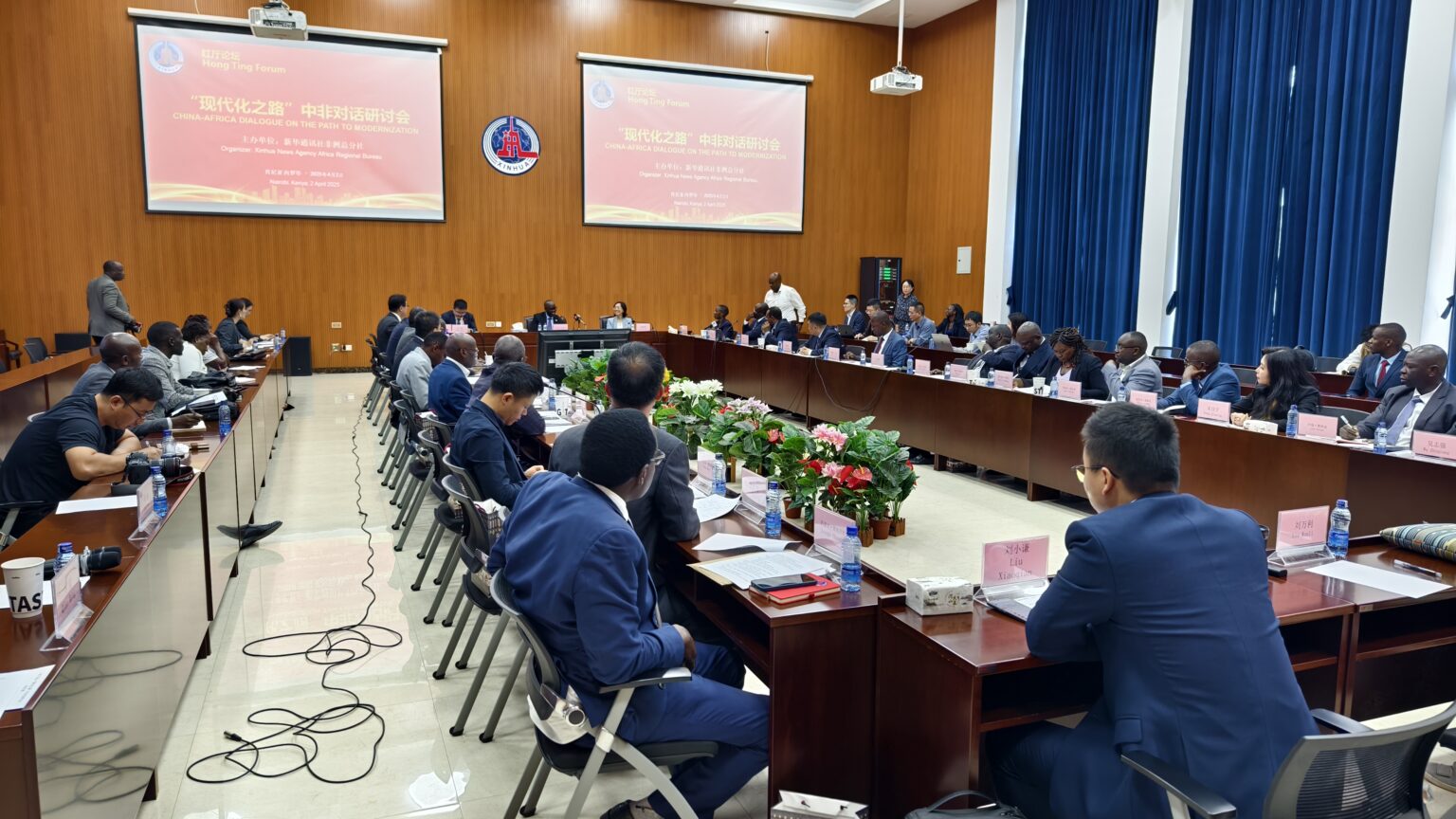
NAIROBI, Xinhua: The Hong Ting Forum was held Thursday in Nairobi, the capital of Kenya, bringing together government officials, scholars, and media practitioners to discuss innovative ways of advancing China-Africa modernization over the next five years.
Organized by the Institute of Party History and Literature of the Communist Party of China Central Committee and Xinhua News Agency, the forum ran under the theme “Opportunities and Challenges for China and Africa to Advance Modernization Together over the Next Five Years.”
Qing Xuemin, director of the Sixth Research Department of the institute, said the forum was pivotal in deepening Sino-African cooperation, characterized by mutual trust, respect, and win-win outcomes.
“China’s cooperation with Africa aims to build an all-weather China-Africa community with a shared future for the new era, so that our African friends can also share in the dividends of development,” Qing said, noting that in recent years, China has remained Africa’s largest trading partner and invested heavily in the continent’s infrastructure, healthcare, education, and digital technologies.
The zero-tariff treatment for 100 percent tariff lines for 53 African countries that have diplomatic ties with China is expected to revitalize Sino-African trade, Qing said, adding that high-quality cooperation under the Belt and Road Initiative will boost the modernization of infrastructure, agriculture, and manufacturing on the continent.
Peter Kagwanja, chief executive of the Africa Policy Institute, a Nairobi-based pan-African think tank, said China’s modernization drive has become an inspiration for countries in the Global South, many of them in Africa, with China’s success in poverty alleviation and grassroots governance inspiring African nations in their quest to chart homegrown development pathways.
“Unique to each country’s historical, cultural, and economic circumstances, a homegrown form of modernization that transforms traditional, rural, and agrarian society qualitatively and quantitatively to a higher, urban, and industrial one,” said Kagwanja.
Hassan Khannenje, director of the HORN International Institute for Strategic Studies, a Nairobi-based think tank, said the centuries-old history of the China-Africa relationship is being redefined to focus more on software, including skills and technology transfer, cultural exchanges, and green development.
“The opportunity for the next five years is not just about deepening the Africa-China relationship, but a modernization relationship that shapes the future of the global economy,” Khannenje said.