
Explainer: What Chapter 6 Says and Why Consensus Matters
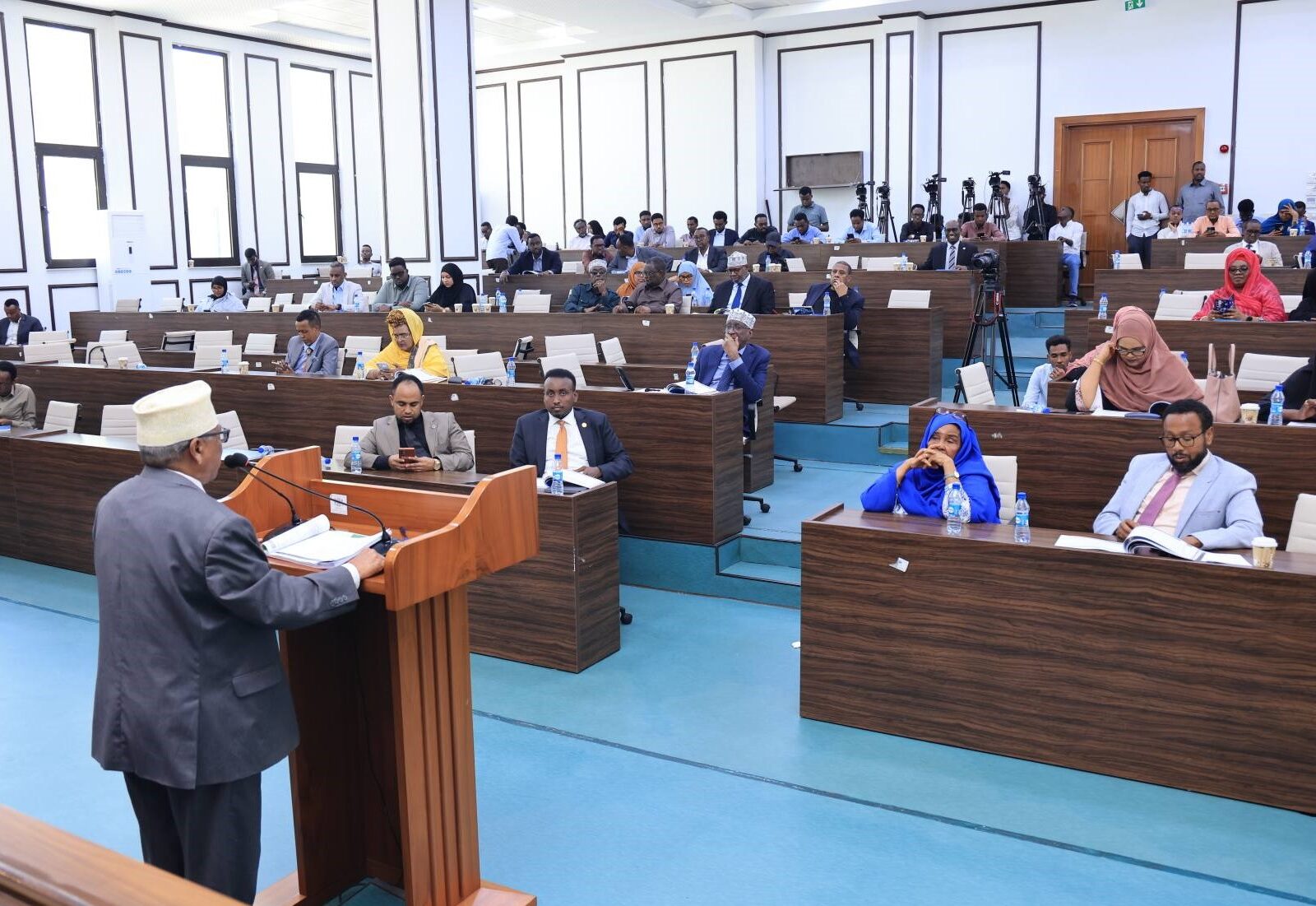
GOOBJOOG NEWS|MOGADISHU: As the Federal Parliament moves into debate on Chapter 6 of the Provisional Constitution, the focus is shifting to the substance of the chapter and the political environment in which the review is taking place.
The provisions under discussion define the structure, authority and procedures of Parliament itself, making the question of consensus particularly significant.
Federal Parliament
Chapter 6 establishes the Federal Parliament as the country’s legislative authority and sets out its bicameral structure. It creates the House of the People, composed of 275 members representing Somali citizens, and the Upper House, with up to 54 members representing Federal Member States. Together, the two chambers form the core of Somalia’s federal legislative system.
The House of the People holds primary responsibility for debating and passing legislation, approving independent commissions, overseeing national institutions and holding government officials accountable. The Upper House plays a central role in safeguarding federalism and reviewing constitutional amendments, particularly those that affect the powers and interests of Federal Member States. Both houses must consider and approve draft legislation, and in cases of disagreement they may establish joint committees to reconcile differences.
Drafting
Chapter 6 also outlines how laws are introduced and enacted. Draft legislation may originate from the Council of Ministers, members of the House of the People or representatives of Federal Member States. For constitutional amendments, both chambers must approve the proposed changes before they are submitted to the President for assent and publication in the Official Gazette. The chapter further defines eligibility requirements for membership, sets the four year term for lawmakers, guarantees parliamentary immunity for views expressed within the chamber and requires that both houses hold at least two regular sessions annually.
Because Chapter 6 governs how Parliament functions and exercises authority, any amendments carry significant institutional consequences. Adjustments to representation, legislative procedures or oversight powers could alter the balance of power within the federal system. For that reason, constitutional reform in this area is widely viewed as requiring broad political agreement.
Suspension of Opposition MPs
The debate is unfolding amid the suspension of several key opposition MPs and senators, a development that has sharpened concerns about inclusivity. Constitutional review processes generally depend on participation across political divides in order to secure legitimacy and long term stability. Where major political actors are absent or contest the process, questions may arise about whether the resulting amendments reflect national consensus or partisan priorities.
Although Chapter 6 deals largely with procedural and institutional matters, its impact extends beyond parliamentary rules. It defines how laws are made, how government is scrutinised and how federal relations are managed. In that context, the degree of political consensus achieved during its review may prove as important as the text of the amendments themselves