
Explainer: What to Know About the Latest U.S.-Iran Nuclear Talks
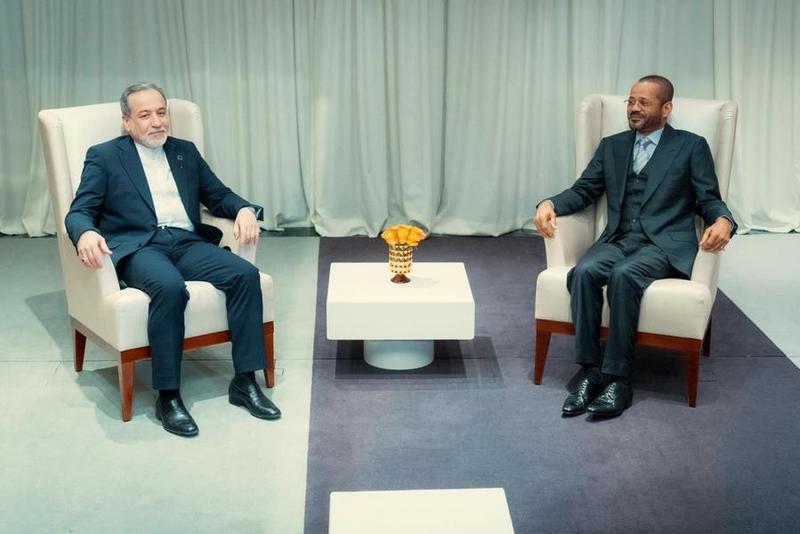
GENEVA, Xinhua: As the United States and Iran meet in Geneva on Thursday for nuclear talks, the hope for a possible agreement that will satisfy both parties is overshadowed by tense diplomatic language.
Despite both countries signaling their intention to negotiate, the recent U.S. military deployment in the Mideast and Iran’s claim of readiness to retaliate have complicated matters.
What’s at stake?
The latest talks in Geneva are being mediated by Oman, a country that’s long served as a mediator between Iran and the West.
Immediately after Iran’s Foreign Minister Seyed Abbas Araghchi arrived in Geneva on Wednesday night, he met his Omani counterpart Sayyid Badr bin Hamad bin Hamood Albusaidi ahead of the third round of indirect nuclear talks between Tehran and Washington.
It marks the effective start of the third round of indirect negotiations between Iran and the United States, according to a statement released by Iran’s Foreign Ministry early Thursday.
During the talks, Araghchi, who leads Iran’s delegation, outlined Iran’s positions and called for U.S. sanctions to be lifted, conveying Tehran’s views and considerations to the Omani side.
He expressed appreciation for Oman’s role in facilitating the ongoing diplomatic process, stressing that the success of the negotiations hinges on the other side’s seriousness and its avoidance of contradictory actions and statements. U.S. special Mideast envoy Steve Witkoff, a billionaire real estate developer and friend of U.S. President Donald Trump, arrived for the talks.
However, tensions between the United States and Iran date back decades, and a single round of talks cannot address all the concerns.
What do both sides want?
Two rounds of indirect talks were held earlier this month, centered on restricting Iran’s uranium enrichment and stockpiles in exchange for sanctions relief. Highly enriched uranium enables the rapid development of nuclear weapons.
The Trump administration is demanding an indefinite, verifiable deal to prevent Iran from developing nuclear weapons, amidst threats of military action if diplomacy fails, while Iran wants to lift a series of sanctions imposed by the United States that have troubled its economy.
“We start with the Iranians with the premise that there is no sunset provision. Whether we get a deal or not, our premise is: you have to behave for the rest of your lives,” Witkoff was quoted as saying at a private gathering in Washington, D.C. on Tuesday.
Witkoff said that two key issues in the current nuclear talks are Iran’s ability to enrich uranium and the fate of its existing stockpile of enriched uranium. He added that the talks were currently focused on Iran’s nuclear program.
However, if a deal is reached, the White House would seek follow-up negotiations on Iran’s missile program and its support for proxy militias. Iran has maintained that the talks must remain focused solely on nuclear issues.
Araghchi said, “Iran will under no circumstances ever develop a nuclear weapon; neither will we Iranians ever forgo our right to harness the dividends of peaceful nuclear technology for our people.”
In his remarks posted on X, Araghchi said the two sides have a “historic opportunity” to strike an unprecedented agreement that addresses mutual concerns and achieves common interests, adding that a deal is within reach if diplomacy is prioritized.
Is diplomacy possible?
Before the talks start, the United States has deployed one of its largest concentrations of air and naval forces to the Middle East in decades, including two aircraft carrier strike groups, showing its militant deterrence.
“It has not been easy over the years to reach a substantive agreement with Iran, and we must secure a meaningful deal,” Trump said last week. “Otherwise, negative consequences will follow.” In Washington, Trump addressed the issue on Tuesday during his first State of the Union address of his second term to a joint session of Congress, stating a preference for a diplomatic resolution but reiterating a firm red line.
“My preference is to solve this problem through diplomacy,” he said. “But one thing is certain — I will never allow … Iran to have a nuclear weapon.” The president also accused Iran of advancing its missile program in ways that could eventually threaten the United States and its allies.
“They’ve already developed missiles that can threaten Europe and our bases overseas, and they’re working to build missiles that will soon reach the United States of America,” Trump said.
In response to Trump’s remarks, Iranian Foreign Ministry spokesman Esmail Baghaei said it was “big lies,” accusing Washington of waging a “disinformation and misinformation campaign” against Iran.
Baghaei said allegations concerning Iran’s nuclear program, its ballistic missile activities and the reported death toll during unrest in January amounted to a repetition of what he described as “big lies,” according to a post he published on social media platform X.
Mohammad Bagher Qalibaf, Iran’s parliament speaker, said that the United States could either try diplomacy or face Iran’s wrath. “But if you decide to repeat past experiences through deception, lies, flawed analysis and false information, and launch an attack in the midst of negotiations, you will undoubtedly taste the firm blow of the Iranian nation and the country’s defensive forces,” Qalibaf said.
Iran had temporarily closed the Strait of Hormuz on Feb. 17, the only sea passage from the Persian Gulf to the open ocean and one of the world’s most strategically important choke points through which a fifth of all oil traded passes.
Tehran could also retaliate against the U.S.-allied nations of the Persian Gulf or Israel if the worst happens, meaning a regional war could break out across the oil-producing area. Oil prices have climbed recently in part due to those concerns.