
Explainer: Why Opposition Leaders Are Gathering in Kismayo
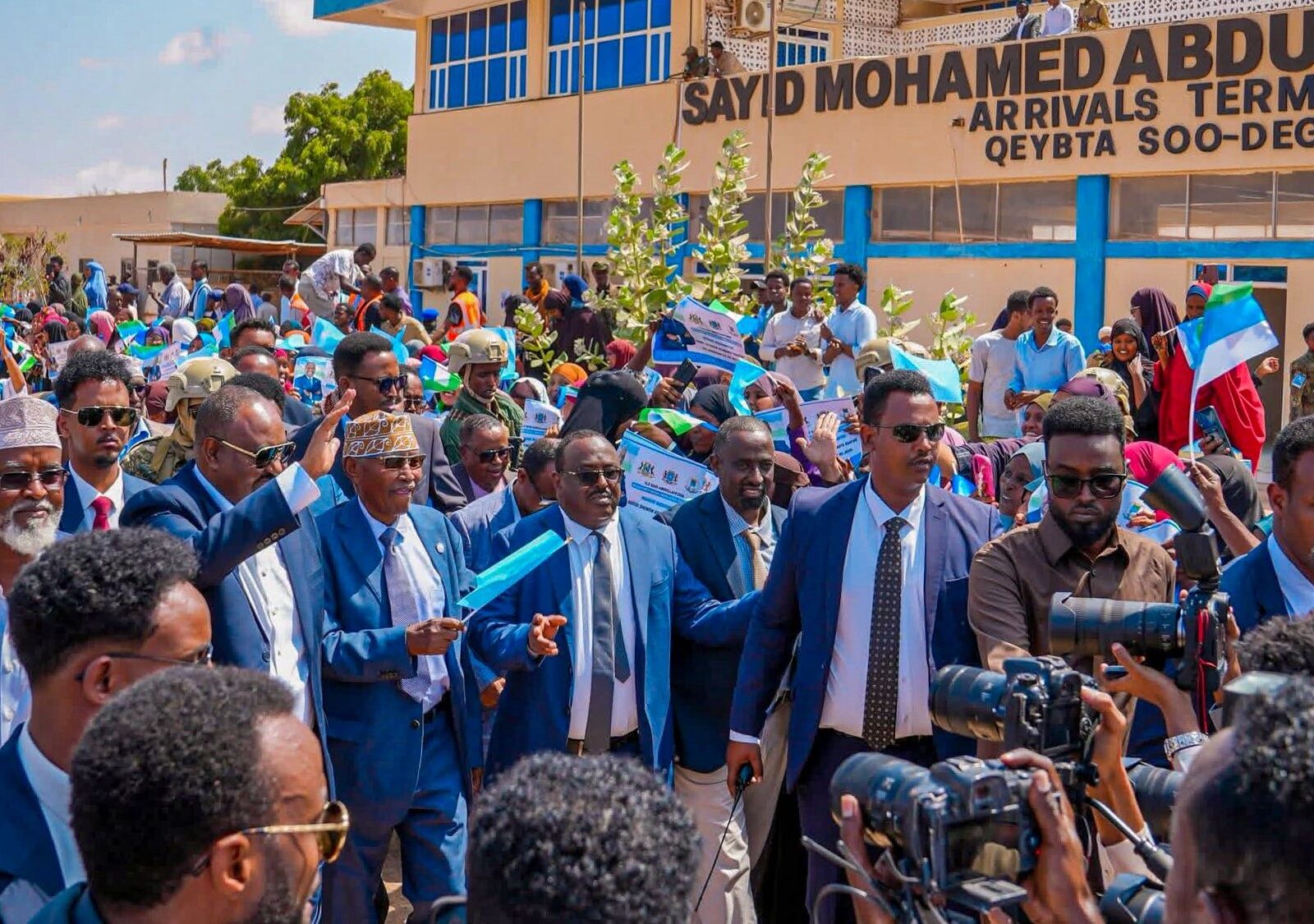
GOOBJOOG NEWS|MOGADISHU: Senior Somali opposition leaders are converging in Kismayo for a major political conference opening this afternoon, with arrivals continuing today. The meeting is expected to formalise the Somali Future Council, a new opposition platform bringing together politicians from Mogadishu alongside the Puntland and Jubbaland administrations.
The gathering comes as President Hassan Sheikh Mohamud’s term enters its final phase, with elections due by 2026. President Mohamud has strongly defended the transition to universal suffrage as voter registration and voter cards collections continue in parts of the country.
Opposition leaders say the conference is aimed at responding to what they view as unilateral federal government decisions on elections, constitutional changes and the management of the political transition.
At the centre of the dispute is the federal government’s push to implement one-person, one-vote elections. While the opposition has not yet proposed a specific alternative, their public statements suggest a preference for an indirect model with enhanced legitimacy, building on previous electoral cycles rather than abandoning them. In the 2016 elections, each member of parliament was elected by 51 representatives, with an electoral college of 14,025 delegates. In 2022, that figure was expanded, with each of the 275 members of the lower house elected by 101 delegates, bringing the total electoral college to 27,775. Opposition figures appear to be considering a further expansion of this model, maintaining the clan-based framework while increasing participation to boost credibility.
This kind of mobilisation is not new in Somali politics. During the 2022 election cycle, opposition leaders similarly banded together after parliament approved a two-year term extension for then-President Mohamed Abdullahi Mohamed. That decision triggered armed confrontations in Mogadishu, split elements of the security forces and pushed the country to the brink of wider conflict, before the extension was eventually reversed. The episode remains a powerful reference point for both the opposition and the public.
Against that backdrop, the Kismayo conference is widely seen as an attempt to act early rather than react late. By organising now and forming the Somali Future Council, opposition leaders are trying to set the terms of engagement before Villa Somalia finalises electoral timelines or frameworks.
The stakes are high. Opposition leaders have drawn a firm line against any extension of the president’s term and have warned against unilateral constitutional changes or non-consensual elections. On Tuesday, some of the Council members warned of a parallel administration should the government not heed to their calls.
What happens after Kismayo will depend on the tone of the conference’s final resolutions and how Villa Somalia responds. Whether through dialogue or confrontation, the decisions taken here are likely to shape Somalia’s political trajectory well beyond this week.