
FACT CHECK: OFAC Did Not Delist Sheikh Hassan Dahir Aweys — Update Was a Duplicate-Record Merge, Not a Sanctions Removal
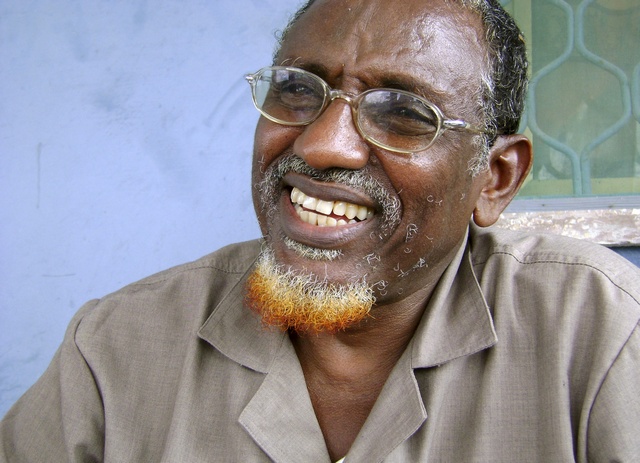
GOOBJOOG NEWS|WASHINGTON: Social media posts claiming the U.S. Treasury’s Office of Foreign Assets Control (OFAC) removed Somali Islamist figure Sheikh Hassan Dahir Aweys from its sanctions list are false. A review of OFAC’s official records confirms this was a technical clean-up of duplicate entries, not a delisting.
What OFAC Actually Did
On July 27, 2026, OFAC published a notice titled “Sanctions List Removals; Sanctions List Updates.” The agency described an effort to remove and update outdated information across its sanctions lists by consolidating 18 duplicate entries in which a single sanctioned target appeared multiple times under separate identifiers. Treasury stated explicitly that even where duplicate entries were deleted, the persons, entities, and property tied to those entries remain sanctioned, with related assets still blocked.
The consolidation table lists Aweys by name, showing Deleted UID 11744 and Retained UID 7006 — matching the specific figures circulating in the viral claim. The full text of the notice confirms this precisely: the duplicate record under UID 11744 was formally deleted, while the surviving entry under UID 7006 — listing Aweys under his various aliases, including “ALI, Sheikh Hassan Dahir Aweys” — remains active on the Specially Designated Nationals (SDN) list under the Somalia sanctions program. His designation is untouched.
Eighteen other sanctioned targets, from Russian defense firms to Mexican cartel figures to a North Korean trading company, underwent the identical duplicate-merge process in the same notice. Nothing in the action singles out Aweys for special treatment.
Why the Confusion Arose
OFAC’s own language draws a sharp line between the terms used here — “duplicate entries,” “duplicate UID,” “consolidated” — and the explicit delisting language it uses when it actually removes someone from sanctions. Some social media commentary appears to have conflated routine record housekeeping with an actual policy decision to lift sanctions on Aweys. It was neither.
Who Is Hassan Dahir Aweys
Born in 1935 in Dusmareb, then part of Italian Somaliland, Aweys served as a colonel in the Somali National Army under Siad Barre before turning to Islamist politics as Somalia’s civil war took hold. His trajectory through Somali Islamism’s major movements spans three decades. He rose within Al-Itihaad al-Islamiya from 1991, one of the earliest major Islamist militant organizations to emerge from the civil war. After that group’s collapse in 1997, he headed an Islamic court in northern Mogadishu and eventually became chairman of the Islamic Courts Union’s Shura Council in 2006, the movement that briefly controlled much of southern Somalia before Ethiopia’s military intervention that December. He subsequently led Hizbul Islam (2009–2010), an insurgent faction that later merged into Al-Shabaab, within which Aweys was long viewed as a spiritual figurehead.
He eventually broke with Al-Shabaab’s Godane faction over its embrace of transnational jihad. Analysts at the time noted Aweys’ focus was building an Islamic state within Somalia’s own borders rather than joining a global jihadist project, a divide that made his alleged al-Qaida ties far looser than Godane’s. He was briefly detained by Godane loyalists before defecting, surrendering to the Himan and Heb regional administration in June 2013 and being handed to Somali federal custody in Mogadishu that July.
Still Under House Arrest
Aweys has remained under house arrest in Mogadishu since that 2013 defection, a status that continues today. He has largely stepped back from armed activity but still comments on Somali political affairs via video from the home where he remains confined. No Somali authority has announced any change to his custody status.
His house arrest and his OFAC sanctions listing are two separate tracks — one a matter of Somali domestic custody, the other a U.S. terrorism-sanctions designation — and neither was altered by the July 2026 OFAC update.
Bottom Line: The claim that OFAC delisted Sheikh Hassan Dahir Aweys is false. The July 27, 2026 action merged a duplicate record (UID 11744) into his original, still-active listing (UID 7006). Aweys remains a Specially Designated National under U.S. sanctions and continues to live under house arrest in Mogadishu.