
Four Killed As Kenya Fuel Protests Disrupt Transport Nationwide
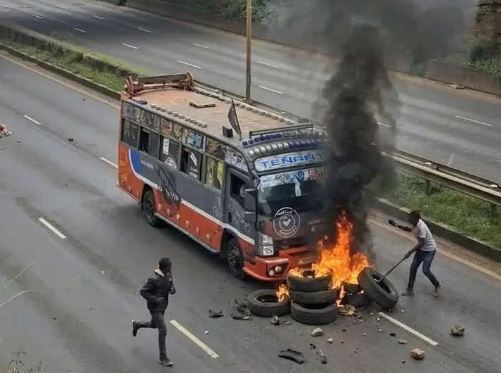
GOOBJOOG NEWS | NAIROBI: At least four people were killed and more than 30 injured on Monday as protests linked to a nationwide transport strike over soaring fuel prices disrupted movement across Kenya, authorities said.
Thousands of commuters were stranded in Nairobi and other major towns after public transport operators halted services, leaving roads unusually deserted while some businesses closed and schools advised students to stay home.
Interior Minister Kipchumba Murkomen said 348 people had been arrested during the unrest, which saw protesters block highways and streets with burning tyres and barricades.
Police used tear gas in several areas of Nairobi and elsewhere to disperse demonstrators, amid reports of attacks on motorists and damage to vehicles.
Nairobi police commander Issa Mohamud said six police officers were injured in clashes, while five police vehicles and one civilian vehicle were damaged.
The strike was organised by the Transport Sector Alliance in protest against recent increases in fuel prices after the Energy and Petroleum Regulatory Authority raised diesel and petrol prices to record highs last week.
Kenya, East Africa’s largest economy and a regional transport hub, has been hit hard by rising global oil prices linked to supply disruptions in the Gulf following months of tensions involving Iran, the United States and Israel.
Although a ceasefire was declared earlier this month, fuel markets remain volatile as the Strait of Hormuz — a key global oil shipping route — remains disrupted, increasing import costs for fuel-dependent economies across Africa.
Public anger over rising fuel costs has intensified as transport fares and food prices continue to climb in Kenya, where many households are already grappling with a broader cost-of-living crisis.
“There is no matatu anywhere,” Charles, a commuter from Kitengela on the outskirts of Nairobi, told Reuters.
“We used to pay 100 to 150 shillings, right now it’s 300. Life is becoming so unbearable,” he said, appealing to President William Ruto to lower fuel prices.
Transport disruption was also reported along major highways linking Nairobi to neighbouring countries. A bus conductor travelling from Tanzania said passengers were stranded in Kajiado after roadblocks prevented vehicles from reaching the capital.
In the border town of Taveta, traders said the strike disrupted cross-border movement of food supplies from Tanzania, raising concerns over supply chains and regional trade.
Murkomen accused political actors of exploiting the demonstrations, saying violence and destruction would not lower fuel prices.
“Looting businesses and vandalising public property can in no way bring down oil prices,” he told reporters in Nairobi.
The transport alliance had urged matatus, truckers and private motorists to stay off the roads as part of what it described as a coordinated national shutdown.
The group has demanded reversal of the latest fuel price increases and a reduction in fuel costs of about 35%, arguing that high energy prices are worsening economic hardship for ordinary Kenyans.
Treasury Minister John Mbadi acknowledged the impact of rising fuel prices on the economy but described the strike as unnecessary, saying the government was dealing with a global crisis beyond its control.
Kenya cut fuel value-added tax from 16% to 8% last month in an attempt to ease pressure on consumers, but transport operators and consumer groups say more measures are needed.
No agreement had been reached between the government and transport operators by Monday evening, raising fears the strike and protests could continue in the coming days.
Additional reporting by agencies.