
From Aid to Investment: Washington Unveils a New Strategic Era for Somalia
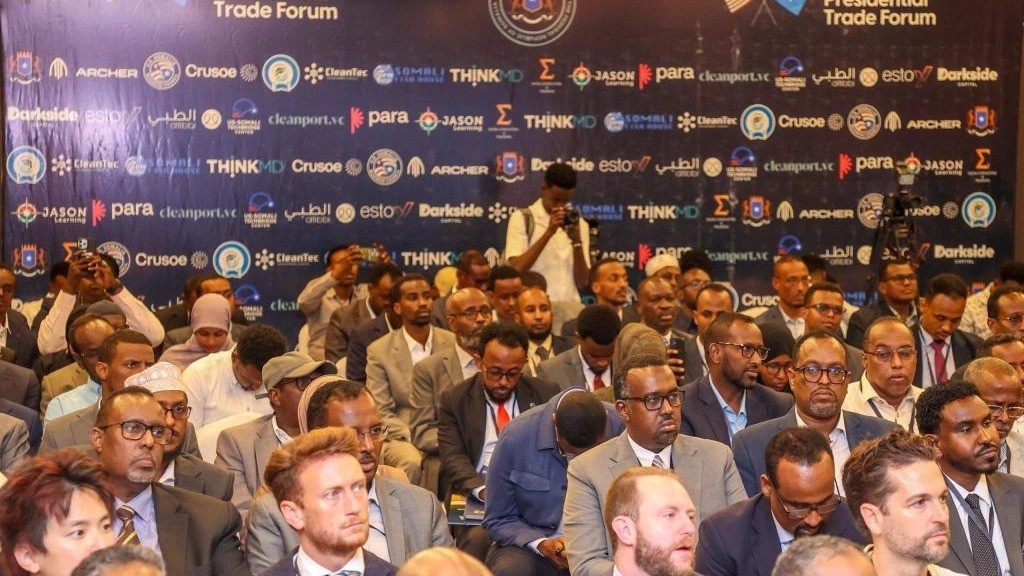
GOOBJOOG NEWS | MOGADISHU: The United States has signaled a historic shift in its relationship with Somalia and the wider Horn of Africa. In its newly released National Security Strategy (2025), Washington is moving away from decades of military-heavy engagement and dependency-based aid, proposing instead a partnership built on economic investment, regional stability, and mutual respect for sovereignty.
For Somalia, this document represents more than just a policy update; it is a potential redefining of its place on the global stage.
Beyond the “Donor-Recipient” Relationship Perhaps the most significant change is the U.S. pledge to transition from a “foreign aid paradigm” to an “investment and growth paradigm.”
“The U.S. will transition… to a paradigm capable of harnessing Africa’s abundant natural resources and latent economic potential.” — U.S. National Security Strategy (2025)
For the Somali economy, this signals a move away from humanitarian handouts toward genuine economic cooperation. The focus is shifting to maritime trade corridors, energy exploration, and infrastructure development. The message is clear: Washington sees Somalia’s future not in food aid, but in business, trade, and the critical minerals required for the global economy.
The Peacekeeper Role: Preventing Regional Conflict: The strategy identifies the Horn of Africa as a region requiring urgent, delicate diplomatic attention. Washington has expressed deep concern regarding rising tensions between Ethiopia, Eritrea, and Somalia, warning that these friction points could destabilize the entire region.
By prioritizing the “prevention of new conflicts,” the U.S. appears ready to act as a diplomatic stabilizer. With Somalia steadfastly asserting its sovereignty and Ethiopia seeking new geopolitical alignments, the U.S. aims to use diplomacy—rather than military intervention—to keep the peace.
A Leaner Approach to Security: While the threat of Al-Shabaab remains a priority, the U.S. is changing how it fights. The days of large-scale military footprints and nation-building are over.
The new strategy rejects long-term American military presence. Instead, it favors a “small footprint” approach: targeted strikes, high-level intelligence sharing, and empowering the Somali National Army (SNA) to lead the fight. The goal is to degrade extremist networks without overshadowing Somali sovereignty.
The Great Power Competition: Somalia’s geography—its long coastline guarding the Red Sea and Indian Ocean—is its greatest strategic asset. As competition with China intensifies, the U.S. is keen to secure maritime corridors and port infrastructure in the region.
Washington’s goal is to ensure these waters remain open and secure for global trade, countering Beijing’s expanding commercial influence in East Africa through competing American investments.
Respecting Somali Sovereignty: In a departure from previous administrations that often sought to engineer political outcomes, the 2025 strategy stresses political non-interference. The U.S. intends to step back from managing Somalia’s internal federal disputes or election mechanics, opting instead for a pragmatic relationship that respects local political processes.
What This Means for Somalia: This strategy elevates Somalia from a “crisis zone” to a key strategic partner. By focusing on the Blue Economy, security cooperation, and investment, the U.S. is betting on Somalia’s potential. The challenge now lies in Mogadishu: to seize these opportunities and navigate this shifting landscape to secure a prosperous future for its people.