
Galmudug and Hirshabelle Votes Signal a Path to Nationwide Multiparty Elections
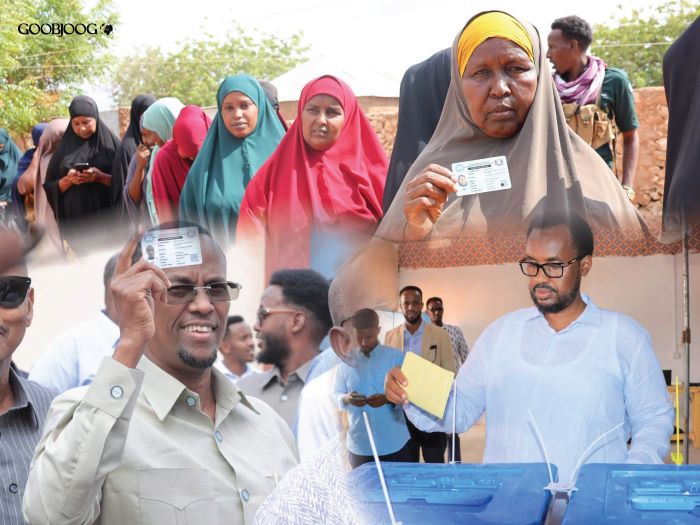
GOOBJOOG NEWS|CENTRAL SOMALIA: Somalia’s transition from clan-based political selection to direct, multiparty democracy advanced another step on Wednesday as voters in 21 districts of Galmudug and Hirshabelle states cast ballots for local councils and state assemblies.
The polls in 11 Galmudug districts and 10 in Hirshabelle show universal suffrage moving from a national ambition into practice. For decades, most Somali leaders have been chosen through negotiations among clan elders and delegates. In these elections, citizens are choosing representatives themselves from a wide field of political parties.
Results may take days, but the election already demonstrates Somalia’s growing capacity to organise direct voting across several regions at once. It also provides practical experience in voter registration, polling, dispute resolution and public accountability, all of which will support the country’s path towards a national one-person, one-vote system.
From clan selection to citizen choice
For much of Somalia’s recent history, political representation has been apportioned through the clan-based formula commonly known as the 4.5 system. Adopted in response to state collapse and conflict, the arrangement enabled competing groups to share power and helped restore national institutions. Direct elections now offer a way to build on that stability by giving citizens a personal vote.
The last time Somalis chose their leaders by direct vote was in 1969. The return of the ballot therefore marks an important change in the country’s political life.
The transition has advanced in stages, beginning with local elections in Banadir and continuing in Southwest State before reaching Galmudug and Hirshabelle. The breadth of competition reflects an emerging multiparty culture. According to the National Independent Electoral and Boundaries Commission, 55 political parties are contesting in Hirshabelle and 48 in the Galmudug rerun.
Many of the parties are still developing their structures and local bases. Elections give them an incentive to organise around voters, policies and public service rather than rely solely on negotiations among political and clan leaders. That change will take time, but the presence of dozens of competing political choices is already broadening participation.
The vote carries real political weight. The elected state assemblies will help determine who holds executive power in the member states, including through their role in selecting state presidents and vice-presidents. Citizens are therefore shaping the institutions that will make consequential decisions on their behalf.
Security capacity supports the vote
Holding simultaneous elections across 21 districts is a substantial logistical and security operation. Parts of Galguduud, Mudug, Hiiraan and Middle Shabelle have faced threats from extremist groups and other armed actors for years. The opening of polling centres across these regions shows that electoral institutions and security authorities can work together to create space for political participation.
Long queues formed in Dhuusamareeb, Guriceel, Cadaado, Jowhar, Beletweyne and Gaalkacyo among other regional centres. The sight of citizens waiting to vote in these towns illustrates how far public life has moved in a decade and how strongly people value the opportunity to choose their representatives.
Authorities imposed temporary curfews in Jowhar and Beledweyne to protect polling centres and voters. The measures reflect the security realities in central Somalia, while the continuation of voting shows an ability to manage those risks without abandoning the democratic process.
Hirshabelle also requires sustained political engagement. Before the vote, armed Macawiisley fighters attacked voter-registration centres in Beledweyne, and Hawadle leaders called for a political agreement on the elections in Hiiraan. A rival Hawadle council in Mogadishu backed the president. These differences underline the importance of dialogue and inclusion as electoral institutions extend their reach.
Hiiraan contains a significant share of Hirshabelle’s polling districts. A peaceful vote followed by an accepted result would strengthen confidence in both the electoral process and the wider political settlement. The large-scale operation now underway provides a foundation for that progress.
The electoral commission expands its reach
The elections show the growing operational reach of the National Independent Electoral and Boundaries Commission. Over the past year, the commission has moved from voter registration to polling in several federal member states, adapting its plans as legal and administrative issues arose.
Its response to the Galmudug court decision was swift. The commission published a rerun timetable on September 1, about a week after the Supreme Court annulled the original result on August 24. It scheduled the new vote for September 30 and retained the same register of 270,737 voters, preserving continuity while implementing the court’s ruling.
In Hirshabelle, the original August 20 election date was adjusted to allow registration to continue in four Hiiraan districts. That extension gave more citizens an opportunity to join the register. The commission’s ability to publish complete data, apply rules consistently and respond openly to concerns will remain central to public trust. Each election gives it another opportunity to strengthen those practices and build a record that political competitors can rely on.
The courts strengthen the process
The Galmudug rerun demonstrates that electoral disputes can be resolved through national institutions. On August 24, the Supreme Court annulled the election held on July 30 after challenges from the Towfiiq Party and other participating groups. Chief Justice Baashe Yusuf Ahmed said violations had affected the independence, freedom and fairness of the polls and influenced the result.
The ruling had significant political consequences. According to the electoral commission, the Justice and Solidarity Party, led by President Hassan Sheikh Mohamud, had won 63 state assembly seats and 115 local council seats. It received 106,388 votes, or 55.55 per cent of valid ballots cast.
By setting aside a result that favoured the president’s party, the court demonstrated its willingness to apply electoral standards to the country’s most powerful political actors. It also kept Galmudug’s existing institutions in office until successors could be elected, protecting administrative continuity while a new vote was organised.
Political parties accepted the legal process and returned to the ballot. Forty-eight parties are contesting the rerun. Their participation shows growing confidence that electoral disagreements can be addressed in court and settled through another vote.
The rerun gives the commission and political parties an opportunity to show that legal correction can improve an election. Clear procedures, open publication of results and equal treatment of competitors will help turn the Supreme Court decision into a lasting institutional precedent.
Preparing for a national vote
District and state elections are building the foundations Somalia will need for a direct national vote. They are producing voter registers, training polling staff, familiarising parties with campaigning and observation, and giving the courts experience in resolving electoral disputes.
The process is also identifying where further work will have the greatest value. Earlier publication of voter registers would improve transparency. Continued dialogue in areas such as Hiiraan would broaden participation. Consistent electoral rules and prompt court decisions would give parties greater certainty. These are practical improvements within institutions that are already operating.
Direct elections have so far reached only parts of the country, and a national contest will require wider political agreement and greater operational capacity. The experience gained in Banadir, Southwest State, Galmudug and Hirshabelle makes that larger undertaking more achievable.
The central Somalia vote is therefore both an election and a demonstration of progress. Citizens are choosing representatives directly, dozens of parties are competing, security agencies are protecting polling, and courts are enforcing electoral standards.
The final measure will include the integrity of the count, the timely publication of data and the acceptance of results. Somalia now has an opportunity to show that these democratic practices can become routine. Each successful election brings the country closer to a durable multiparty system based on universal suffrage.