
Iran Warns U.S. Against Escorting Ships Through Hormuz Echoing 1987 Tanker War
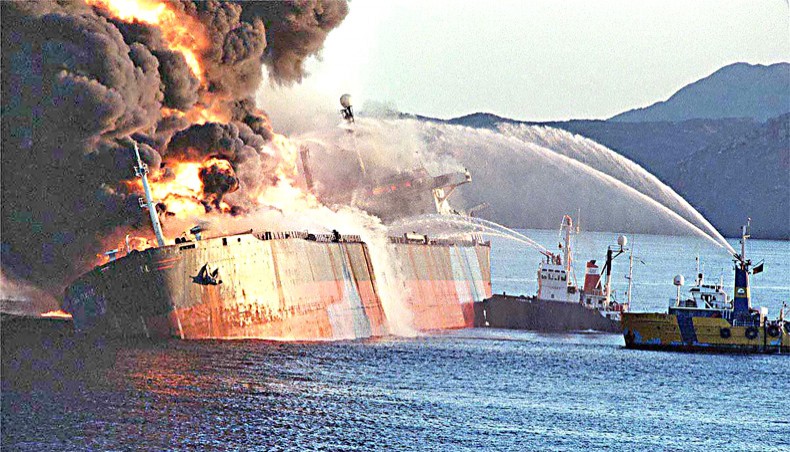
GOOBJOOG NEWS|TERHAN: The Islamic Revolutionary Guard Corps (IRGC) has warned the United States against escorting commercial vessels through the Strait of Hormuz, invoking a historic confrontation between Iranian forces and the U.S. Navy during the late stages of the Iran–Iraq war.
In a statement carried by Iranian media, the IRGC cautioned Washington to remember the consequences of similar actions in the past.
“We recommend that before making any decision, the Americans remember the fire of the American supertanker Bridgeton in 1987.”
The warning comes after the United States announced plans to escort ships through the narrow but strategically vital waterway, a route that carries a significant share of the world’s oil and liquefied natural gas shipments. The move is aimed at protecting commercial shipping amid rising regional tensions and threats to maritime traffic.
Echoes of the 1987 Tanker War
Iran’s reference points to an incident during the Tanker War, when attacks on oil tankers in the Persian Gulf escalated dramatically.
In 1987, the United States launched Operation Earnest Will to protect Kuwaiti oil tankers that had been reflagged under the American flag. The operation involved U.S. Navy warships escorting commercial vessels through the Gulf and the Strait of Hormuz.
One of the escorted vessels, the Kuwaiti tanker Bridgeton—which had been reflagged as a U.S. ship—struck an Iranian naval mine on 24 July 1987. The explosion tore a large hole in the tanker’s hull but did not sink the vessel. The ship continued its journey, escorted by U.S. naval vessels.
The incident was widely seen as an embarrassment for Washington because the tanker that hit the mine ended up sailing ahead of the U.S. warships, effectively clearing a path through the mined waters.
Strategic Waterway at the Center of Tensions
The Strait of Hormuz remains one of the most sensitive maritime chokepoints in the world. According to widely cited energy shipping data, roughly one-fifth of global oil consumption passes through the narrow corridor connecting the Persian Gulf to international waters.
Iran has repeatedly warned that it could disrupt traffic through the strait if it faces military pressure or severe economic restrictions. The United States and its allies, however, maintain that freedom of navigation must be protected.
The IRGC’s latest statement suggests Tehran is signaling its readiness to confront any U.S.-led escort operations, while also invoking the memory of past clashes to deter Washington from expanding its naval presence in the region.
Whether the situation escalates further will likely depend on how both sides respond in the coming weeks as naval deployments and commercial shipping activity continue in the Gulf.