
Israel Recognizes Somaliland, Marking First Formal Break in Global Stance on Somalia’s Unity
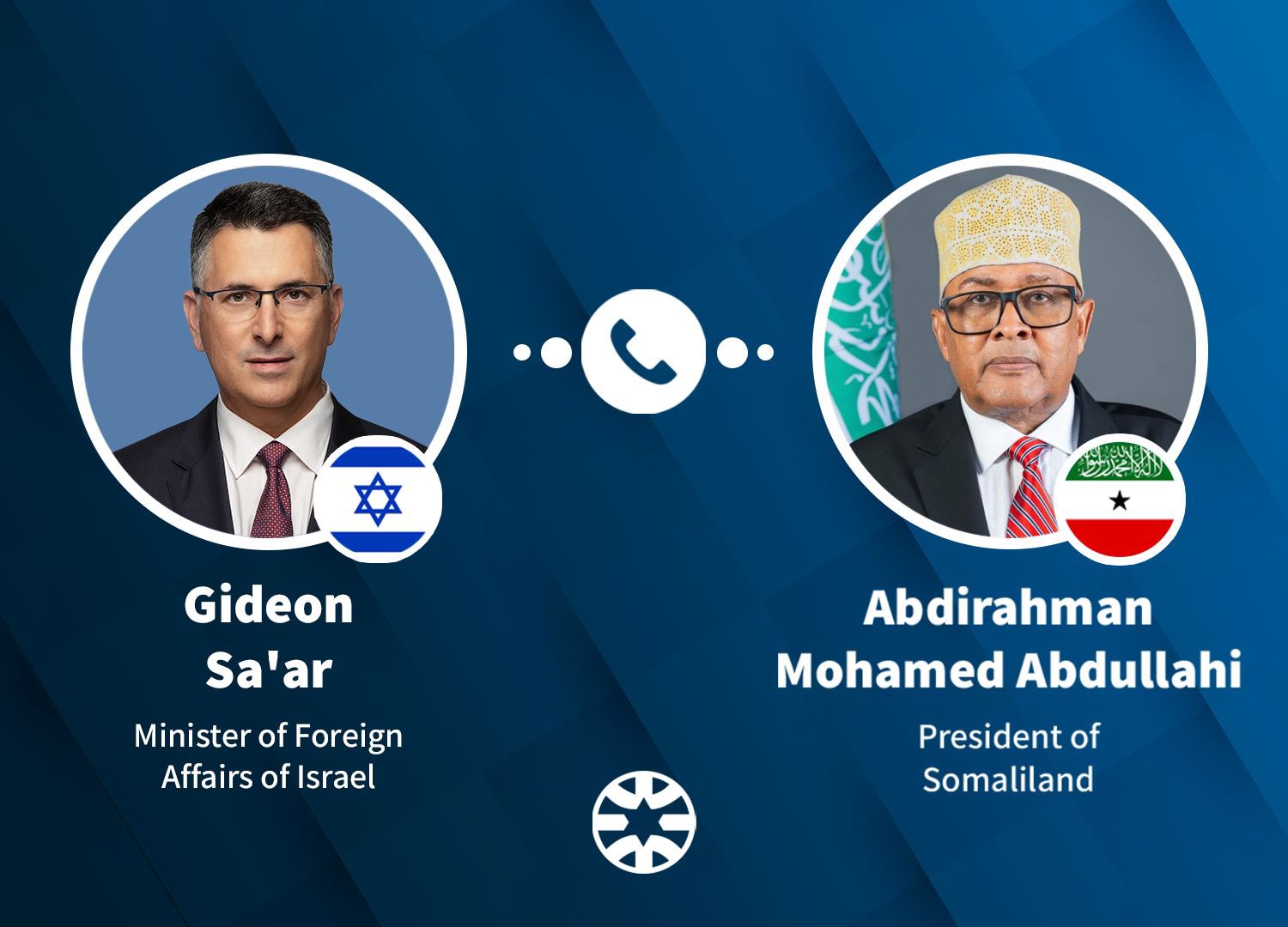
GOOBJOOG NEWS|TEL AVIV: Israel has become the first country to formally recognize Somaliland as an independent state, signing a mutual recognition agreement with President Abdirahman Mohamed Abdullahi and opening a new chapter in the Horn of Africa’s long-running diplomatic dispute over Somalia’s territorial integrity.
The announcement was made by Israeli Foreign Minister Gideon Sa’ar, who said the decision followed a year of sustained dialogue between the two sides. The agreement provides for the establishment of full diplomatic relations, including the appointment of ambassadors and the opening of embassies in Tel Aviv and Hargeisa. Sa’ar said Israel would move immediately to institutionalize ties across political, economic and security sectors, describing the day as “important for both countries.”
Somaliland’s long quest for recognition
For Somaliland, the move represents its most significant diplomatic breakthrough since it declared independence from Somalia in 1991 following the collapse of the central government in Mogadishu.
Despite maintaining its own currency, security forces, elected governments and relative stability for more than three decades, Somaliland has remained internationally unrecognized, largely due to global adherence to the principle of Somalia’s territorial unity.
Successive Somaliland administrations have argued that their case is distinct from other secessionist movements, pointing to colonial-era boundaries, a 2001 constitutional referendum endorsing independence, and a record of internal peace in contrast to Somalia’s prolonged conflict. Until now, however, no country had been willing to cross the line from informal engagement to formal recognition.
Why Israel, and why now
Israel’s decision breaks that pattern at a moment of shifting geopolitical calculations in the Red Sea and Gulf of Aden, where security concerns, global trade routes and regional rivalries have sharpened international interest.
Somaliland’s port of Berbera, located along one of the world’s busiest maritime corridors, has long been viewed as a strategic asset. Hargeisa has actively pitched itself as a reliable partner on security, trade and logistics in a volatile region.
Israel has, in recent years, expanded its diplomatic footprint beyond traditional partners, particularly following the Abraham Accords, and has shown growing interest in Africa and the Horn. Analysts say recognition of Somaliland aligns with Israel’s broader effort to secure strategic relationships along key maritime routes.
Expected backlash from Mogadishu
The decision is likely to trigger strong reactions in Somalia’s capital. The federal government has consistently rejected any suggestion that Somaliland’s status is negotiable and has mobilized diplomatic support at the United Nations and African Union to reinforce the “One Somalia” position.
Officials in Mogadishu are expected to view Israel’s move as a direct challenge to Somalia’s sovereignty. Regionally, countries such as Turkey, Egypt and Djibouti, all of which maintain close ties with Somalia, have previously opposed any recognition of Somaliland, warning that it could destabilize the Horn of Africa.
Could others follow?
Beyond the immediate fallout, Israel’s recognition raises a larger question about whether other countries may now reconsider their stance.
Attention is already turning to the United States, where debate over Somalia policy has grown more visible. During recent United Nations Security Council discussions, U.S. officials signaled frustration with the slow pace of stabilization in Somalia and the continued demands on international support.
While Washington has not indicated an imminent shift, Israel’s move lowers the diplomatic barrier for others who have quietly engaged Somaliland for years but stopped short of recognition. If another major power follows, it could fundamentally alter the diplomatic landscape of the Horn of Africa.
A symbolic moment with real implications
For now, Israel’s recognition remains largely symbolic until backed by concrete cooperation and sustained diplomatic engagement. But symbols matter in international politics.
After more than 30 years of waiting, Somaliland has secured its first formal acknowledgment as a sovereign state. Whether this proves an exception or the beginning of a broader realignment will depend on how other capitals respond in the weeks and months ahead.