
Mogadishu Can Still Become a Climate-Resilient City
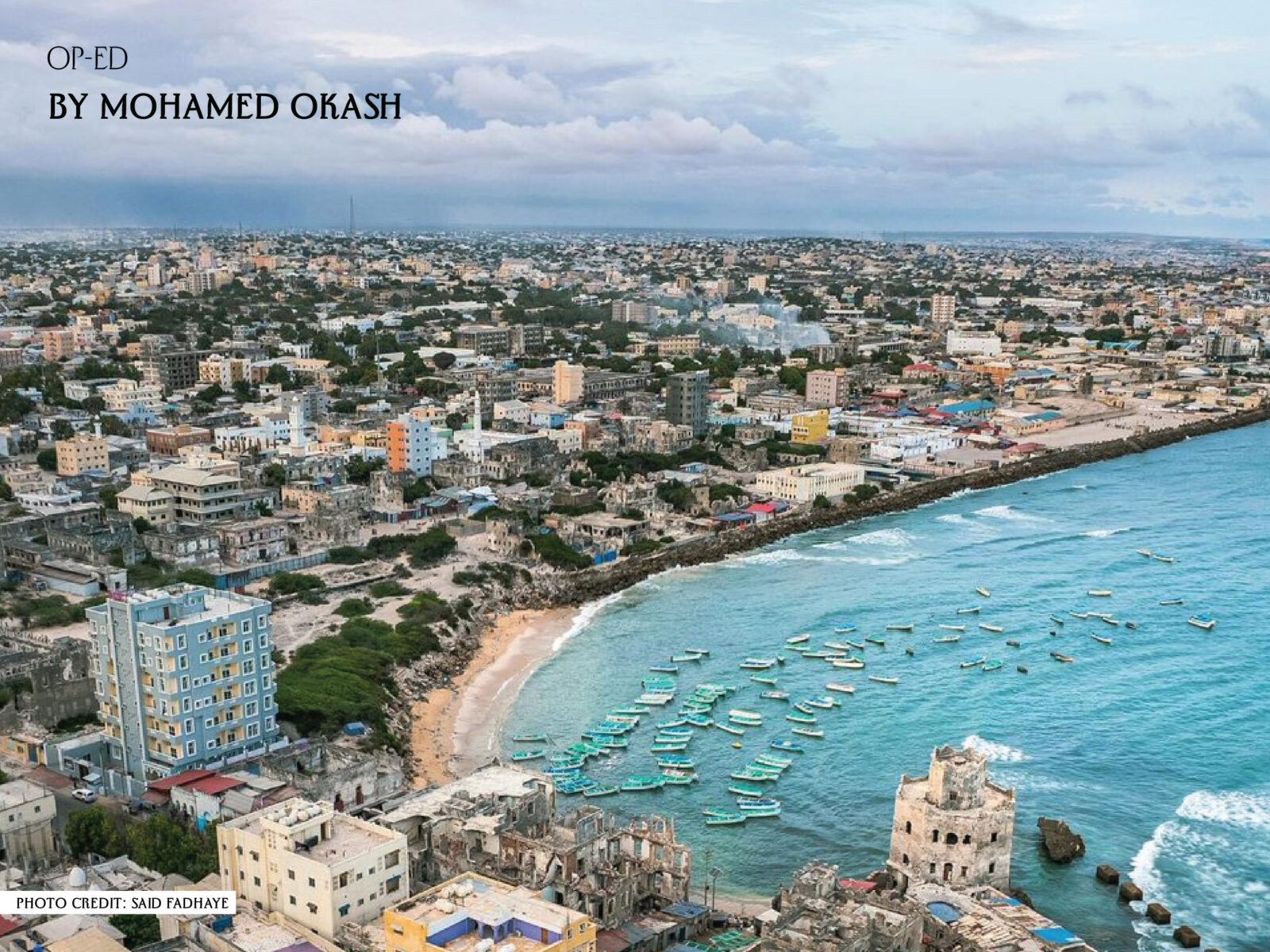
Every Friday, groups of young volunteers gather on beaches, roadsides and public spaces to clear waste and plant trees to protect Mogadishu’s natural environment. Their work recently took on a new urgency, however.
When heavy rains hit the city in April, roads disappeared beneath brown floodwater, transport stalled, families were stranded, and familiar warnings returned. For many outside Somalia, this was just another weather story. For those who live here, it was something else entirely, a reminder that climate change is deeply intensifying and our underbuilt urban systems are failing the pressure test.
Mogadishu can still become a climate-resilient city, however, and we have a vision to get us there with last week’s launch of the Mogadishu Transformational Plan 2026–2030. As a policy researcher and co-organiser of the annual Mogadishu Environmental Summit, I know that climate resilience is strongest when public institutions and communities build together. The solutions already exist. Now is the time for government, academia, civil society, youth groups and the private sector to come together to ensure a safe and resilient future for everyone.
Climate change is exposing and exacerbating existing structural vulnerabilities. This matters far beyond Somalia. The UN’s Environment Programme has warned that African cities increasingly face “water volatility” – too much during intense storms, too little during droughts. Indeed, across East Africa, cities are entering a new era of urban climate risk. In 2026, Nairobi again faced deadly flooding after torrential rains. In 2024, heavy rains in Burundi, Kenya, and Tanzania displaced around 700,000 people. Some projections suggest parts of Eastern Africa could see precipitation rise significantly in coming decades.
Mogadishu is part of that regional story, but with its own unique pressures, fragility, population displacement, overstretched services, and limited municipal finance. Yet unlike many cities, it still has a chance to shape growth before dysfunction becomes permanent.
The city does not flood simply because it rains. It floods because rainfall now meets blocked drains, paved-over recharge areas, neglected detention ponds, weak waste systems, and rapid urban growth that has outpaced planning. Therefore, flooding in Mogadishu is not random. It is predictable, diagnosable and manageable.
The Mogadishu Transformational Plan rightly places environment and climate resilience at the centre of development. It identifies blocked drainage, waste accumulation, heat stress, contaminated water, weak enforcement and coastal vulnerability as major risks to public health and economic productivity.
The plan places climate resilience at the heart of the city’s future through an ambitious $84 million investment package under Pillar 4, Environment and Climate Resilience. It allocates $32 million to flood resilience and drainage systems, which could sharply reduce the recurring floods that disrupt transport, damage homes and paralyze commerce during heavy rains. A further $28 million is dedicated to waste management and sanitation, with the potential to deliver cleaner streets, healthier communities and unclogged drainage channels. And $9.5 million is earmarked for urban greening, parks, tree planting and ecosystem restoration, critical investments to cool the city, improve air quality and restore public space amid rapid urbanization.
Still millions more are earmarked for early-warning systems so communities can respond faster to floods and other climate shocks and for initiatives to improve environmental governance, regulation and enforcement. If implemented seriously and transparently, these programmes could help transform Mogadishu over the next five years into a cleaner, safer and more climate-resilient African capital, one better prepared for rising climate risks while creating green jobs, protecting public health and restoring its heritage.
To help us move forward, the Banadir Regional Administration must enact the Somali Environmental Protection and Management Act, which bans or phases out single-use plastics that clog drains, pollute streets, degrade beaches and endanger human health. It should also establish clear environmental standards, enforcement powers and incentives for greener business practices.
Mogadishu must also protect its greatest natural asset which is its coastline. Few capitals in Africa possess beaches as beautiful and economically promising as our capital city. Yet dumping waste into the sea, unmanaged runoff and coastal degradation threaten marine ecosystems, fisheries, tourism potential and public health. The Banadir Regional Administration should introduce strict anti-dumping enforcement, regular beach monitoring and a coastal restoration programme.
To complement those efforts, mangrove restoration should become another strategic priority. Mangroves act as natural infrastructure since they reduce coastal erosion, buffer storm surges, store carbon and support biodiversity. Rebuilding mangrove belts near vulnerable coastal zones is environmental investment for preventable damage.
Lastly, the city should also scale urban tree planting, establish district parks, incentivize climate-smart construction materials, improve rainwater harvesting, and integrate schools and mosques into environmental awareness campaigns. Youth-led volunteer groups already cleaning streets and planting trees every Friday should be supported through grants, tools and formal recognition and partnerships.
The world often sees Mogadishu only through conflict. But another story can be crafted if only inaction evolves into action. Every Friday, our youth remind us of that possibility and signal hope for a path towards true urban resilience.