
Mogadishu Hosts EACON 2026 as Somalia Deepens East African Integration
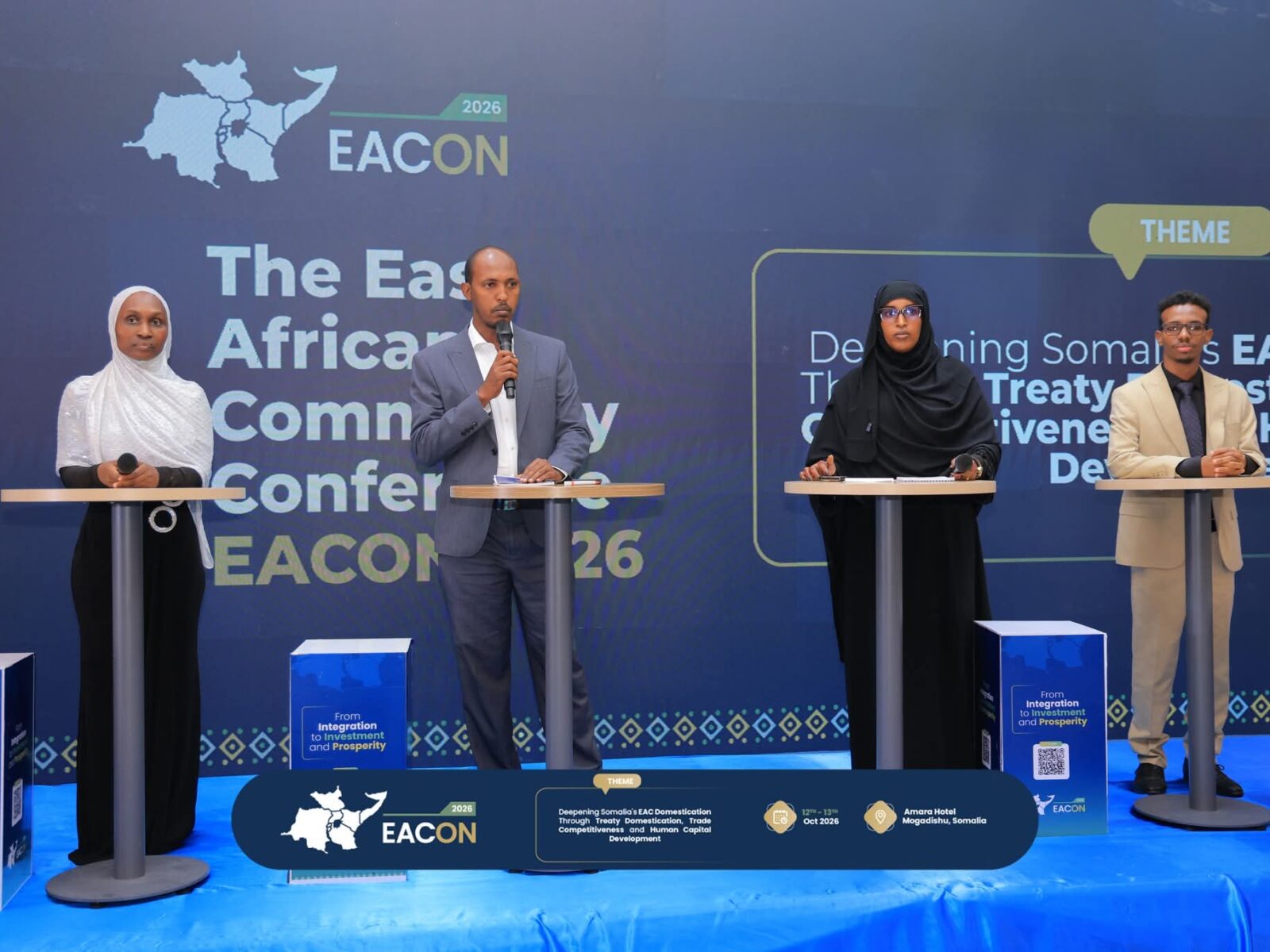
GOOBJOOG NEWS|MOGADISHU: Somalia must now move from membership of the East African Community to the more demanding task of implementation, leaders and experts said as the third East African Community Opportunities Conference, EACON 2026, concluded in Mogadishu after two days of policy, business and research discussions.
Held on 12 and 13 October at Amara Hotel, EACON 2026 brought together more than 800 participants, including senior government officials, parliamentarians, diplomats, regional institutions, academics, development partners, civil society and representatives of more than 25 businesses.
Across the two days, the conference featured six panel sessions, two fireside chats, two executive roundtables, 10 research and policy papers, keynote addresses, exhibitions, B2B meetings and investment matchmaking, reflecting an effort to connect policy dialogue with business, research and implementation.
Opening the conference, EACON Chairperson Dr Amina Sheikh Omar said Somalia’s regional integration should be judged by the opportunities it creates. “Regional integration is not defined by membership alone, but by our ability to translate shared commitments into meaningful opportunities for our institutions, businesses, and citizens,” she said.
She added that the value of Somalia’s EAC membership would depend on implementation, competitiveness, investment in human capital and partnerships capable of converting opportunities into tangible outcomes.
Day One focused primarily on treaty domestication, institutional readiness, trade competitiveness and human capital. Ministers responsible for EAC affairs, commerce, planning and investment, education, information and finance discussed the domestic reforms required to make regional integration work.
Officially opening the conference, Deputy Prime Minister Dr Salah Ahmed Jama stressed that Somalia’s regional integration must go beyond signing agreements. In his remarks, he emphasised translating regional commitments into national laws, strengthening institutions, investing in education and skills and improving the competitiveness of Somali businesses. He also argued that economic growth should ultimately translate into real development and better living standards.
Higher education Institutions were given a significant role in the discussions as they part of the organisers, SIMAD University and Somali National University.
Dr Mohamed Mohamud Mohamed, Rector of Somali National University, said Somalia’s accession should create tangible opportunities for citizens. “By strengthening institutions, improving trade and investment conditions, and investing in education, research, and innovation, Somalia can transform regional integration into a pathway toward sustainable economic growth and shared prosperity,” he said.
SIMAD University Rector Dr Abdikarim Mohaidin Ahmed said integration must also be visible in universities and research institutions.
“Regional integration must go beyond treaties and formal agreements; it must be reflected in our universities, research centres, laboratories, and the skills we equip our young people with.”
Day Two shifted toward financing, bankable projects, ports, regional corridors, fisheries and the Blue Economy, alongside discussions on universities, demographic change and workforce readiness.
The two-day meeting culminated in the EACON 2026 Mogadishu Declaration, which sets out priorities around domestication, competitive markets, productive investment, human capital, mobility and measurable implementation.
Importantly, the Declaration was produced in English, Somali and Kiswahili, giving the conference’s final outcome both national accessibility and wider regional reach.
Closing the conference, Hon. Abdulkadir Mohamed Nur Jama, Speaker of the House of the People, said Somalia should enter the EAC with confidence in what it can contribute.
“We are a nation of entrepreneurs,” he said. His final message summed up the conference’s direction: “Somalia’s accession opened the door. Our collective responsibility is to turn regional integration into transformation.”