
Nepal Flood Death Toll Tops 1,000 as Hundreds Remain Missing
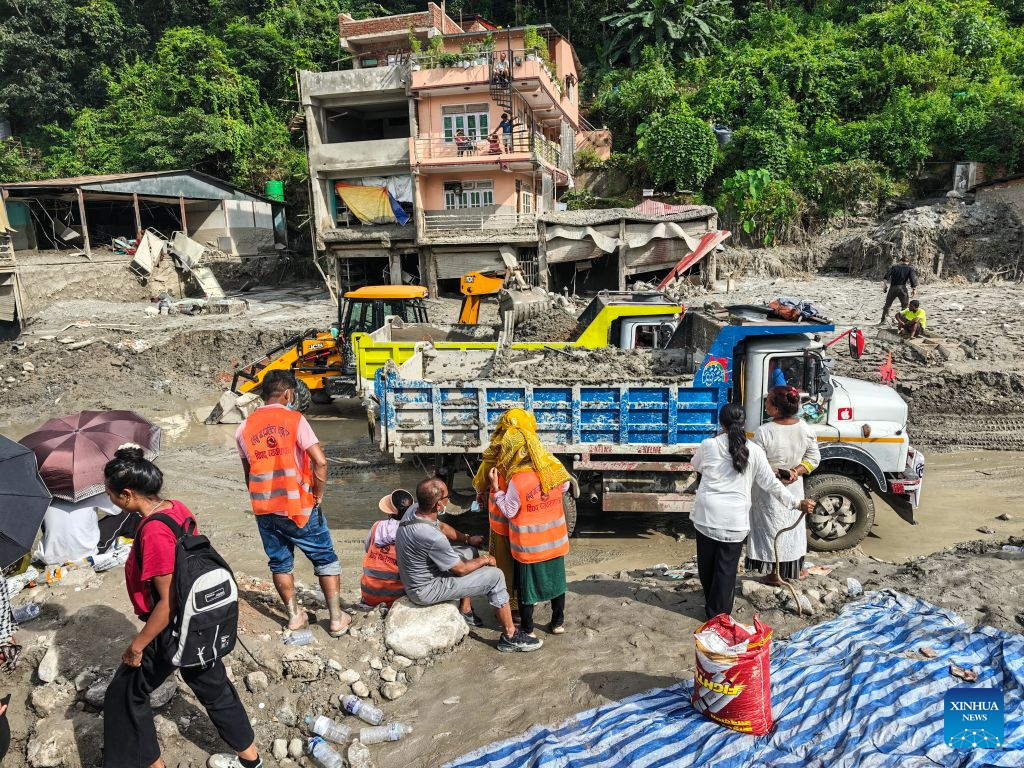
GOOBJOOG NEWS | KATHMANDU: The death toll from devastating floods in Nepal has risen above 1,000, with more than 3,900 people still missing, including hundreds of workers believed to be trapped at hydropower projects along the Trishuli River, the country’s disaster agency said.
More than 600 workers are believed to have been inside a network of tunnels at hydropower sites when the floods struck along Nepal’s border with Tibet. Rescue teams have been pumping air into the underground passages in an effort to reach those who may still be alive.
Nepalese Prime Minister Balendra Shah said on Monday that 279 people had been rescued from the affected sites as international and domestic teams intensified the search.
Chinese and Nepalese military personnel are leading the rescue operation, with experts from India, South Korea and Australia also assisting with the search and assessment of the damaged infrastructure.
A rescue team managed to enter one of the tunnels leading to a hydropower plant but withdrew after finding no survivors. Families of missing workers have urged authorities to accelerate the operation, saying time is becoming increasingly critical.
“I wish we could find him. I wish he would come home,” Anushila Bhandari, whose husband, 33-year-old engineer Aurus Bhandari, remains missing, told BBC Nepali.
Another family member, Sita Pandey, said she continued to hope her husband was alive because the facility had an oxygen system.
Nepal relies heavily on hydropower and has developed numerous projects along its mountainous river systems. Authorities say at least 11 completed or partially built projects were damaged by the floods, highlighting the scale of the destruction.
Australian tunnelling expert Arnold Dix, who has been advising Nepalese authorities remotely, said the force of the flooding had dramatically altered the terrain and made it difficult for rescuers to locate tunnel entrances.
He said rescuers first needed to establish the locations of the damaged power stations before determining how best to reach the underground areas, a process that could involve removing large rocks and debris.
Despite the destruction, Dix said there remained hope for people trapped underground because tunnels could provide some protection from the flooding above.
The search has left families anxiously waiting for information about relatives who disappeared at the project sites.
Priya Kharel, whose brother Milan was working as an engineer at the Upper Trishuli-1 hydropower plant, said workers who escaped had reported that people remained inside the tunnels.
The government says rescue operations have been intensified, while Prime Minister Shah described the disaster as an extraordinary event and linked the increasing risks in the Himalayan region to climate change.
He has called for greater international attention to climate-related disasters affecting Nepal and other vulnerable mountainous countries.
The floods have also created a major challenge for authorities dealing with unidentified victims. Nepal’s Health Ministry said only about 4% of the roughly 900 bodies recovered so far had been formally identified.
In Chitwan district, nearly 300 bodies were carried downstream by river systems from areas hit by the floods. Authorities have resorted to temporary burials because of limited storage capacity while medical teams and volunteers collect DNA samples to help identify the dead.
District officials said families would be able to recover the remains of relatives once identification through DNA testing is completed.
The disaster has stretched Nepal’s emergency response capacity, with rescuers facing widespread destruction, blocked access routes and large quantities of mud and debris as they continue searching for those still missing.
Additional reporting by agencies