
Netanyahu Credits Mossad Role in Israel’s Recognition of Somaliland
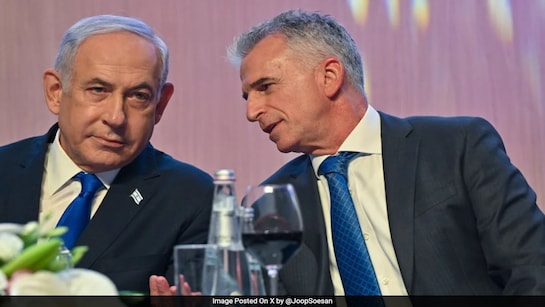
GOOBJOOG NEWS|TEL AVIV: Israeli Prime Minister Benjamin Netanyahu has publicly acknowledged the role of the country’s intelligence services in Israel’s decision to recognize Somaliland, offering a rare glimpse into how covert diplomacy shapes high-stakes foreign policy moves.
In a statement issued following the announcement, Netanyahu singled out the Mossad and its director, David Barnea, alongside Foreign Minister Gideon Sa’ar, for their contribution to what he described as a major diplomatic development.
“I thank Foreign Minister Sa’ar, the Head of Mossad David Barnea and the Mossad, for their contribution to today’s development, and I wish the people of Somaliland success, prosperity, and freedom,” Netanyahu said.
The explicit mention of the Mossad underscores the often-unseen role intelligence agencies play in preparing the ground for sensitive political decisions, particularly those involving recognition of disputed or unrecognized entities.
Intelligence and diplomacy intersect
While foreign recognition is formally a political and diplomatic act, intelligence agencies frequently operate behind the scenes to assess risks, build quiet channels, and evaluate strategic benefits. Netanyahu’s remarks suggest that Mossad engagement with Somaliland was not peripheral, but central to Israel’s calculations.
Such involvement can include discreet contacts with political leadership, security assessments, regional impact analysis, and coordination with allied intelligence services. These efforts often precede public diplomatic breakthroughs, especially in regions marked by geopolitical competition and security concerns like the Horn of Africa.
Strategic significance of the Horn of Africa
Israel’s move places Somaliland, a self-governing territory that declared independence from Somalia in 1991, at the center of a wider regional chessboard. The Horn of Africa sits astride key maritime routes linking the Red Sea to the Indian Ocean, an area of growing interest to global and regional powers.
By involving its intelligence apparatus, Israel appears to have treated the recognition not only as a diplomatic gesture but as a strategic decision with security, trade, and regional implications.
Rare public acknowledgment
It is unusual for Israeli leaders to openly credit the Mossad in matters of state recognition. Intelligence contributions are typically kept out of public view, even when decisive. Netanyahu’s statement therefore stands out as an implicit signal of the depth and sensitivity of the process that led to the decision.
The acknowledgment also reinforces the perception that Israel’s engagement with Somaliland has been long-term and carefully prepared, rather than sudden or symbolic.
As reactions continue to emerge across the region, Netanyahu’s remarks highlight a broader reality of modern geopolitics: some of the most consequential diplomatic shifts are shaped well before they reach official press statements, often in the shadowy space where intelligence and diplomacy meet.