
Israel Election Ends in Stalemate as Arab Parties Make Major Gains
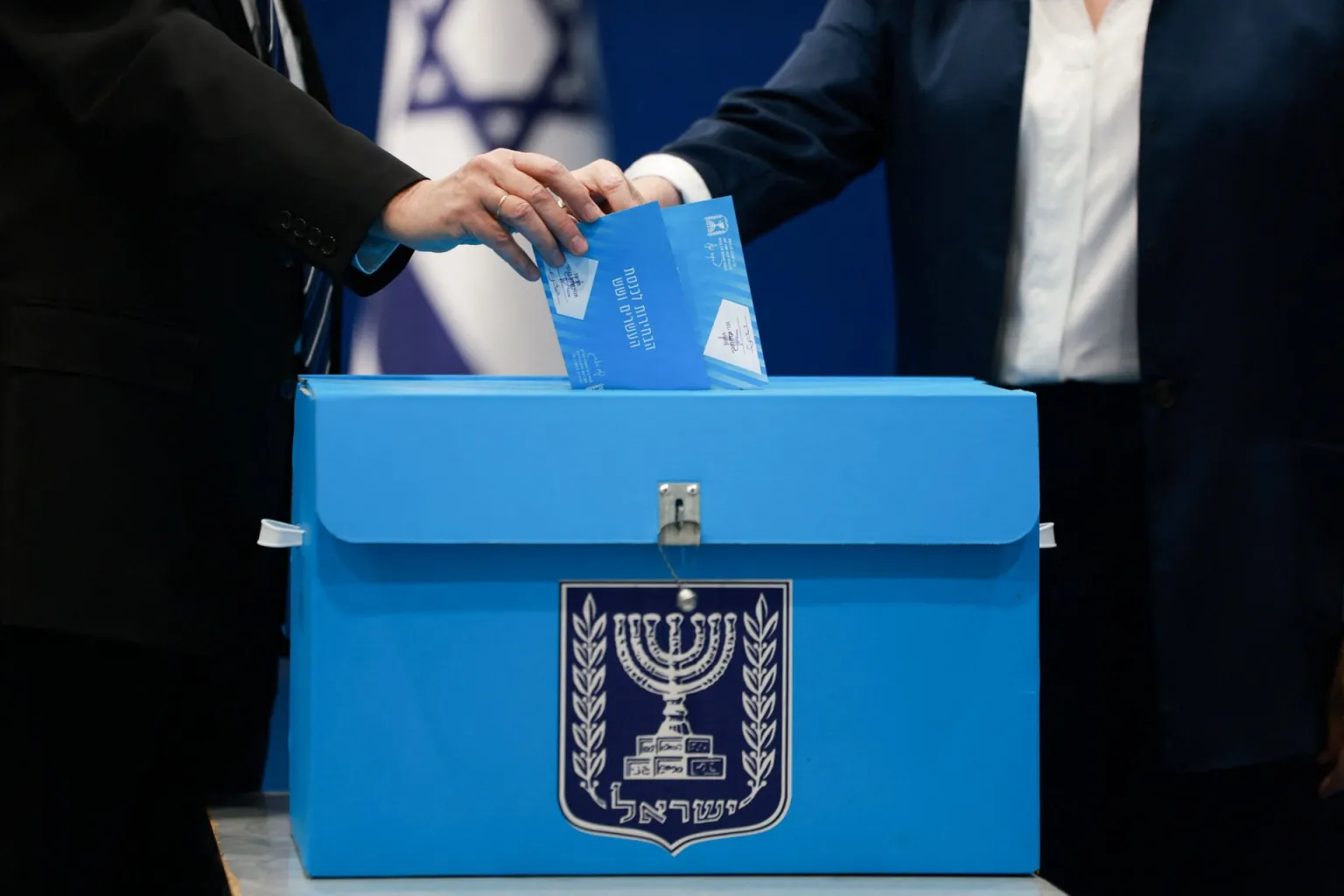
GOOBJOOG NEWS | JERUSALEM: Israeli Prime Minister Benjamin Netanyahu and opposition leader Gadi Eisenkot have both vowed to form a government after an election marked by record-high voter participation left neither camp with a parliamentary majority, raising the prospect of prolonged political uncertainty.
The vote, Israel’s first since the October 7, 2023 Hamas attack, delivered a closely divided parliament, with exit polls projecting around 51 seats each for Netanyahu’s right-wing bloc and Eisenkot’s opposition alliance, short of the 61 needed to govern.
The election was widely seen as a referendum on Netanyahu’s leadership following years of political divisions, the devastating war in Gaza and military confrontations across the Middle East.
But the most striking development was a surge in turnout among Arab Israeli voters, whose parties were projected to win between 17 and 18 seats, potentially giving them a decisive role in determining Israel’s next government.
Netanyahu, 77, appeared before supporters in Jerusalem, calling for a united right-wing government but stopping short of declaring victory.
He also renewed his focus on Iran, suggesting that Israel could pursue further military action alongside the United States.
“Israel has a unique opportunity with our partner President Trump to forever eliminate the existential threat of Iran,” Netanyahu said.
Eisenkot, a former military chief who has emerged as Netanyahu’s main challenger, accused the prime minister of seeking to exploit national security concerns to remain in power.
“Netanyahu, don’t you dare use Israel’s security for your political needs,” Eisenkot told supporters in Tel Aviv.
He said the election showed that Israelis wanted political change and urged Netanyahu to accept the result.
The contest has exposed deep divisions over Israel’s political direction, particularly the influence of far-right parties, the treatment of Palestinians and the future of the country’s democratic institutions.
Although Eisenkot supported Israel’s military offensive in Gaza following the October 2023 attack, he has campaigned on promises to reduce domestic political tensions and curb violence by extremist settlers in the occupied West Bank.
His prospects of forming a government could depend on support from Arab lawmakers, despite his earlier refusal to include Arab parties in a governing coalition.
Mansour Abbas, a prominent Arab Israeli political leader, said Netanyahu’s right-wing bloc had suffered a significant setback and indicated a willingness to cooperate with Eisenkot.
Arab parties could potentially support a minority government without formally joining it, although such an arrangement would face considerable political obstacles.
Far-right politician Itamar Ben Gvir, meanwhile, warned Netanyahu against forming a unity government with Eisenkot, underscoring the divisions within Israel’s political right.
Turnout reached nearly 78 percent, the highest since 1999, reflecting the stakes of an election held amid international criticism of Israel’s military operations and growing tensions over the occupied Palestinian territories.
Netanyahu also faces domestic corruption proceedings and an International Criminal Court arrest warrant over alleged crimes connected to the Gaza war.
Despite the opposition’s gains, the election has produced no clear path to power for either side.
With coalition negotiations expected to be difficult, Israel could face weeks of political bargaining or another election if neither leader can assemble a parliamentary majority.
Additional reporting by agencies.