
Netanyahu Rejects Reliance on Arab Parties as Israeli Election Ends in Deadlock
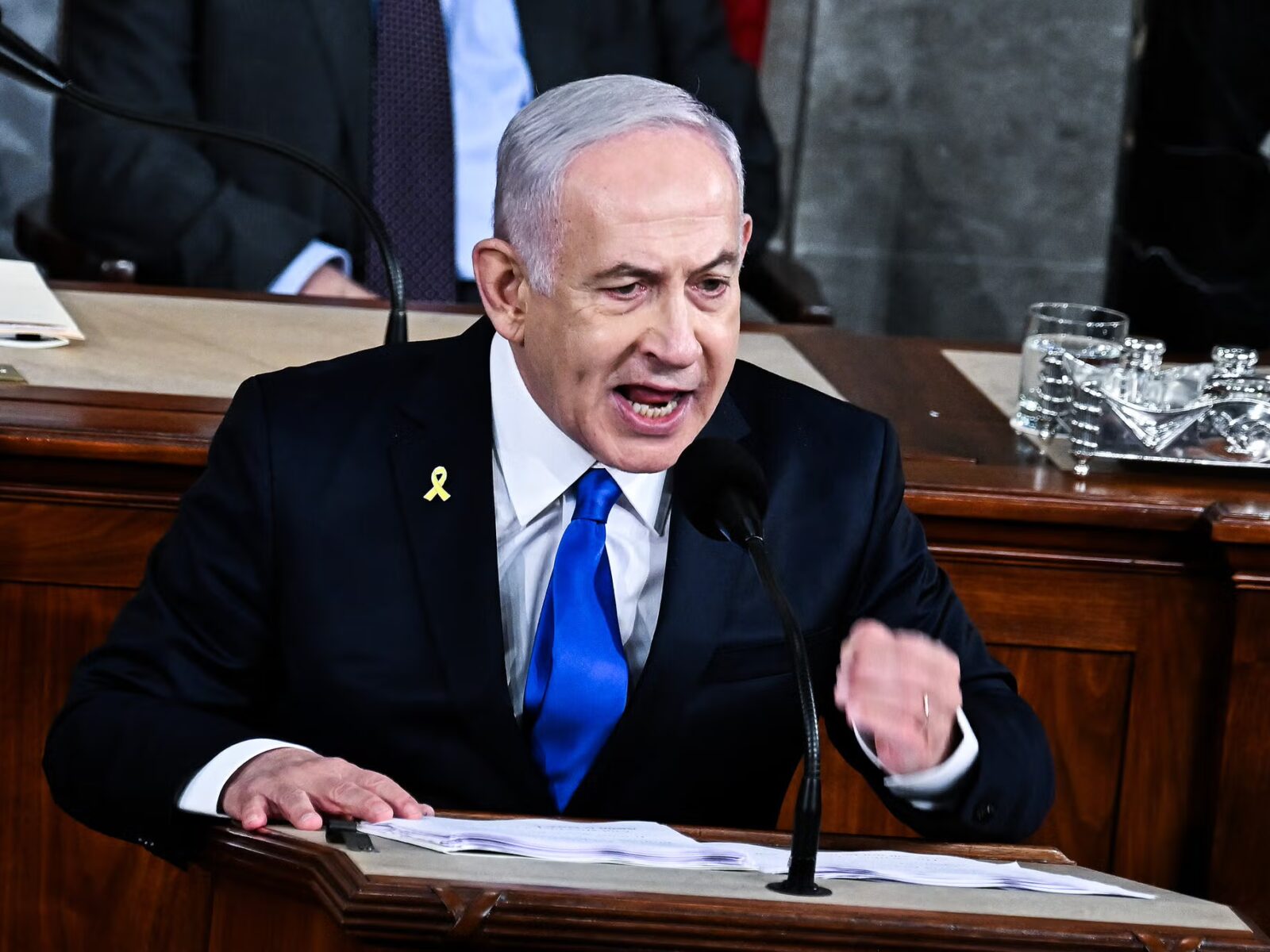
GOOBJOOG NEWS | JERUSALEM: Israeli Prime Minister Benjamin Netanyahu has rejected the prospect of relying on Arab parties to form a government, calling such cooperation “a disgrace and a shame”, as exit polls suggest neither his political bloc nor the opposition has secured a parliamentary majority.
Netanyahu’s stance could complicate efforts to form Israel’s next government, with preliminary projections showing both major political camps falling short of the 61 seats needed for a majority in the 120-member Knesset.
Exit polls put Netanyahu’s right-wing bloc at around 50 seats, while the opposition led by former military chief Gadi Eisenkot was projected to win 52 to 53. Arab-led parties were expected to secure 17 to 18 seats, potentially giving them significant influence over the coalition negotiations.
The results leave Netanyahu facing a political dilemma: he needs additional parliamentary support to remain in power but has ruled out relying on Arab parties, whose backing could prove crucial if other potential partners refuse to join his coalition.
His opposition reflects a longstanding divide in Israeli politics over the role Arab lawmakers should play in government formation. Although Arab citizens account for roughly one-fifth of Israel’s population and elect representatives to the Knesset, Arab-led parties have often been excluded from governing coalitions, particularly by right-wing parties.
The issue has precedent. In 2021, the United Arab List, known as Ra’am, became the first independent Arab party to join an Israeli governing coalition. Its participation helped a diverse alliance of parties end Netanyahu’s consecutive 12-year tenure as prime minister. That government collapsed in 2022, allowing Netanyahu to return to office at the head of a right-wing and religious coalition.
The opposition now faces its own challenge. Even if Arab-led parties are willing to support an alternative government, opposition groups must overcome their ideological differences and agree on a coalition or another arrangement capable of commanding parliamentary support.
Israel’s proportional representation system makes coalition-building central to government formation, as no single party has secured an outright parliamentary majority in recent decades. A party leader can therefore struggle to form a government even when their party wins the largest number of seats.
The election comes amid deep divisions over Netanyahu’s leadership and Israel’s security and regional policies following the Hamas-led attacks of October 7, 2023, and the ensuing war in Gaza.
The exit-poll figures remain provisional, and the final results will determine the balance of power in parliament. If neither side can assemble sufficient support, Israel could face prolonged negotiations or another election.
Netanyahu’s refusal to rely on Arab parties has emerged as a central obstacle in the struggle to form the next government, even as those parties could hold considerable leverage in a closely divided parliament.
Additional reporting by agencies.