
Opposition Bloc Unveils Alternative Electoral Roadmap Amid Somalia’s Political Deadlock
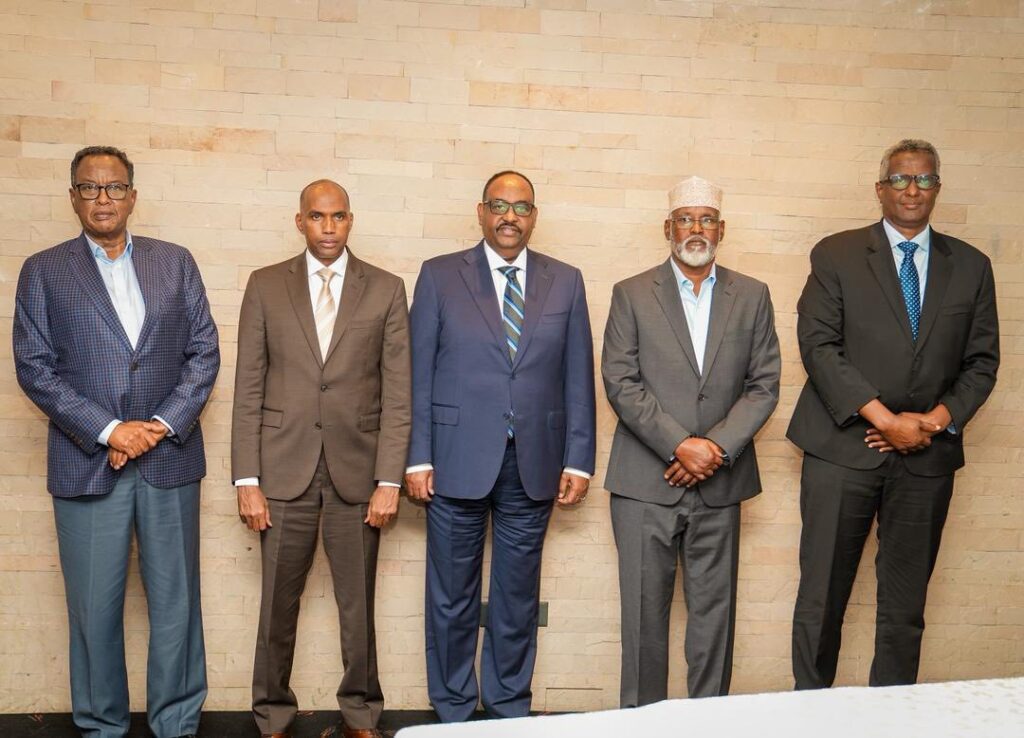
GOOBJOOG NEWS|MOGADISHU: An opposition coalition comprising Puntland, Jubbaland and allied political actors has unveiled a new electoral framework aimed at breaking Somalia’s ongoing political impasse over the country’s future election model.
The proposal, presented during a meeting of the Golaha Mustaqbalka (Future Council) attended by representatives of the international community, including the United Nations, European Union, United States and United Kingdom, outlines what its architects describe as an “Expanded Indirect Election” system that combines wider public participation with Somalia’s longstanding 4.5 clan power-sharing arrangement.
According to details of the proposal obtained following the meeting, the opposition-backed framework seeks to establish a constituency-based electoral system in which citizens would directly vote for parliamentary representatives within designated electoral constituencies known as SEEJO, while maintaining the clan allocation formula that has underpinned Somali politics for more than two decades.
The proposal comes amid growing disagreement between the Federal Government and opposition stakeholders over the country’s electoral direction. President Hassan Sheikh Mohamud’s administration has been pushing for a transition to a one-person-one-vote system based on political parties, while Puntland, Jubbaland and several opposition figures have argued that key constitutional, political and security conditions necessary for such a transition have not yet been met.
Under the new proposal, elections would be held in four districts within each federal member state, with voting centres primarily located in regional capitals. Special arrangements have also been suggested for areas where authorities lack full territorial control, including parts of Lower Jubba and the northern regions.
A central feature of the plan is the creation of a joint national electoral management structure bringing together representatives of the Federal Government and Federal Member States. The proposed commission would oversee all stages of the electoral process and make decisions through majority voting.
The framework also calls for the abandonment of political associations and parties registered under the current government’s electoral process, instead proposing that parliamentary representation continue to be allocated through the 4.5 formula, with voters registering and casting ballots within constituencies linked to their clan-based representation.
Supporters of the initiative argue that it offers a practical middle ground between Somalia’s previous indirect elections and the government’s ambition for universal suffrage, expanding public participation while avoiding the logistical and security challenges associated with nationwide direct elections.
The proposal further outlines a 42-day electoral timetable beginning with voter registration, candidate verification and campaign activities before culminating in a nationwide voting day and rapid resolution of electoral disputes through the Supreme Court.
The opposition bloc has also proposed using the model to conduct long-delayed elections in Hirshabelle and Galmudug within three months, before completing federal-level elections within six months.
The unveiling of the roadmap highlights the widening debate over Somalia’s political future as stakeholders remain divided on how to manage the country’s democratic transition. While the Federal Government has maintained its commitment to direct elections through political parties, opposition leaders continue to advocate for a consensus-based model that preserves the involvement of federal member states and existing power-sharing arrangements.
International partners have repeatedly called for dialogue and agreement among Somali stakeholders, warning that broad political consensus will be essential to ensuring the legitimacy and stability of any future electoral process.
The Federal Government has not yet publicly responded to the proposal.