
Ruto Presses For Africa’s Role in Global Finance and AI at G7 Summit in France
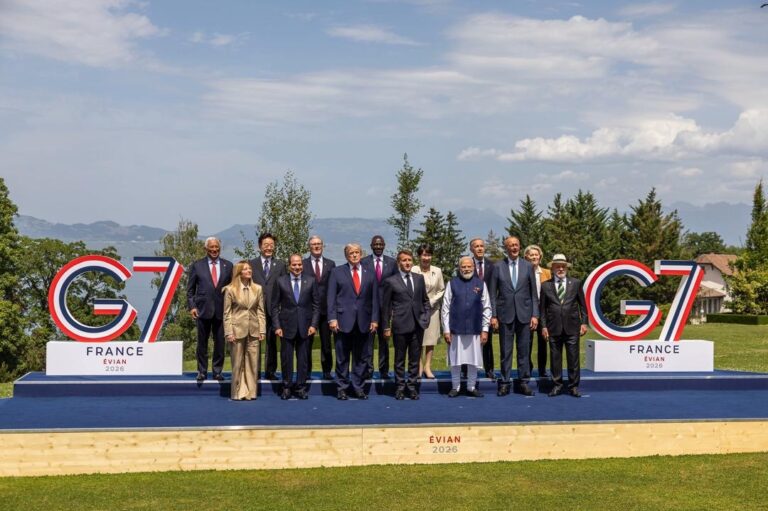
GOOBJOOG NEWS | ÉVIAN-LES-BAINS, France: Kenyan President William Ruto has said that African leaders expect concrete progress on access to affordable financing and a greater role in shaping artificial intelligence, as the continent seeks a stronger voice in decisions affecting the global economy.
Speaking on the sidelines of the Group of Seven (G7) summit in the French resort town of Évian-les-Bains, Ruto said discussions with leaders of the world’s major economies had created an opportunity to advance long-standing African calls for reforms to the global financial system.
“I am very clear that we will leave here with, number one, our position having been understood and, number two, having concrete proposals on how Africa can access concessional resources,” Ruto said.
The Kenyan leader is among a select group of invited heads of state attending the summit, where discussions have focused on global economic stability, debt pressures facing developing countries, climate finance, energy security, migration and the rapid expansion of artificial intelligence.
Ruto said Africa’s growing population, renewable energy resources and expanding consumer markets position the continent as a key partner in addressing global challenges ranging from climate change and food insecurity to labour shortages and energy transition.
“Africa can contribute its assets to global growth. Whether it is energy transition, whether it is food security, whether it is labour mobility, or whether it is building a bigger market, Africa will have a say,” he said.
His remarks come as African governments continue to push for reforms to international financial institutions, arguing that many countries face high borrowing costs despite having some of the world’s greatest development and investment needs. Several African leaders have called for changes at institutions such as the International Monetary Fund and the World Bank, as well as greater representation in global governance structures.
The debate has gained urgency as governments across Africa struggle to balance development spending with rising debt-servicing costs, while also financing climate adaptation projects.
African nations contribute only a small share of global greenhouse gas emissions but are among those most vulnerable to climate-related shocks such as droughts, floods and food insecurity.
Ruto also sought to position Africa at the centre of the emerging artificial intelligence revolution, saying the continent should help shape the technologies and regulations that will influence future economic growth.
“Africa is not going to be merely a consumer. Africa is going to write the rules and is going to be co-creators on how artificial intelligence drives the next industrial and global revolution,” he said.
The comments reflect growing concern among African policymakers that the continent risks being left behind in the AI race despite its young population and rapidly expanding digital economy. Recent studies have highlighted the limited representation of African languages and datasets in AI systems, prompting calls for greater investment in local innovation and digital infrastructure.
For East Africa, the discussions carry particular significance as countries including Kenya, Rwanda and Tanzania seek to attract investment in technology, renewable energy and manufacturing sectors while expanding their role in global supply chains.
The summit is also taking place against a backdrop of wider geopolitical and economic uncertainty, including conflicts affecting energy markets, concerns over global trade imbalances and growing competition among major powers for influence in the Global South. G7 leaders are expected to discuss measures aimed at easing debt pressures on developing countries and strengthening cooperation on emerging technologies.
While no major agreements have yet been announced, African leaders attending the summit say the outcome will be judged by whether discussions translate into practical measures that improve access to financing, support economic growth and give developing nations a greater role in shaping the rules of the global economy.