
Somali President Says Government Is Winning War Against Al-Shabaab Despite Territorial Setbacks
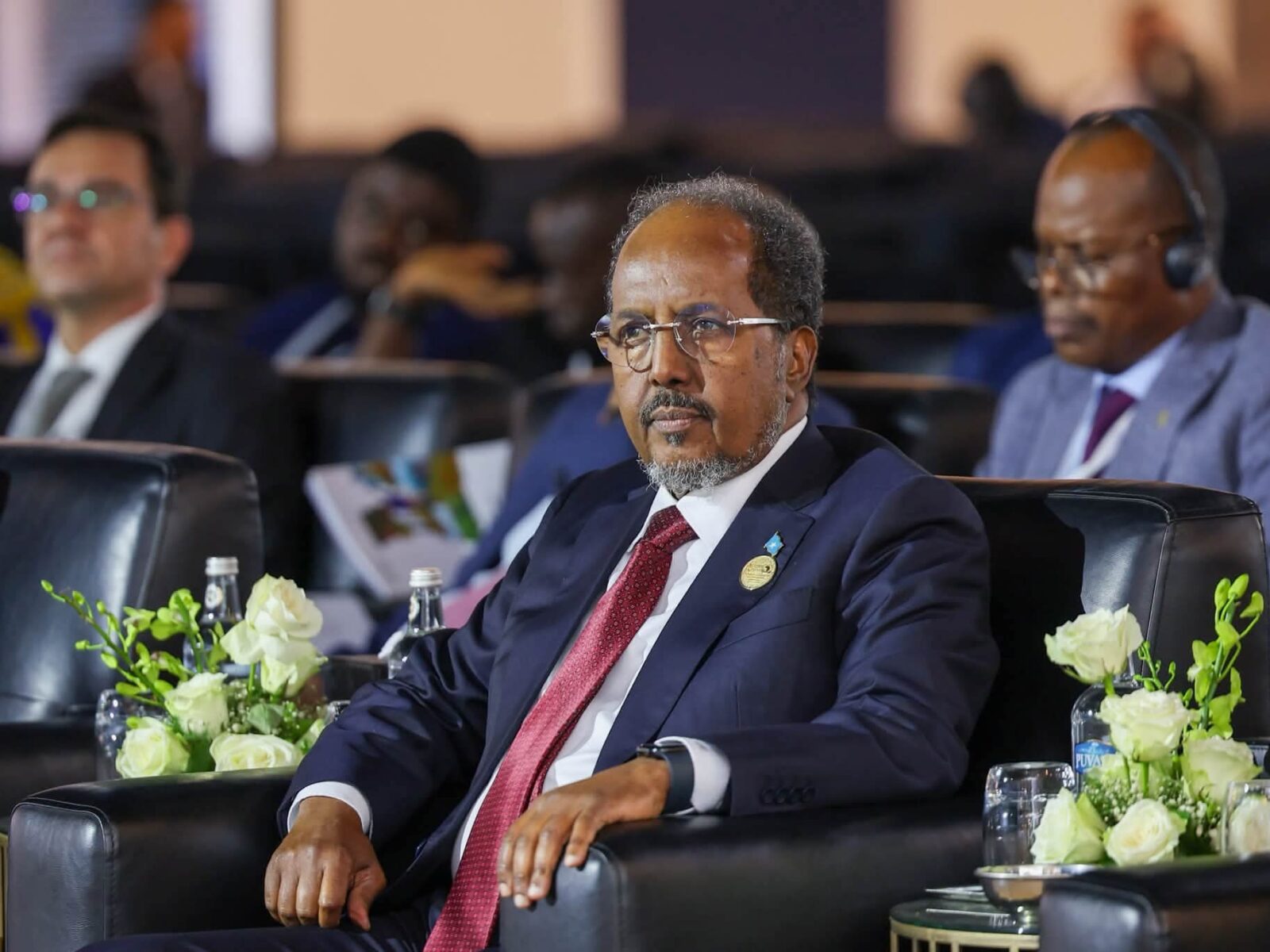
GOOBJOOG NEWS: Somali President Hassan Sheikh Mohamud has defended his government’s military campaign against Al-Shabaab, saying the militant group has weakened despite regaining some territory, while warning that youth unemployment, poverty and limited economic opportunities continue to expose young people to recruitment.
In an interview with Sky News, Mohamud said the government remained confident of defeating the Al-Qaeda-linked group, arguing that territorial setbacks were part of a prolonged conflict and did not necessarily indicate that the overall campaign was failing.
“This is a war. Two things have to be differentiated: the war and the battlefield,” Mohamud said. “In a battlefield, you lose, you gain.”
The president said government forces had lost some positions but maintained control over most districts previously recovered from Al-Shabaab. He identified two districts as having been recaptured by the militants and said government forces were working to regain them.
Mohamud also argued that Al-Shabaab had lost senior leaders and significant territory compared with its strength four or five years ago.
“Al-Shabaab is not as strong as they were four or five years ago. They are not. They are very weak now,” he said, adding that government forces would continue pressuring the group until it was defeated.
His assessment comes as Somalia continues to rely on its national security forces, supported by international partners, to confront the insurgency, which has fought successive governments for nearly two decades.
Three-Pronged Strategy Against Al-Shabaab
Mohamud said his government was pursuing a three-pronged strategy combining military operations, ideological engagement and efforts to disrupt the group’s revenue collection.
He described military action as the principal component but said the government also needed to challenge the group’s ideology and prevent it from collecting money from the Somali public.
“Al-Shabaab is an ideology-based organisation. So we have to fight with them ideologically,” he said, adding that the government also needed to stop the group from collecting revenue from Somali citizens.
Al-Shabaab has maintained its insurgency through attacks on security forces and civilians, territorial control in parts of southern and central Somalia, and the collection of taxes and other revenues from businesses and communities.
The president acknowledged that military operations alone would not resolve the problem, pointing to the need to weaken the group’s financial base and ideological influence.
He also highlighted the gradual transfer of security responsibilities to Somali forces as African Union peacekeeping deployments are reduced.
Mohamud said Somalia was still focused primarily on its internal security and was not yet in a position to provide security assistance to other countries.
Youth Vulnerability Raises Recruitment Concerns
The president identified the country’s young population as one of his biggest concerns, saying more than 70% of Somalis were under the age of 30.
He warned that the generation could become an asset for national development or a source of future instability if the government failed to provide sufficient opportunities.
“So either they are going to be an asset for the future or they can be a time bomb,” Mohamud said, stressing the urgency of creating opportunities for young people.
Asked about Al-Shabaab’s recruitment of teenagers, including young people reportedly recruited as early as age 15, Mohamud said poverty and limited employment prospects made some youths vulnerable to the group.
He cited payments of about $30 a month for unmarried recruits and $70 for married recruits, illustrating the economic pressures facing young people in vulnerable communities.
The government, he said, was seeking to address the problem through microfinance, employment creation, vocational training and support for small businesses.
Mohamud said the construction industry could provide opportunities for young people who lacked specialised skills, while government contracts for information technology, logistics and other services could help young entrepreneurs establish businesses.
He also pointed to the Somali Development and Reconstruction Bank and commercial banks as potential sources of microcredit for young people with business ideas.
However, he acknowledged that limited government resources remained a major obstacle to expanding these initiatives.
Education and Employment as Long-Term Priorities
Mohamud said rebuilding public education had been a priority since his first term in office, when the government sought to expand access to public schools and reopen public university education.
He said the government had previously set a target of returning three million students to school but had yet to achieve it.
The president argued that education, employment and economic development were essential to preventing young people from being drawn into armed groups.
He also urged international partners to align their assistance with Somalia’s priorities, saying the country needed support that strengthened its institutions and expanded economic opportunities.
Mohamud said Somalia’s needs should guide international assistance rather than priorities determined exclusively by foreign governments or organisations.
President Criticises Aid Dependency
The interview also addressed the impact of reductions in humanitarian assistance, including concerns over the closure or scaling back of health and nutrition facilities.
Mohamud acknowledged that cuts could initially create a shock for vulnerable communities but argued that long-term assistance should focus on strengthening people’s ability to support themselves.
He criticised what he described as a dependency created by some aid programmes, saying cash transfers and food assistance should be accompanied by investment in livelihoods, skills and productive activities.
“One of the problems that I’m seeing with the United Nations support, not United Nations aid, the whole aid industry, whether it’s the United Nations or otherwise, is that it creates a dependency,” he said.
The president argued that people needed opportunities to engage in farming, crafts and other income-generating activities rather than remain dependent on periodic assistance.
“What’s required is building the capacity of human,” he said, arguing that development programmes should help people establish sustainable livelihoods instead of relying indefinitely on food aid or financial handouts.
His comments came as Somalia continued to face overlapping humanitarian pressures, including displacement, food insecurity and climate-related shocks.
Mohamud also highlighted the difficulties Somalia faces in accessing international climate financing, despite the country’s exposure to recurrent droughts and floods.
He said unpredictable rainfall and increasingly severe climate shocks had undermined livelihoods in rural communities, compounding the economic challenges that contribute to displacement and vulnerability to recruitment.
The president’s remarks underscored the link between Somalia’s security campaign and its broader development challenges, with poverty, limited education and insufficient employment opportunities remaining major obstacles to lasting stability.