
Somalia and Uganda Expand Cooperation on Labour, Trade, Aviation and Security
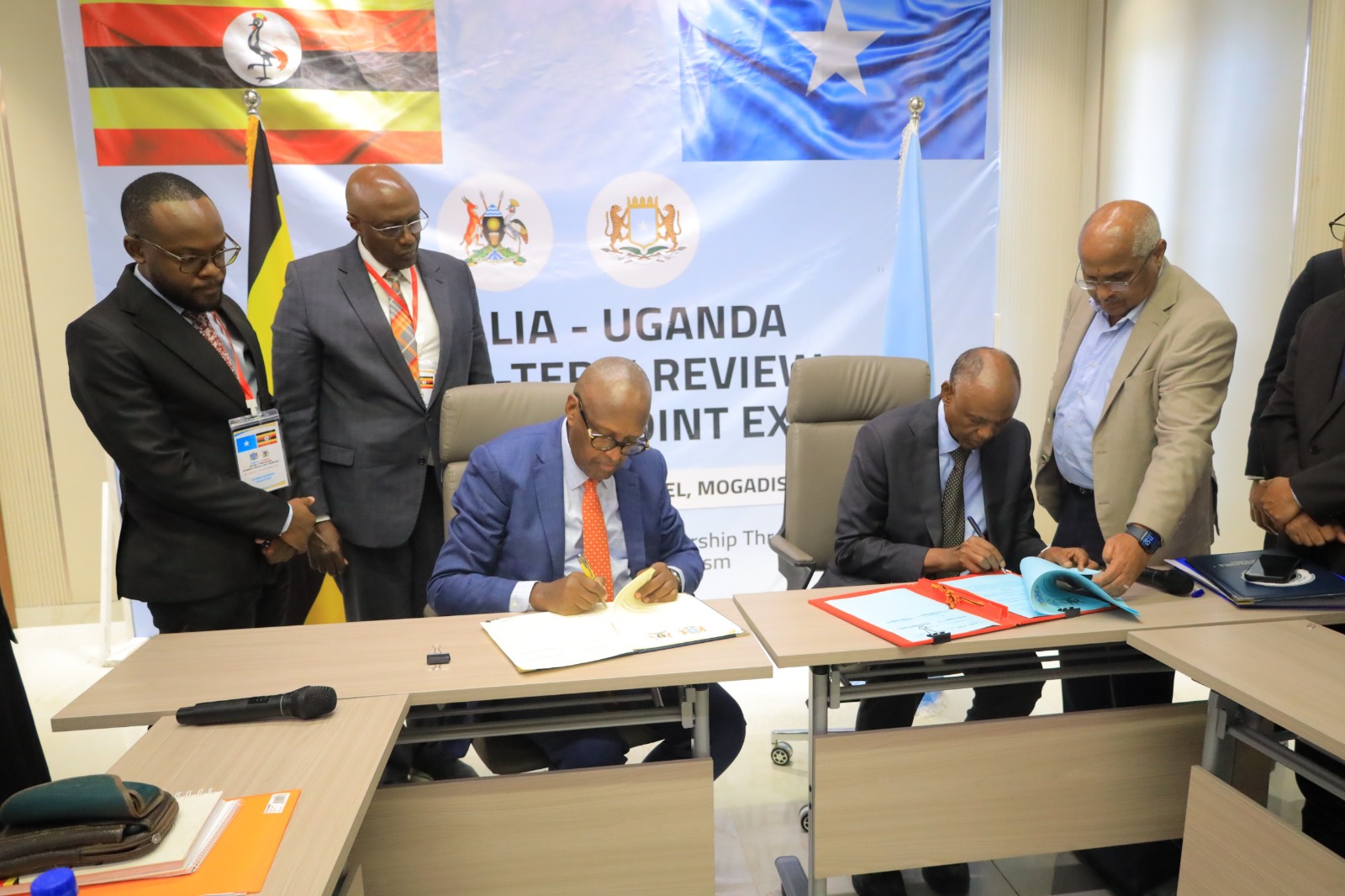
GOOBJOOG NEWS|MOGADISHU: Somalia and Uganda have agreed to broaden cooperation on labour, trade, investment, civil aviation and security following a review of existing bilateral agreements.
The two governments signed a labour agreement regulating recruitment, employment contracts and workers’ rights. It seeks to address complaints involving unpaid wages, withheld passports, employment without written contracts and disputes over work permits.
The review, conducted through the Somalia–Uganda Joint Permanent Commission, also covered defence, immigration, education, health, customs, statistics and product quality standards.
Under the implementation timetable, arrangements to establish a Joint Investment and Business Council are due to be completed by November 30. Investment promotion agencies from both countries are also expected to hold regular meetings to assess progress.
The two sides agreed to submit a revised air services agreement for legal review ahead of a planned signing in December. The agreement is intended to support passenger travel and trade while addressing operational challenges faced by Uganda Airlines in Somalia.
On defence, an agreement covering military training and education is scheduled to be finalised by December 30. The countries also plan to establish a joint defence committee, with Somalia expected to nominate its representatives.
At an event hosted by Uganda’s ambassador to Somalia, Prof. Sam Turyamuhika, President Hassan Sheikh Mohamud pledged government support for Ugandan investors and businesses seeking opportunities in Somalia.
Uganda has long supported Somalia through military training and participation in African Union security operations. The latest agreements seek to expand that relationship by strengthening economic ties and creating opportunities for workers, businesses and investors.
Implementation remains a central challenge. The review identified earlier commitments that remain outstanding, putting pressure on both governments to translate the new deadlines into effective worker protections, functioning agreements and increased trade.