
Somalia Faces Deepening Political Crisis After Collapse of Government-Opposition Talks
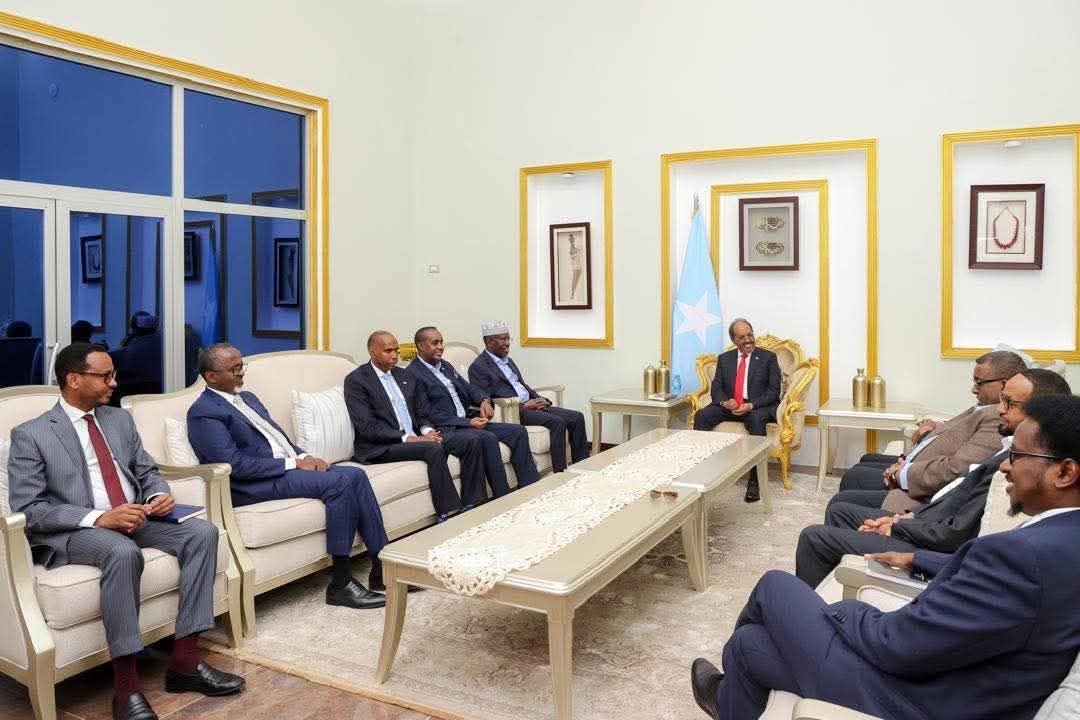
GOOBJOOG NEWS|MOGADISHU: Somalia is facing one of its most serious political crises in recent years following the collapse of talks between the Federal Government and opposition leaders, amid growing tensions over elections, constitutional amendments and the government’s term in office.
President Hassan Sheikh Mohamud said on Friday that the federal government’s mandate will expire on May 15, 2027, arguing that constitutional amendments adopted by the administration define the presidential term as five years.
His remarks came after the expiry of his current mandate on May 15 under the previous Provisional Constitution, the legal framework under which he was elected in 2022.
The statement has intensified an already heated political debate, particularly as opposition groups continue to reject the constitutional changes and the government’s plan to introduce a one-person, one-vote electoral system.
The Federal Government has formally declared that Somalia is entering a transition toward a democratic system based on universal suffrage, arguing that Somali citizens deserve the right to directly elect their leaders and move beyond the long-standing clan-based power-sharing model.
However, opposition leaders have strongly challenged the government’s approach, accusing the administration of pursuing a political term extension and making unilateral decisions on national matters that require broad political consensus.
Following the failure of the recent talks at the Halane compound in Mogadishu, opposition groups called for a new consultative process independent of the federal government in an effort to establish a neutral platform for negotiations.
The current dispute goes beyond ordinary political rivalry and touches on the future structure of governance in Somalia. While the government says it seeks to modernize the country through democratic reforms, opposition figures warn that any major political transition must be built on trust, security and inclusive national agreement.
There are also growing concerns that the political deadlock could negatively affect national security at a time when Al-Shabaab continues to wage attacks in different parts of the country.
Several politicians and analysts have warned that political divisions could weaken ongoing security operations and undermine efforts against armed groups.
The international community has been closely monitoring developments and has repeatedly urged Somali stakeholders to pursue dialogue and reach an inclusive political settlement.
The European Union envoy to Somalia recently described the situation as a “new political phase” for the country, while expressing hope that Somali leaders can reach an agreement on the electoral process and political transition.
Somalia now stands at a critical crossroads. If political leaders succeed in reaching consensus, the country could enter a new democratic chapter. However, if tensions continue to escalate, the risk of prolonged political instability and security challenges is likely to grow.