
Somalia Faces Security Risks As Troop Withdrawals Accelerate Amid Funding Shortfalls
MOGADISHU, Xinhua — Somalia faces growing security challenges as foreign peacekeeping forces accelerate their withdrawal from key strategic positions amid severe funding shortfalls and domestic political tensions, raising concerns over the country’s readiness to assume full responsibility for its security.
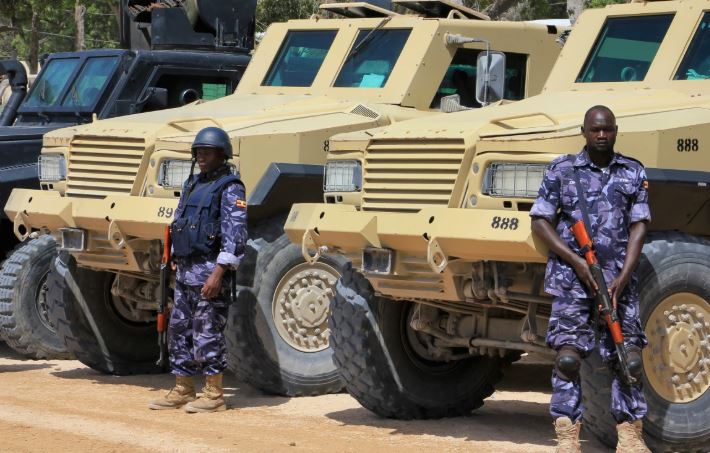
As part of the African Union (AU) transition plan, Uganda has initiated troop withdrawals from four critical positions in southern Somalia, including Sabid-Anole, Barire, Awdhegle, and Buulo-Gaduud.
Military sources confirm that an initial contingent of 109 Ugandan soldiers has departed Mogadishu. However, officials clarify that this initial departure does not signal a total exit from the four strategic locations or the complete withdrawal of Uganda’s forces from the country.
The withdrawal comes at a critical juncture for the Horn of Africa nation. For over a decade, AU forces, with Ugandan troops at the core, have anchored counterinsurgency operations against al-Shabaab, securing Mogadishu and maintaining control over key strategic corridors across southern Somalia.
Security analysts caution that an uncoordinated or premature drawdown could create dangerous power vacuums, leaving liberated areas vulnerable to renewed militant incursions.
Defense experts stress that preventing a resurgence by al-Shabaab will require sustained international financial assistance, dependable logistical infrastructure, and a significant increase in the operational readiness of Somali national security forces.
“In the short term, the concern is the positions around Mogadishu. Lower Shabelle and the bridge towns are the capital’s southern buffer, and the Ugandans have held that ground for years,” said Samira Gaid, a regional security analyst, founder and director of Balqiis Insights, a think tank.
Somali military authorities, however, say national forces will take over the positions once the African Union Support and Stabilization Mission in Somalia (AUSSOM) completes its withdrawal, expected next year, with the AU mission holding them in the interim.
Mohamed Ali Barise, chief of staff of the Somali National Army (SNA), told Xinhua that the handover plan had been prepared in advance and that the SNA would take over the positions.
“The positions vacated by Ugandan troops will be handed over to the SNA, and this plan was established well in advance. Apparently, foreign forces were initially deployed to Somalia to support the national army for a limited period,” Barise said.
However, persistent funding shortages are complicating the transition. Donors facing budget constraints have scaled back financial support for AUSSOM, putting pressure on the mission to expedite the transfer of security responsibilities to Somali forces.
The funding gap is also undermining the mission’s operational capacity, affecting supplies to forward bases, transport networks and routine patrols. The challenge has evolved from delays in troop stipends to increasingly serious logistical constraints, raising questions about whether AU forces can maintain their current operational presence and adequately support Somali troops during the transition.
“The money problem was already there. Initially, it was about stipends; now it has to do with logistics. AUSSOM has never had secure funding, and the gap was already shaping operational decisions,” Gaid said. “But without logistics, it is unclear if the mission can actually survive. Uganda’s decision signals that.”
The December 2027 deadline for the complete withdrawal of foreign peacekeepers is raising sharp questions over whether Somali forces can build sufficient operational capacity and secure the resources needed to take full control before international troops depart.
According to Gaid, the entire transition strategy rests on two core assumptions: that Somali security forces will steadily expand their capabilities to fill the voids left by outgoing peacekeepers, and that international partners will maintain uninterrupted funding and logistical support until that handoff is complete.
“Both those assumptions are questionable now,” Gaid said, pointing to worsening donor fatigue and unresolved political friction in Mogadishu.