
Somalia Marks 72 Years of Its National Flag, Honours Designer Mohamed Awale Liban
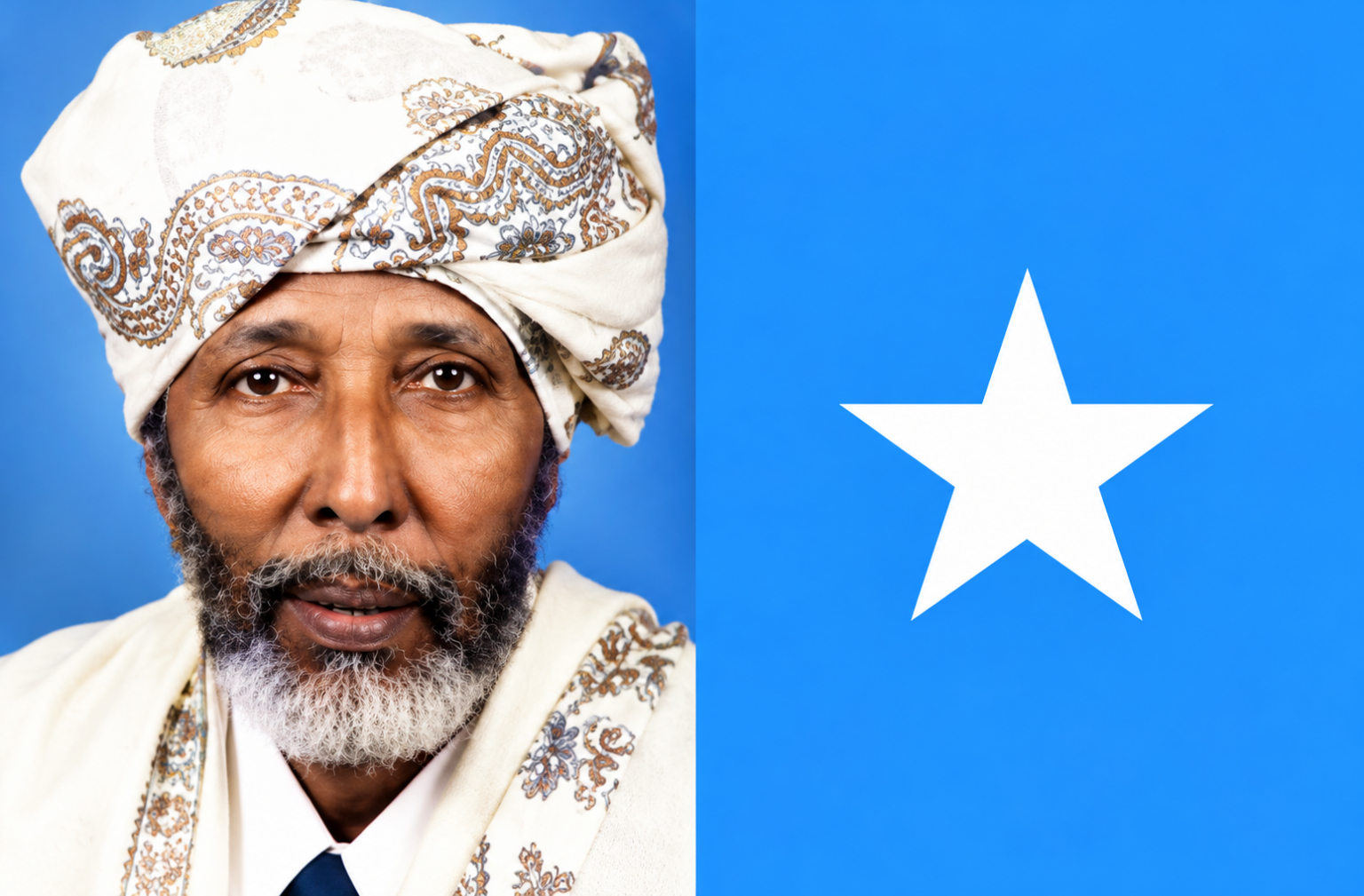
GOOBJOOG NEWS | MOGADISHU: Somalia marks National Flag Day on Monday, commemorating the adoption of its blue-and-white flag 72 years ago and honouring the man whose design became one of the country’s most enduring symbols of independence, national identity and unity.
The flag, adopted on Oct. 12, 1954, was designed by Mohamed Awale Liban, a Somali civil servant whose simple creation, a white five-pointed star against a light blue background, came to represent the aspirations of a people divided by colonial borders but united by a shared identity and the struggle for self-determination.
The anniversary offers Somalis an opportunity to reflect on the country’s journey to independence and the significance of a national symbol that has endured through political upheaval, military rule and decades of conflict.
Liban was born in Galkayo in 1919, at a time when Somali-inhabited territories were administered by different colonial powers. His design emerged during a period of growing nationalist movements, as Somalis sought political independence and the possibility of bringing their territories together under a single national identity.
The flag’s five-pointed white star historically represented five Somali-inhabited territories: the former Italian-administered Somalia, British Somaliland, French Somaliland — now Djibouti — the Somali Region of Ethiopia and Kenya’s Northern Frontier District.
Its adoption in 1954 came six years before independence, when British Somaliland gained independence on June 26, 1960, and the former Italian-administered territory followed on July 1. The two territories united to form the Somali Republic, which adopted the blue flag as its national emblem.
Beyond designing the flag, Liban served in Somalia’s early post-independence administration. Between 1960 and 1967, he worked in the presidency during the administration of the country’s first president, Aden Abdulle Osman, widely known as Aden Adde.
He later served as director-general of government personnel under President Abdirashid Ali Sharmarke from 1967 until 1969, when a military coup ended Somalia’s civilian government and ushered in a new political era.
Following the collapse of Somalia’s central government in 1991, Liban moved to Canada, where he died in Toronto on June 5, 2001, at the age of 82.
More than two decades after his death, the flag he created remains a powerful symbol of Somali identity, displayed at government institutions, international diplomatic missions and national celebrations, as well as by Somali communities around the world.
For a country whose recent history has been marked by conflict and political divisions, National Flag Day remains a reminder of the shared aspirations that shaped the independence movement and the creation of the Somali Republic.
Seventy-two years after its adoption, the blue flag and its white star continue to connect generations of Somalis to the country’s history, while preserving the legacy of the man who gave those aspirations a lasting national symbol.