
Somalia Seeks Solar Energy Investment at Global Summit in India
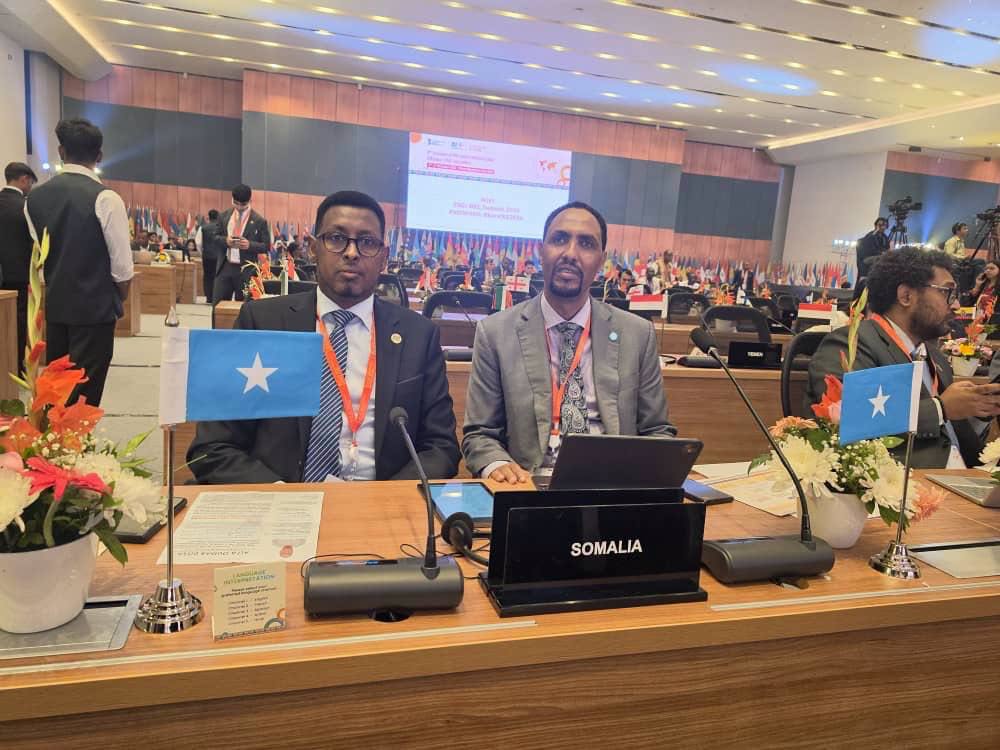
GOOBJOOG NEWS | NEW DELHI: Somalia is looking to expand its renewable energy sector through international partnerships and investment, as governments across Africa seek alternatives to costly and unreliable electricity supplies.
Somalia’s State Minister for Energy and Water Resources, Mohamed Abdullahi Farah, attended the International Solar Alliance (ISA) General Assembly in New Delhi, joining representatives from more than 130 countries. He was accompanied by Somalia’s ambassador to India, Abdullahi Mohamed Odowaa.
The summit comes as solar power gains importance in Africa, where millions of people still lack reliable access to electricity and many economies remain heavily dependent on expensive fossil fuels. For Somalia, with abundant sunshine throughout the year, solar energy offers an opportunity to improve electricity access while supporting businesses, public services and rural communities.
India, which co-launched the International Solar Alliance with France in 2015, has been promoting international cooperation to expand solar power, particularly in developing countries. Opening the gathering, Prime Minister Narendra Modi announced a $200 million Africa Solar Fund to support solar projects and improve access to clean energy across the continent.
Modi also highlighted India’s growing renewable energy capacity, saying the country’s non-fossil fuel power capacity had reached 308 gigawatts, with a target of 500 gigawatts by 2030. He called for wider access to clean-energy technology, investment and technical expertise.
Somalia’s participation provides an opportunity to strengthen cooperation with countries and institutions involved in renewable energy development, at a time when the country faces persistent electricity access challenges and high power costs.
Despite its solar potential, Somalia’s energy sector continues to face infrastructure gaps and limited investment, leaving many households and businesses reliant on costly electricity generated by private operators.
The federal government has increasingly identified renewable energy as part of its broader development priorities, although expanding access will require financing, stronger infrastructure and policies capable of attracting long-term private investment.