
Somalia-UAE Rift Escalates as Officials Exchange Sharp Online Responses
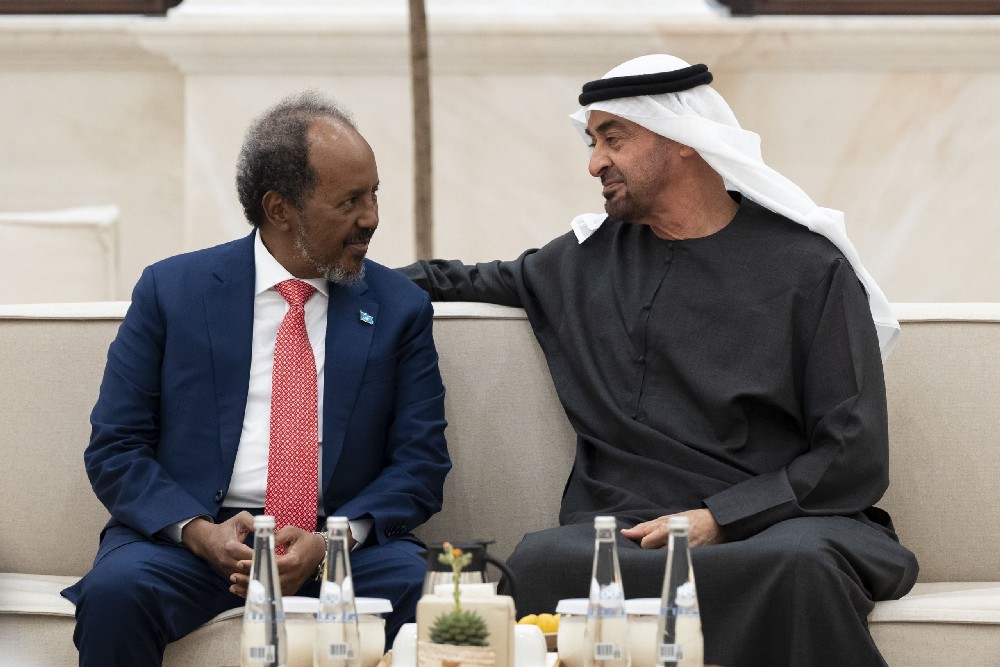
GOOBJOOG NEWS | MOGADISHU: A diplomatic dispute between Somalia and the United Arab Emirates has spilled onto social media, with senior officials from both sides exchanging sharp accusations following a speech by President Hassan Sheikh Mohamud accusing Abu Dhabi of interfering in Somalia’s internal affairs.
The exchange has brought renewed attention to tensions over Somalia’s sovereignty, port agreements, security cooperation and the UAE’s relations with regional administrations, with officials and political commentators weighing in on the dispute.
In his address to the Somali public, President Mohamud accused the UAE of backing political, financial and security interests that he said undermine the authority of the federal government and weaken national institutions.
The president questioned agreements involving the ports of Berbera, Bosaso and Kismayo, arguing that arrangements affecting Somalia’s national assets, security and sovereignty should be handled through the federal government. He also raised concerns about the establishment of military facilities and forces outside the command structure of the national armed forces.
President Mohamud stressed that Somalia had no hostility towards the Emirati people, but said his concerns were directed at the policies of the UAE government. He said Mogadishu remained open to relations based on mutual respect, equality and recognition of Somalia’s territorial integrity.
His remarks drew a response from Anwar Gargash, diplomatic adviser to the UAE president, who described the speech as an attack on the Emirates and questioned the consistency of the Somali president’s positions.
Gargash said the UAE had stood alongside Somalia and its people during difficult periods, warning that internal political disputes could drag the country into wider regional rivalries that would not benefit Somalis.
He argued that relations between the UAE and the Somali people were broader than temporary political disagreements and individual interests, prompting a series of responses from Somali government officials.
Defence Minister Ahmed Moalim Fiqi directly challenged Gargash, questioning his authority to comment on Somalia’s constitutional and political affairs, including the tenure of its president.
Fiqi said Somalia’s parliamentary and presidential elections were governed by the country’s own political and constitutional processes and could not be determined in Abu Dhabi. He also turned the question back on Gargash, asking how long the Emirati official himself would remain in office.
In a separate response, Fiqi accused UAE policies of fuelling conflict, buying political loyalties and undermining the sovereignty of other countries, insisting that Emirati wealth could not be used to fracture Somalia or override the will of its people.
Somali Public Works Minister Ayub Ismail Yusuf also criticised the UAE, accusing it of using financial influence to deepen political divisions and weaken government institutions.
He further alleged that such policies were opening the door to foreign interference, including that of Israel, which he described as a threat to Somalia’s sovereignty and national unity.
Somalia’s State Minister for Foreign Affairs Ali Balcad weighed in on the dispute, focusing on strategic agreements involving Berbera, Bosaso and Kismayo.
Balcad argued that Somalia’s national interests could not be advanced through political fragmentation or agreements with regional administrations that bypass the authority of the federal government. He warned that such arrangements, alongside security cooperation and political support outside federal oversight, could lead to the emergence of parallel institutions and power structures.
Meanwhile, Emirati political analyst and academic Abdulkhaleq Abdulla defended the UAE’s role in Somalia, outlining what he described as the country’s contributions to the Somali government and armed forces.
Abdulla cited military training, capacity-building, financial support for soldiers and assistance to the federal government among the UAE’s contributions to Somalia’s security and stability. He also claimed the UAE had covered rent for the residence of the president’s family, saying his country did not expect gratitude or recognition for its assistance.
The dispute has also triggered personal attacks on social media against Somali officials, particularly Fiqi and President Hassan Sheikh, as the political debate increasingly shifted from diplomatic disagreements to direct criticism of individuals.
The latest exchanges come amid deteriorating relations between Mogadishu and Abu Dhabi following Somalia’s earlier decision this year to cancel agreements with the UAE covering defence, security and port-related cooperation.
The federal government has maintained that agreements affecting Somalia’s sovereignty, security and national interests must be handled through its constitutional institutions, while the UAE and its supporters have defended the country’s longstanding assistance and engagement with Somalia.
The latest public exchanges underscore the deepening diplomatic tensions between the two countries, with the dispute now playing out increasingly through statements and social media posts by officials and political figures.