
Somalia’s Fishing Industry Could Generate Up to $3 Billion Annually, Officials Say
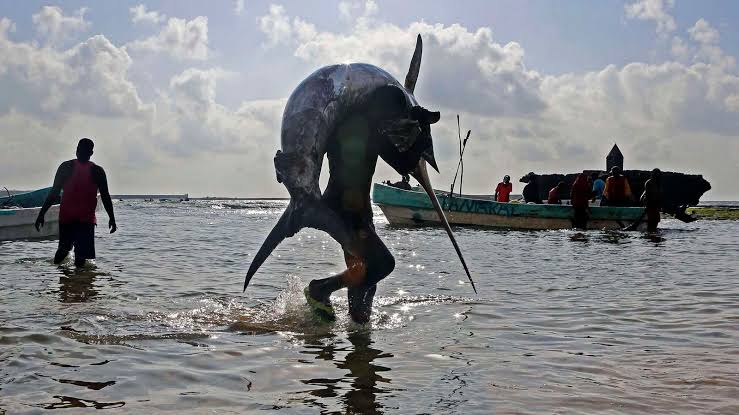
GOOBJOOG NEWS | MOGADISHU: Somalia is producing only a fraction of the fish its waters could yield, leaving a potentially multibillion-dollar industry largely untapped despite years of efforts to develop the country’s fisheries sector.
The country produces about 30,000 tonnes of fish annually, compared with an estimated potential of 600,000 tonnes, according to figures cited in a report by The EastAfrican newspaper.
Abdi Dirshe, director general of the Ministry of Fisheries and Blue Economy, said the gap of roughly 570,000 tonnes represented a major economic opportunity but would require greater investment in fishing equipment, landing facilities, cold storage and processing plants.
He estimated that a fully developed fisheries sector could generate between $1.8 billion and $3 billion in annual revenue and create more than 210,000 jobs.
Somalia has a coastline stretching about 3,333 kilometres along the Indian Ocean and the Gulf of Aden, giving it access to extensive marine resources. Yet limited infrastructure, inadequate equipment and weaknesses in monitoring and protecting its waters have constrained commercial fishing and exports.
Abdullahi Adan, coordinator of the Badmaal Sustainable Fisheries Development Project, said the government’s National Transformation Plan for 2025–2029 prioritised private-sector investment, market development and partnerships between the government and businesses.
Somalia has introduced legislation and policies intended to encourage investment, including laws covering fisheries, investment and food safety, as well as a framework for public-private partnerships. Local companies have also begun investing in fish processing and boat construction, initiatives expected to create jobs and develop skills among young people.
For the industry to reach international markets, however, exporters say improvements in product quality and certification will be essential.
Ali Ibrahim Siyaad, chairman of the Somali Fish Exporters Association, said meeting international standards would help Somali seafood gain access to markets in the United States, China, the Middle East and East Africa.
Security remains another major concern for potential investors. Fisheries expert Omar Abdulle Haili said businesses needed assurances that their workers, vessels and equipment could operate safely.
The challenges extend beyond increasing the volume of fish caught. Developing the sector will also require reliable transport and storage networks, stronger regulation, sustainable management of marine resources and the capacity to prevent illegal fishing.
Somalia has increasingly identified its maritime resources as a potential source of jobs, exports and economic growth, but turning that potential into a functioning industry will depend on sustained investment and effective management of its waters.