
Tigrai TV Hit by Drone Strike amid Renewed Ethiopia Fighting
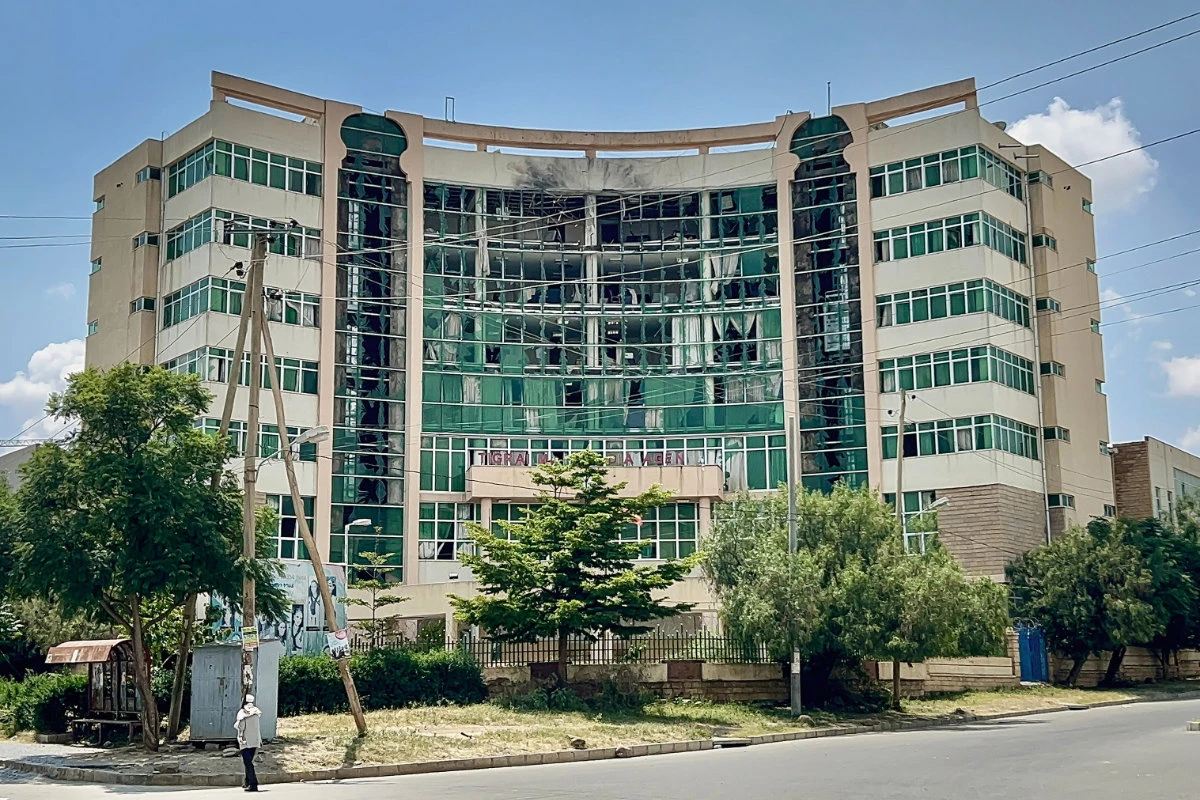
GOOBJOOG NEWS | MEKELLE: A drone strike damaged the headquarters of Tigrai TV in Mekelle on Sunday as fighting between Ethiopian federal forces and Tigrayan fighters intensified, deepening fears that Ethiopia could be sliding back into a wider war.
Journalists at the broadcaster told AFP that the strike hit the building in the morning, damaging parts of the facade and shattering windows. Tigrai TV, which is closely associated with the Tigray regional authorities, went off air following the attack.
It was not immediately clear who carried out the strike, and there were no immediate reports of casualties. The attack came days after Ethiopia’s media regulator indefinitely suspended Tigrai TV and ordered other media organisations not to use or rebroadcast its material, accusing the station of violating media laws and threatening national security.
The fighting has spread beyond Tigray into neighbouring Afar and Amhara regions, with humanitarian and security sources reporting heavy clashes around several towns. In Afar, a humanitarian source told AFP that Tigrayan fighters had taken control of Erebti after fighting involving heavy artillery and were moving towards Afdera, although battlefield claims have been difficult to independently verify.
The renewed violence pits forces aligned with the Tigray People’s Liberation Front (TPLF) against Ethiopia’s federal military and comes less than four years after the Pretoria agreement ended the devastating 2020–2022 Tigray war. That conflict killed an estimated hundreds of thousands of people, with the African Union putting the death toll at about 600,000.
The latest escalation has been accompanied by a communications blackout in Tigray, with internet and telephone services severely disrupted. The restrictions have made it increasingly difficult to independently establish casualty figures, movements of troops or claims about territorial control.
The conflict has also acquired a wider political dimension. The TPLF is among seven Ethiopian armed groups that announced the Ethiopian Peoples’ Forces Alliance for Survival last week, bringing together forces from several regions in opposition to Prime Minister Abiy Ahmed’s government. The alliance includes groups that previously fought on opposing sides of Ethiopia’s conflicts.
Ethiopia’s military chief, Field Marshal Birhanu Jula, has accused foreign powers, including Eritrea, Sudan and Egypt, of backing groups opposed to the federal government. Eritrea has rejected the allegations, while Sudan’s army has described Ethiopia’s accusations as baseless.
The accusations add a regional dimension to the crisis, particularly amid strained relations between Addis Ababa and Asmara and Ethiopia’s long-running interest in securing reliable access to the Red Sea. Eritrea has been wary of Ethiopia’s intentions, while the two countries’ relations have deteriorated since the rapprochement that helped end their border conflict.
The renewed fighting and communications disruptions have revived memories of the previous war for civilians in Tigray, when the region was cut off from much of the outside world and basic services, banking and humanitarian access were severely disrupted.
International concern has also grown as the fighting spreads. The African Union and other international actors have called for restraint and a return to dialogue, while the Pretoria agreement remains the main framework associated with the end of the previous war.
The latest escalation has therefore raised concerns not only about renewed fighting in Tigray but also about the possibility of the conflict drawing in neighbouring regions and external actors, with the humanitarian consequences potentially extending well beyond the immediate battlefronts.