
U.S., Iran Trade Fresh Airstrikes as Trump Announces Hormuz Blockade
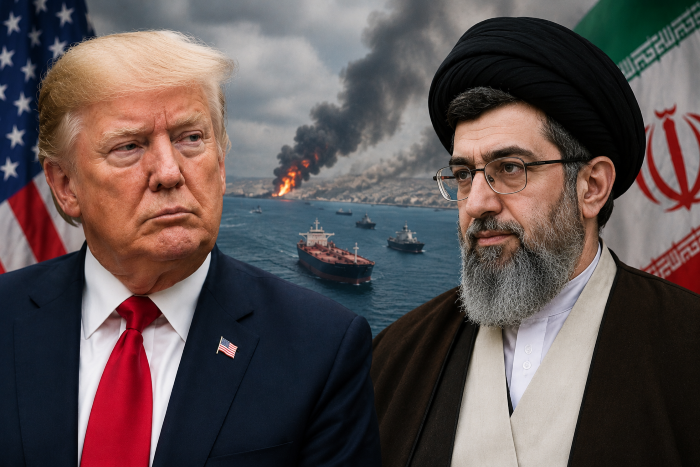
GOOBJOOG NEWS|PERSIAN GULF: The United States and Iran exchanged a fresh wave of air and missile strikes for a third consecutive night on Tuesday, deepening fears of a wider regional conflict after President Donald Trump announced the reinstatement of a U.S. naval blockade targeting Iran and pledged to keep the Strait of Hormuz open to international shipping.
The latest U.S. strikes targeted Iranian military facilities, missile launch sites and command infrastructure near the Gulf coast, including areas around Bandar Abbas, while Iran responded with missile and drone attacks against U.S. interests and commercial shipping in and around the Strait of Hormuz, according to U.S. officials and Iranian state media. The renewed exchanges mark one of the most intense escalations since hostilities resumed earlier this month.
Trump said the United States would reinstate its naval blockade of Iran beginning Tuesday, saying the operation would prevent vessels linked to Iran from accessing international shipping routes while allowing commercial traffic to continue through the Strait of Hormuz. He also announced that Washington would impose a 20% security charge on cargo transiting the strategic waterway, arguing that the United States was bearing the cost of protecting one of the world’s busiest maritime corridors.
Iran condemned the move, insisting that security in the Strait of Hormuz remains its sovereign responsibility and warning that continued U.S. military operations would provoke further retaliation. Tehran has also rejected U.S. demands to publicly guarantee unrestricted passage for shipping through the waterway.
The renewed fighting has already disrupted maritime traffic. Tanker movements through the Strait of Hormuz have fallen to their lowest levels in two months as shipping companies reassess security risks following attacks on commercial vessels and the latest military exchanges. Oil prices rose sharply on fears that prolonged fighting could threaten supplies from the Gulf, through which roughly one-fifth of the world’s seaborne crude oil passes.
The Strait of Hormuz, which separates Iran from Oman and the United Arab Emirates, remains the world’s most important energy chokepoint. Any sustained disruption to navigation through the narrow passage has immediate implications for global oil markets, liquefied natural gas exports from Qatar and international shipping, making the latest escalation a concern far beyond the Middle East.