
An Unlikely Axis: Inside the Growing Alliance Between Al-Shabaab and Yemen’s Houthis
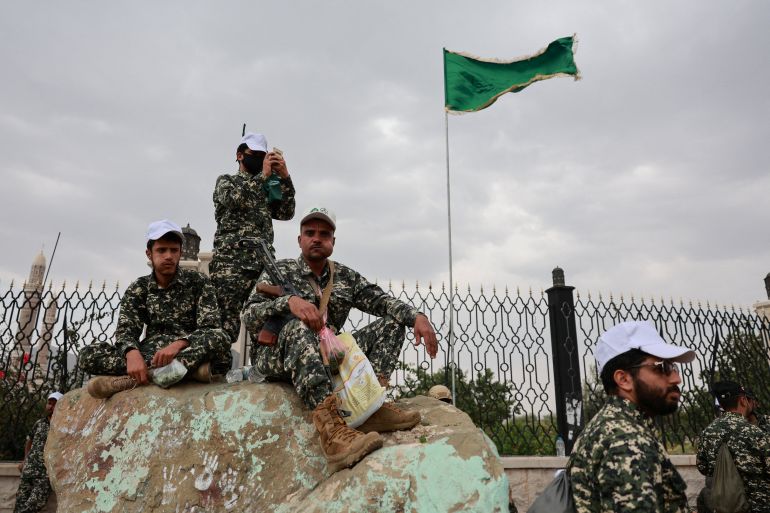
A dangerous convergence between two of the region’s most powerful armed groups is reshaping the security landscape across the Gulf of Aden. Al-Shabaab, the al-Qaeda affiliate fighting to overthrow Somalia’s internationally recognised government, and Yemen’s Iran-aligned Houthi movement have reportedly developed a transactional partnership involving weapons, money, military training and maritime intelligence.
According to an investigation published by The Wall Street Journal on September 2, 2026, the relationship is particularly striking because the two organisations emerged from opposing religious traditions. Al-Shabaab follows an extremist Sunni ideology, while the Houthi movement is rooted in Yemen’s Zaydi Shia community. Their theological differences would ordinarily make close cooperation unlikely.
However, shared hostility toward the United States and Israel—as well as practical military and financial interests—appears to have pushed their ideological divisions aside.The emerging partnership combines two distinct forms of power. Al-Shabaab possesses extensive financial resources accumulated through taxation, extortion and illicit trade but has limited access to advanced military technology.
The Houthis, meanwhile, have gained considerable experience in missile warfare, armed drones, maritime attacks and other sophisticated military capabilities, supported in part by technology and training linked to Iran’s Islamic Revolutionary Guard Corps.This exchange has created a potentially dangerous arrangement: al-Shabaab provides money and possible access to the Somali coastline, while the Houthis supply weapons, technical expertise and specialised military training.
The reported cooperation could consequently transform two largely separate conflicts in Somalia and Yemen into an interconnected security threat extending across the Gulf of Aden and the wider Red Sea region.
Cash, Weapons and a Foothold Across the Gulf
Al-Shabaab is widely regarded by intelligence analysts as al-Qaeda’s wealthiest affiliate. The group has developed a sophisticated financial system that extracts revenue from businesses, transport routes, agricultural production and communities under its influence. Some assessments estimate that the organisation generates at least $100 million annually.
Despite this financial strength, al-Shabaab has traditionally relied on rifles, explosives, mortars and vehicle-borne bombs rather than advanced military systems. Cooperation with the Houthis could help close that technological gap by giving the group access to armed drones, guided missiles, advanced communications equipment and specialised training.For the Houthis, the partnership offers both financial and strategic advantages.
Revenue from weapons sales could support their operations in Yemen, while cooperation with al-Shabaab could provide access to the opposite coastline of the Gulf of Aden. Such access would give the Houthis additional opportunities to monitor maritime traffic and threaten vessels associated with the United States, Israel and their allies.The Gulf of Aden connects the Arabian Sea with the Red Sea through the Bab al-Mandab Strait and forms one of the world’s most important maritime corridors.
Any armed network capable of operating from both the Yemeni and Somali coasts would pose a wider threat to commercial shipping, energy supplies and international naval operations. What began as separate conflicts in Somalia and Yemen could therefore evolve into an interconnected security crisis with consequences far beyond the region.
The Man Who Connected the Two Organisations
One of the central figures in building the relationship was reportedly Jibril Yahya Ali, a 38-year-old Somali national known as “Gacaamey” or “One-Armed.” Jibril had studied veterinary medicine in Yemen and later established several businesses in Mogadishu, including an import-export company, a currency exchange and a charitable organisation.Behind these civilian activities, he allegedly served as al-Shabaab’s principal intermediary with senior Houthi commanders in Sana’a.
His commercial operations and knowledge of both Somalia and Yemen placed him in a strong position to arrange payments, purchase weapons and organise their movement across the Gulf of Aden.Jibril was killed on February 12 near Al-Ghaydah in eastern Yemen when a United States airstrike struck his vehicle.
Reports indicate that the operation used a non-explosive missile designed to kill a specific target while limiting damage to people and property nearby.His death removed a significant intermediary, but it did not appear to dismantle the network he helped create. Reporting indicates that al-Shabaab appointed a replacement, suggesting that cooperation with the Houthis had already become institutional rather than dependent on one individual.
Another alleged intermediary was Ahmed Elmi Samatar, whom al-Shabaab reportedly sent to Yemen in 2024 to assist Jibril. Samatar was detained in Mukalla later that year by forces aligned with Yemen’s internationally recognised government. He was subsequently returned to Somalia through a prisoner exchange involving the Houthis, according to reports.
A Maritime Smuggling Network Hidden Behind Civilian Trade
The weapons pipeline allegedly relies on commercial companies and established smuggling routes to conceal military cargo as ordinary civilian goods. Shipments are moved through Yemeni ports, including Mukalla, before being transferred to speedboats, wooden vessels and fishing boats capable of crossing the Gulf of Aden without attracting significant attention.The vessels reportedly approach isolated stretches of Somalia’s northern coastline, where government monitoring remains limited.
The weapons are then transported overland towards areas where al-Shabaab operates, particularly in southern and central Somalia.The use of civilian-looking vessels makes the network difficult to detect. The Gulf of Aden has long been crossed by fishing boats, traders, smugglers and vessels carrying migrants. Weapons shipments can therefore be concealed within the enormous volume of legitimate and illicit maritime traffic moving between Yemen and the Horn of Africa.
The coastal geography also benefits the smugglers. Northern Somalia has an extensive coastline with numerous isolated landing points, while weak maritime surveillance leaves large areas insufficiently monitored. Once a shipment reaches land, existing trafficking networks can move it through remote territory and across internal boundaries.The network demonstrates how legitimate commercial structures can be exploited to support militant operations.
Import-export companies, currency exchanges and charities can provide cover for payments, purchases and the movement of equipment while making it difficult for authorities to distinguish normal business activity from organised arms trafficking.
Al-Shabaab’s Weapons List and the Spread of Drone Warfare
Documents reportedly reviewed by intelligence agencies suggest that al-Shabaab submitted an extensive list of requested weapons to its Houthi contacts. The requested equipment included shoulder-fired antiaircraft missiles, 107-millimetre Katyusha rockets, armed attack drones, antitank guided missiles, Dragunov sniper rifles, machine guns, ammunition and American-manufactured night-vision equipment.
If acquired in significant quantities, some of these weapons could materially change the balance of the conflict in Somalia. Portable antiaircraft missiles could threaten Somali and allied aircraft, while antitank missiles could be used against military vehicles and fortified positions. Night-vision equipment would improve the group’s ability to conduct operations after dark.The transfer of drone technology may present the most serious long-term danger.
Al-Shabaab has already demonstrated its ability to adapt commercially available technology for surveillance and attacks. Access to Houthi expertise could allow it to develop longer-range, more accurate and more destructive systems.More than 100 al-Shabaab members have reportedly travelled to Yemen in rotating groups, often consisting of approximately 30 fighters. In Houthi-controlled areas such as Al-Hudaydah and Sa’dah, they allegedly received instruction in precision shooting, antiaircraft operations, the construction of sophisticated explosive devices and the assembly and operation of first-person-view attack drones.
Houthi instructors have also reportedly travelled to Somalia to train al-Shabaab members directly. This would allow the group to establish local technical teams capable of assembling, repairing and operating drones without continuously sending personnel abroad.The danger extends beyond individual weapons deliveries. Once knowledge of drone construction, explosives and guided weaponry is transferred, it can be reproduced and taught to additional fighters.
The long-term threat therefore lies not only in the equipment acquired by al-Shabaab but also in the technical capacity the organisation may develop.
Somaliland and the Struggle for the Opposite Shore
The partnership has acquired additional geopolitical importance following Israel’s recognition of Somaliland in December 2025. Somalia, the African Union and several regional governments condemned the decision as a violation of Somalia’s sovereignty, while Houthi leaders viewed the development through the lens of their confrontation with Israel.
Somaliland’s location directly across the Gulf of Aden from Yemen gives it considerable strategic value. Berbera possesses a deep-water port and an extended airport runway that could potentially support surveillance aircraft, drones and other military operations. Although the existence and extent of any formal Israeli military presence remain disputed, the possibility has alarmed Houthi leaders.
Houthi leader Abdul Malik al-Houthi publicly warned that any Israeli presence or activity in Somaliland would be considered a military target. His warning demonstrated how diplomatic developments in the Horn of Africa could become entangled with the wider conflict involving the Houthis, Israel and Western powers.
Reports also indicate that a four-member Houthi delegation travelled covertly to Jilib, al-Shabaab’s principal stronghold in southern Somalia, to discuss advanced weapons and broader strategic cooperation. The Houthis have reportedly explored the possibility of deploying coastal radar equipment along Somalia’s shoreline with al-Shabaab’s assistance.
Such systems could allow the Houthis and their partners to collect information about vessels moving through the Gulf of Aden, identify shipping patterns and improve the selection of maritime targets. If established, a network of coastal surveillance systems could expand the Houthis’ reach beyond the Yemeni coastline and make commercial and military vessels more vulnerable.
Al-Shabaab’s Financial Power
The financial resources supporting the relationship largely originate from al-Shabaab’s coercive taxation system. The organisation demands payments from companies, traders, property owners and transport operators, including businesses located in government-controlled territory.It also raises money through checkpoints, agricultural levies, imports passing through the port of Mogadishu and illicit natural-resource networks.
Reports have linked the group to artisanal gold-mining operations in the Cal Madow Mountains of northern Somalia, although the scale of the revenue generated from these activities remains difficult to verify independently.Al-Shabaab’s ability to generate revenue allows it to purchase weapons without depending entirely on foreign donations.
The Houthi relationship consequently gives the organisation a channel through which it can convert its financial strength into more advanced military capability.This combination distinguishes the reported partnership from a traditional alliance based solely on ideological affinity. It functions more like a marketplace in which each side offers what the other lacks: al-Shabaab provides financing and geographical access, while the Houthis offer weapons, technical expertise and experience in drone and missile warfare.
A Growing Counterterrorism Challenge
For Somalia, the consequences could be severe. Armed drones, antiaircraft missiles and improved explosive devices would increase the threat to civilians, government forces and international partners. They could also undermine the Somali government’s efforts to reclaim territory and assume greater responsibility for national security.Portable antiaircraft weapons would present a particular risk to helicopters, transport aircraft and other low-flying military or civilian planes.
More advanced drones could allow al-Shabaab to strike government buildings, military installations and urban areas from greater distances while exposing fewer of its fighters.The relationship could also strengthen al-Shabaab’s maritime capabilities. Although the group has primarily operated as a land-based insurgency, access to Houthi training and coastal surveillance technology could enable it to play a greater role in smuggling, intelligence gathering and attacks connected to the Gulf of Aden.
The deepening relationship has contributed to increased concern in Washington and among regional governments. The United States has intensified its campaign of targeted airstrikes against militant positions in Somalia, seeking to disrupt senior leadership, training facilities and operational networks.Airstrikes may eliminate individual commanders and destroy equipment, but the reported survival of the Houthi–al-Shabaab pipeline following Jibril’s death demonstrates the limitations of a strategy centred on targeted killings.
Once a network becomes embedded in commercial, financial and smuggling systems, removing one intermediary may not be enough to dismantle it.
From Transactional Cooperation to a Regional Alliance
The growing relationship demonstrates how militant organisations can overcome theological and political differences when their material interests converge. Al-Shabaab gains weapons and expertise; the Houthis gain money, influence and potential access to the Somali coast. Neither organisation needs to abandon its ideology for the arrangement to function.
What may have begun as a commercial exchange of cash for weapons now appears to include personnel movements, specialised training, intelligence sharing and strategic coordination. If the reports are accurate, this development represents a shift from occasional cooperation to a more organised partnership.By linking the conflict in Yemen, the insurgency in Somalia and the struggle over maritime security, the emerging alliance threatens to turn the Gulf of Aden into a shared operational theatre.
It also exposes weaknesses in regional maritime surveillance, border control, financial monitoring and intelligence cooperation.Somalia and its international partners will need to address more than al-Shabaab’s fighters on the battlefield. Disrupting the relationship will require monitoring financial transfers, investigating commercial companies, strengthening coastal surveillance and dismantling the smuggling networks operating between Yemen and Somalia.
The threat is no longer confined to territory controlled by al-Shabaab or the Houthis. If drone technology, advanced weapons and coastal surveillance systems continue to spread, the consequences could be felt across the shipping lanes connecting Asia, Africa, Europe and the Middle East.
The alliance may be ideologically unlikely, but its strategic logic is increasingly clear. It has brought together the Houthis’ advanced military capabilities and al-Shabaab’s financial resources and geographical reach, creating a new security challenge on both sides of one of the world’s most important maritime corridors.