
AUSSOM Troop-Contributing Countries Summit Endorses Transition to Somali Security Forces
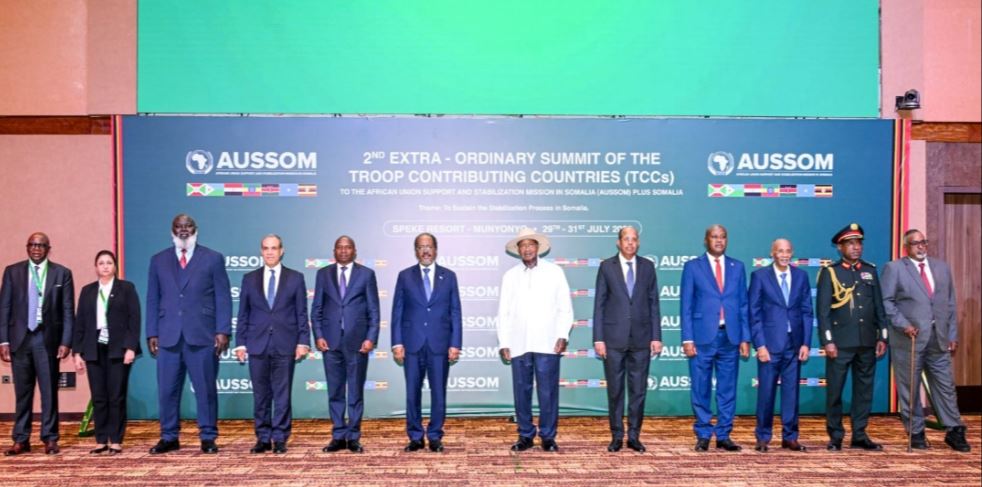
GOOBJOOG NEWS|KAMPALA: Leaders attending the Second Extraordinary Summit of the Troop-Contributing Countries (TCCs) to the African Union Support and Stabilization Mission in Somalia (AUSSOM) have endorsed a phased plan to transfer security responsibilities to the Somali National Armed Forces within the next 18 to 24 months.
The summit, hosted by Ugandan President Yoweri Kaguta Museveni in Kampala on Friday, brought together Somali President Hassan Sheikh Mohamud, representatives of countries contributing troops to AUSSOM, as well as senior officials from the African Union (AU), the Intergovernmental Authority on Development (IGAD), and the United Nations.
In a communiqué issued after the meeting, participants praised the contribution of troop-contributing countries in supporting Somalia’s fight against Al-Shabaab and helping stabilize the country. The leaders also paid tribute to peacekeepers who have been killed or injured while serving under the AU mission.
The summit reaffirmed support for a united, sovereign and stable Somalia with strong state institutions, stressing that strengthening democratic governance and preserving national unity remain essential to the country’s long-term stability.
A key outcome of the meeting was the endorsement of a structured transition plan that aims to conclude the AUSSOM mission over the next 18 to 24 months. Under the roadmap, security responsibilities will be gradually handed over to the Somali National Armed Forces as their operational capacity continues to expand.
The leaders emphasized that the transition must be conditions-based and accompanied by sustained military operations against Al-Shabaab. They called for continued support to Somali security forces, including mobile units and local community forces responsible for securing areas recovered from the militant group.
The communiqué also highlighted the need to strengthen Somalia’s military capabilities through enhanced air support, intelligence-sharing, surveillance and reconnaissance, while promoting standardized training and a unified national military strategy.
Beyond military operations, the summit underscored the importance of addressing violent extremism through non-military measures. Leaders called for greater investment in public services, economic opportunities and community resilience to reduce the factors that make young people vulnerable to recruitment by extremist groups.
Recognizing the persistent funding challenges facing AUSSOM, the summit tasked the foreign ministers of troop-contributing countries, the Federal Government of Somalia and the African Union with establishing a joint