
Explainer: Who Is Gadi Eisenkot, the Man Who Ousted Netanyahu and Took Over Israel’s Leadership?
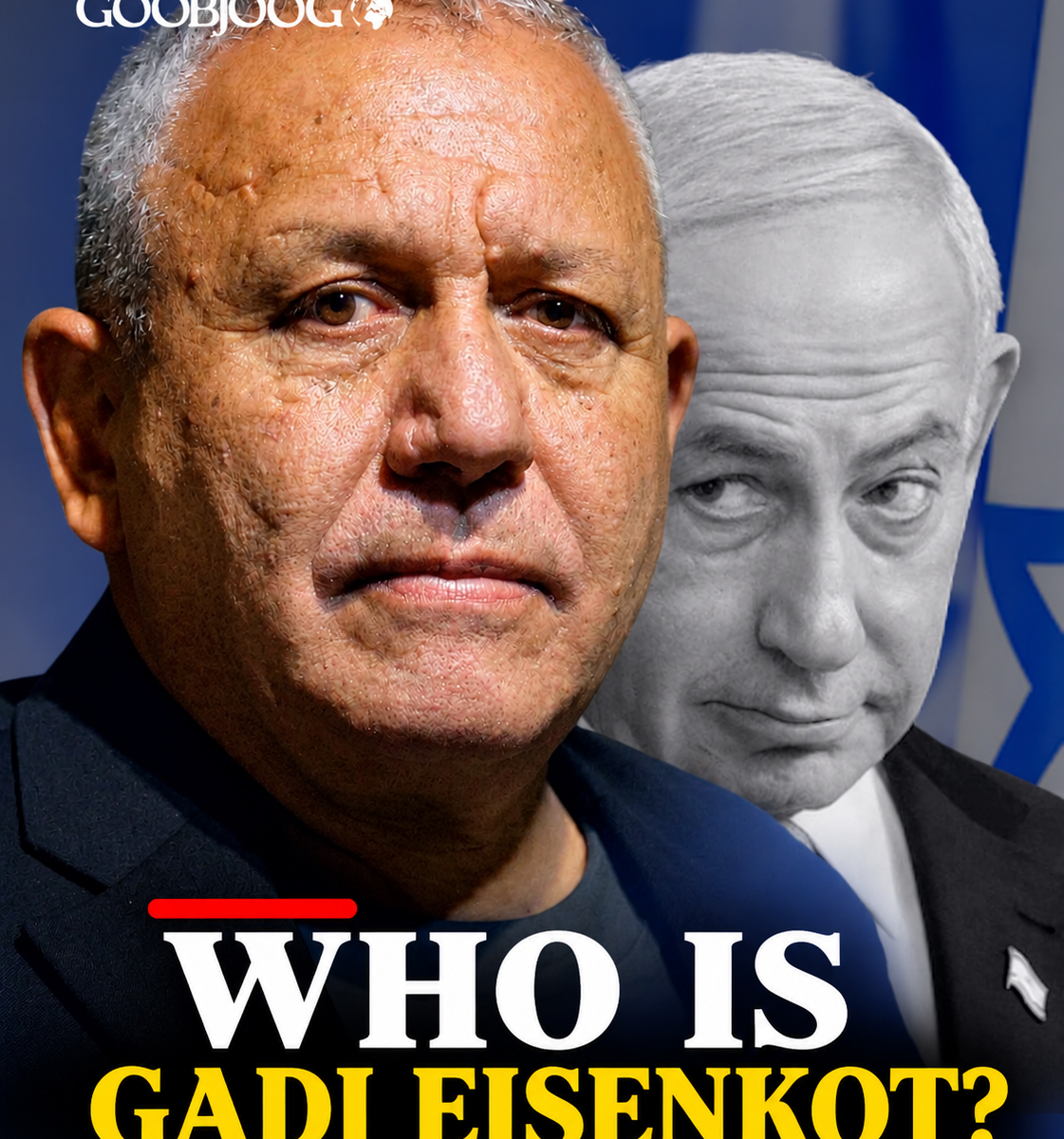
GOOBJOOG NEWS|TEL AVIV: Gadi Eisenkot is a former Israeli military chief who has emerged as one of the country’s leading political figures, challenging Benjamin Netanyahu’s long-standing dominance and positioning himself as an alternative to the veteran prime minister.
Born in 1960 in the northern Israeli city of Tiberias, Eisenkot grew up in Eilat. He comes from a Moroccan Jewish family and was the second of nine children.
His family background and upbringing differed from Netanyahu’s, who grew up in a family with established connections to Israeli politics and public life. Eisenkot emerged from communities outside Israel’s traditional political and economic centres, a background that has contributed to his image as a leader distinct from the country’s longstanding political establishment.
Eisenkot joined the Israeli military in 1978, beginning his career as an infantry soldier in the Golani Brigade. He went on to serve for more than four decades, rising through the ranks and holding several senior military positions.
He studied at Tel Aviv University, the University of Haifa and the US Army War College, where he pursued studies in history, politics and military strategy.
From Military Officer to Israel’s Top Commander
Eisenkot served in the Israeli military for 41 years, holding positions including commander of the Golani Brigade, head of the military division responsible for the West Bank, director of operations, commander of the Northern Command and deputy chief of staff.
In 2015, he became Israel’s 21st chief of general staff, the highest-ranking military position in the country. He held the office until 2019.
During his tenure, Eisenkot played a central role in planning Israeli military operations, particularly those involving Lebanon, Syria and Iran-backed groups across the region.
He has also been associated with the military concept known as the Dahiya Doctrine, which advocates the use of overwhelming force against infrastructure that an adversary could use during conflict. The doctrine has particularly been linked to Israeli military operations against Hezbollah in Lebanon.
His military record has given him a reputation for security expertise and leadership experience, credentials he has since brought into politics.
How Eisenkot Entered Politics and Challenged Netanyahu
After retiring from the military in 2019, Eisenkot spent time in public affairs and the private sector before entering formal politics in 2022. He joined Benny Gantz’s National Unity party and was elected to the Israeli parliament, the Knesset.
The Hamas attack on Israel on October 7, 2023, significantly changed the course of his political career. Eisenkot joined Netanyahu’s emergency wartime government and became a member of the war cabinet responsible for shaping Israel’s military strategy.
However, disagreements soon emerged between Eisenkot and Netanyahu, particularly over the conduct of the Gaza war, the future governance of the territory and negotiations to secure the release of Israeli hostages.
Eisenkot accused Netanyahu of lacking a clear strategy for ending the war and prioritising political survival over security objectives and efforts to bring the hostages home.
In June 2024, Eisenkot and Gantz withdrew from the wartime government.
The disagreements eventually pushed Eisenkot away from Gantz’s political leadership. In September 2025, he established his own political party, Yashar, a Hebrew word meaning straight or upright.
The party’s political message is centred on the need for leadership that transcends Israel’s traditional left-right divisions. Eisenkot has campaigned on government reform, accountability, national unity and rebuilding public confidence in state institutions and security agencies.
His family’s experience of the Gaza war has also shaped his political profile. His son, Gal Eisenkot, was killed in Gaza in December 2023, as were two of his nephews. Eisenkot has invoked those losses to highlight the personal cost of the conflict and argue that the sacrifices of Israeli soldiers must produce meaningful security and political outcomes.
How Eisenkot Differs From Netanyahu
Although both leaders share hardline positions on Israeli security, Iran and Hamas, they differ significantly on domestic politics, government management and the conduct of the Gaza war.
- Domestic Politics and Governance
Netanyahu has relied on a coalition that includes ultra-Orthodox parties and far-right politicians such as Itamar Ben-Gvir and Bezalel Smotrich.
Eisenkot wants a broader governing coalition and has criticised the influence of far-right politicians on security and national policy.
He has also pledged to establish a state commission of inquiry into the security failures surrounding the October 7, 2023, Hamas attack. Netanyahu has faced prolonged criticism for resisting calls for such an investigation.
- The Palestinians and the West Bank
Both leaders oppose a fully sovereign Palestinian state and support maintaining Israeli security control over the territory between the Jordan River and the Mediterranean Sea.
However, Eisenkot opposes formally annexing the West Bank and has criticised the expansion of Jewish settlements in Palestinian territory as well as violence by some Israeli settlers.
Netanyahu, meanwhile, has governed with coalition partners who advocate extending Israeli sovereignty over the territory.
- Gaza and the Future of Hamas
Both Eisenkot and Netanyahu support removing Hamas from political and military power in Gaza. They also support resuming military operations if Hamas refuses to disarm.
Their principal disagreement concerns the strategy and political objectives of the war.
Eisenkot has accused Netanyahu of using the conflict to protect his political future rather than presenting a clear plan for ending hostilities, securing the release of hostages and determining Gaza’s future governance.
- Iran and Regional Security
Both leaders regard Iran as Israel’s principal strategic threat and oppose Tehran acquiring nuclear weapons or expanding the influence of its regional allies.
Eisenkot supports weakening Iran and its regional network, but argues that military victories must be accompanied by political and diplomatic strategies that define the desired outcomes of conflict.
His political positioning therefore does not represent a fundamental departure from Netanyahu’s security outlook. Rather, Eisenkot is seeking to change how Israel is governed, how wars are managed and how the country engages with international partners.
US Midterm Elections and Netanyahu’s Political Setback
The November 3, 2026, US midterm elections have emerged as another factor in Israel’s political contest.
The Democrats’ reported victory in both chambers of Congress dealt a major setback to President Donald Trump and the Republican Party.
Israeli opposition politicians interpreted the results as evidence that Netanyahu’s close alignment with Trump and the Republicans could undermine Israel’s traditionally broad bipartisan support in Washington.
For decades, Israel maintained strong relationships with both major American political parties. Critics argue that Netanyahu increasingly made that relationship dependent on Republican political fortunes, while tensions grew between him and Democratic leaders.
Trump had openly backed Netanyahu ahead of the Israeli election. Following the Democratic victory, he reportedly announced plans to suspend US military assistance to Israel, estimated at $4 billion annually.
The development gave Netanyahu’s opponents an opportunity to argue that his political strategy had jeopardised Israel’s strategic relationship with Washington.
Eisenkot has pledged to restore bipartisan relations with the United States and strengthen security, political and diplomatic cooperation with Washington.
He argues that Israel cannot afford to align itself exclusively with one American political party and must maintain relations with both Democrats and Republicans to protect long-term US support.
However, some analysts argue that replacing Netanyahu alone would not necessarily restore American support, as public concerns in the United States are also linked to the Gaza war and Israel’s treatment of Palestinians.
Israeli Election and Eisenkot’s Opportunity to Form a Government
The October 27, 2026, Israeli parliamentary election produced a complicated political outcome.
Netanyahu’s coalition secured 53 seats, while the four opposition parties led by Eisenkot won 48 seats. The two Arab parties together secured 19 seats.
Although Netanyahu’s bloc emerged with more seats than Eisenkot’s opposition alliance, it failed to secure sufficient support to form a government.
The two Arab parties subsequently expressed support for Eisenkot, bringing his backing among lawmakers to 67.
On November 7, 2026, Israeli President Isaac Herzog tasked Eisenkot with forming a new government, giving him 28 days to complete negotiations, with the possibility of a two-week extension.
The mandate marked a major political breakthrough for Eisenkot, whose military background, opposition to Netanyahu’s wartime leadership and promise of institutional reform have helped position him as a challenger to Israel’s longstanding political establishment.
His ability to translate parliamentary support into a stable governing coalition will determine whether he can turn that breakthrough into lasting political change.