
Explainer: Why Rival Forces Are Fighting For Control Of Baidoa
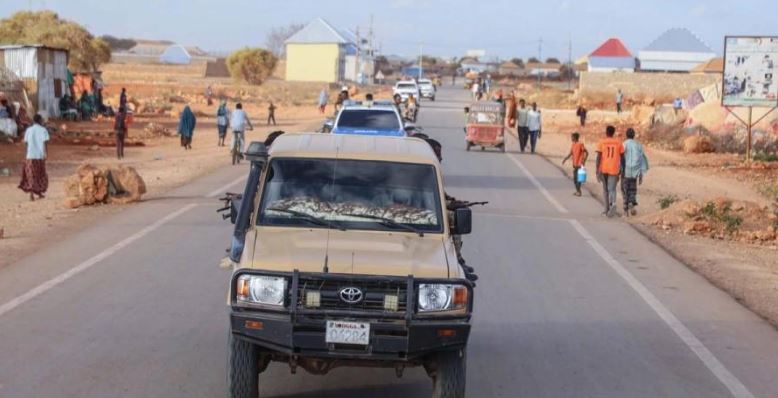
GOOBJOOG NEWS|BAIDOA: The renewed fighting in Baidoa on Thursday is the latest chapter in a political crisis that has gripped Somalia’s South West State for nearly six months, transforming a dispute over elections and federal authority into an armed confrontation over control of the regional capital.
The crisis escalated in March when then South West President Abdiaziz Hassan Mohamed Laftagareen broke relations with the Federal Government amid disagreements over constitutional changes and the country’s future electoral system.
Laftagareen subsequently secured another term in a regional election rejected by Mogadishu. Days later, federal forces moved into Baidoa and took control of the city on March 30, prompting Laftagareen to resign. Many residents had already fled amid fears of fighting.
The confrontation also took on a security dimension. Around the time federal forces entered Baidoa, the Federal Government accused Laftagareen and former South West parliament speaker Ali Said Fiqi of having direct links with Al-Shabaab. The allegations were not accompanied by publicly presented evidence establishing such links and remained disputed.
Mogadishu subsequently backed a new political transition in South West, culminating in the election of former federal parliament speaker Sheikh Aden Mohamed Nur Madobe as regional president. Laftagareen’s supporters rejected the process, however, leaving the question of political legitimacy unresolved.
Electoral Fall Out
The dispute returned violently to Baidoa on August 17 when Laftagareen-aligned fighters entered parts of the city and fought federal forces for several hours before being pushed out. Four civilians were reported killed and 98 people injured. Federal authorities alleged that Laftagareen-aligned fighters had operated alongside Al-Shabaab during the assault, a claim his camp has denied.
The allegations were subsequently taken further by the new South West administration. On August 30, its cabinet formally designated forces loyal to Laftagareen as a terrorist group, accusing them of joining and maintaining an alliance with Al-Shabaab. The cabinet said information from federal and regional security agencies supported the allegation and resolved that the forces would be treated in the same manner as terrorist groups.
Thursday’s renewed fighting therefore comes against two overlapping disputes: a battle over who legitimately governs South West State and increasingly serious government allegations that forces challenging the new administration are cooperating with Al-Shabaab.
Laftagareen’s camp has rejected the Al-Shabaab allegations and portrays the confrontation instead as a political struggle against what it considers an unlawful federal intervention.
For Baidoa’s residents, however, a crisis that began with competing interpretations of elections, constitutional authority and federalism has increasingly become a battle fought on the streets of the regional capital.