
PM Barre Urges National Leadership Academy to Tackle Corruption and Clan Divisions
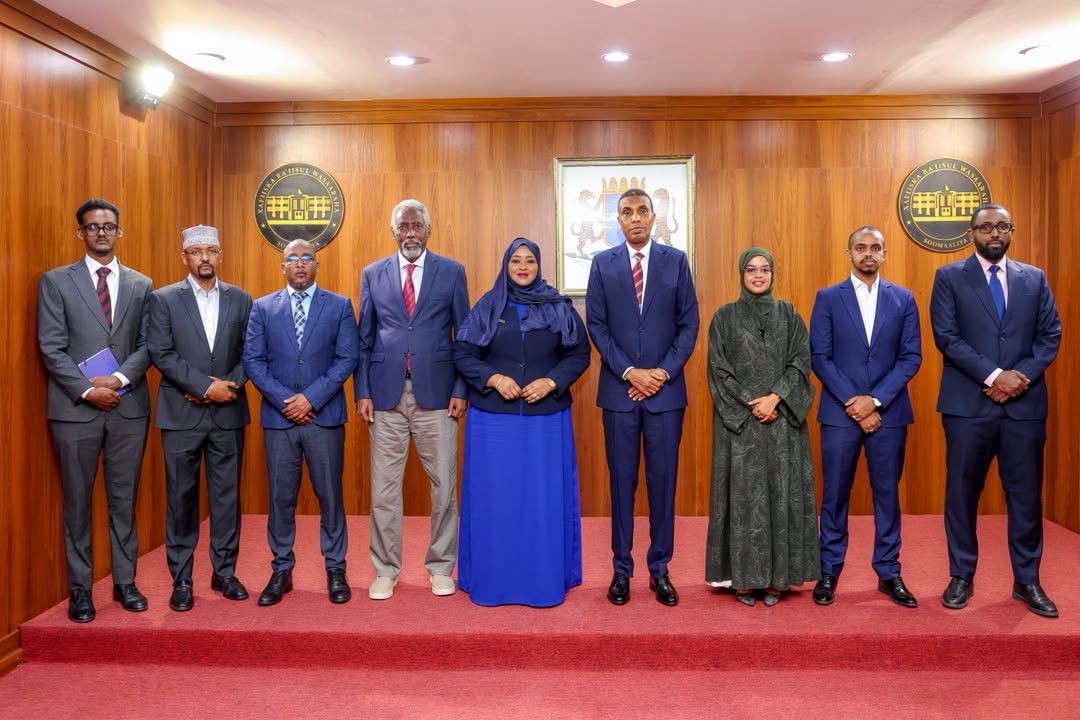
GOOBJOOG NEWS | MOGADISHU: Prime Minister Hamza Abdi Barre has urged Somalia’s National Leadership Academy (NLA) to focus on developing a new generation of leaders capable of addressing corruption, clan divisions and other social challenges facing the country.
The prime minister made the remarks during a meeting with the NLA’s governing board and management in Mogadishu on Wednesday, where he was briefed on progress in establishing the academy and its programmes.
The officials told the prime minister that the academy’s facilities had been completed and its curriculum developed, while memorandums of understanding had been reached with major international institutions and universities to support its work.
Barre welcomed the progress and said the academy had been established at a time when Somalia needed institutions capable of strengthening leadership and changing attitudes that have hindered the country’s development.
“We need educational institutions that can make a real difference in the lives of Somali people, raise individual awareness, change misguided ways of thinking and produce leaders whose leadership is rooted in the interests of the country and its people,” Barre said.
He called on the academy’s governing board and management to develop programmes that could help change social practices that have weakened Somalia’s institutions and hindered national development.
Among the issues he highlighted were corruption and clan-based divisions, which remain major challenges to efforts to strengthen state institutions and build effective governance.
The establishment of the National Leadership Academy comes as Somalia continues efforts to strengthen public institutions and develop professional leadership as part of its broader state-building agenda.
The country has made progress in rebuilding government institutions after decades of conflict, but weak institutional capacity, political divisions and corruption continue to pose challenges to effective governance.
The government has increasingly emphasised education, professional development and institutional reform as tools for building a stronger public sector and improving leadership at national and local levels.
The NLA is expected to contribute to those efforts through leadership education and training, with its partnerships with international institutions potentially providing access to broader expertise and academic resources.
Barre said the academy should use its mandate not only to impart knowledge but also to help shape attitudes and leadership values that support Somalia’s national interests.