
Russia’s Influence Grows Among Young Africans, Survey Finds
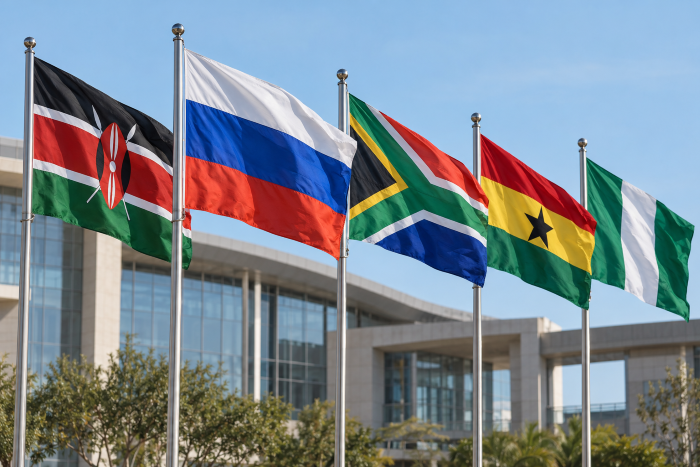
GOOBJOOG NEWS: Russia’s perceived influence among young Africans has risen, even as concern about foreign powers’ involvement in their countries grows, according to the African Youth Survey 2026.
Findings released on October 28 show that 54 per cent of respondents regard Russia as having some or a lot of influence in their country, compared with 44 per cent in 2024. Russia ranked ahead of France, at 47 per cent, but behind the United States and China, at 81 per cent and 79 per cent respectively.
Among respondents who recognised Russian influence, 83 per cent viewed it positively. In a separate question, 86 per cent described Russia as a strong or somewhat of an ally.
The survey was commissioned by the Ichikowitz Family Foundation and conducted by PSB Insights through face-to-face interviews with 4,901 people aged 18 to 24 across 16 African countries, including Kenya, in March 2026.
Despite the favourable assessments of Russia, 80 per cent of respondents expressed concern about foreign influence generally, up from 72 per cent in 2024.
Concern was highest in Mozambique at 91 per cent, followed by South Africa at 88 per cent and Liberia at 85 per cent. The survey did not ask whether respondents specifically distrusted Russia’s motives.
Ivor Ichikowitz, the survey’s founder and commissioner, said the findings reflected both an openness to foreign partnerships and expectations that those relationships would benefit Africans.
“But approval is not a blank cheque,” he said.
Russia’s perceived influence varied sharply across the countries surveyed. In Burkina Faso, 95 per cent of respondents said Moscow had some or a lot of influence, compared with 69 per cent in Congo Brazzaville and 65 per cent in Chad.
Only 24 per cent of respondents in Liberia and 26 per cent in Somalia identified Russia as influential.
Economic benefits topped respondents’ priorities when choosing international partners. Forty-three per cent selected investment in infrastructure and the economy, while 39 per cent prioritised respect for natural resources.
Respect for sovereignty and non-interference, and democratic values and a strong human rights record, were each selected by 34 per cent. Technology and knowledge transfer attracted 30 per cent, while military or security assistance was cited by 29 per cent.
More than half of respondents, 55 per cent, preferred alliances that delivered trade and investment even where partners had different political systems. Another 42 per cent favoured partners with similar values and systems of government, even if they delivered fewer practical benefits.
The findings also showed that 60 per cent supported strong alliances with one or two major global powers to secure long-term advantages, while 37 per cent preferred neutrality.
The foundation released the results in a statement linking them to a Russia–Africa summit it said was taking place in Moscow on October 28 and 29.
The survey’s comparisons over time use eight countries included in all four waves of the research: Congo Brazzaville, Ethiopia, Ghana, Kenya, Nigeria, Rwanda, South Africa and Zambia.