
Somali Deputy PM, UK Minister Visit WFP Facility Following Biting Hunger Report
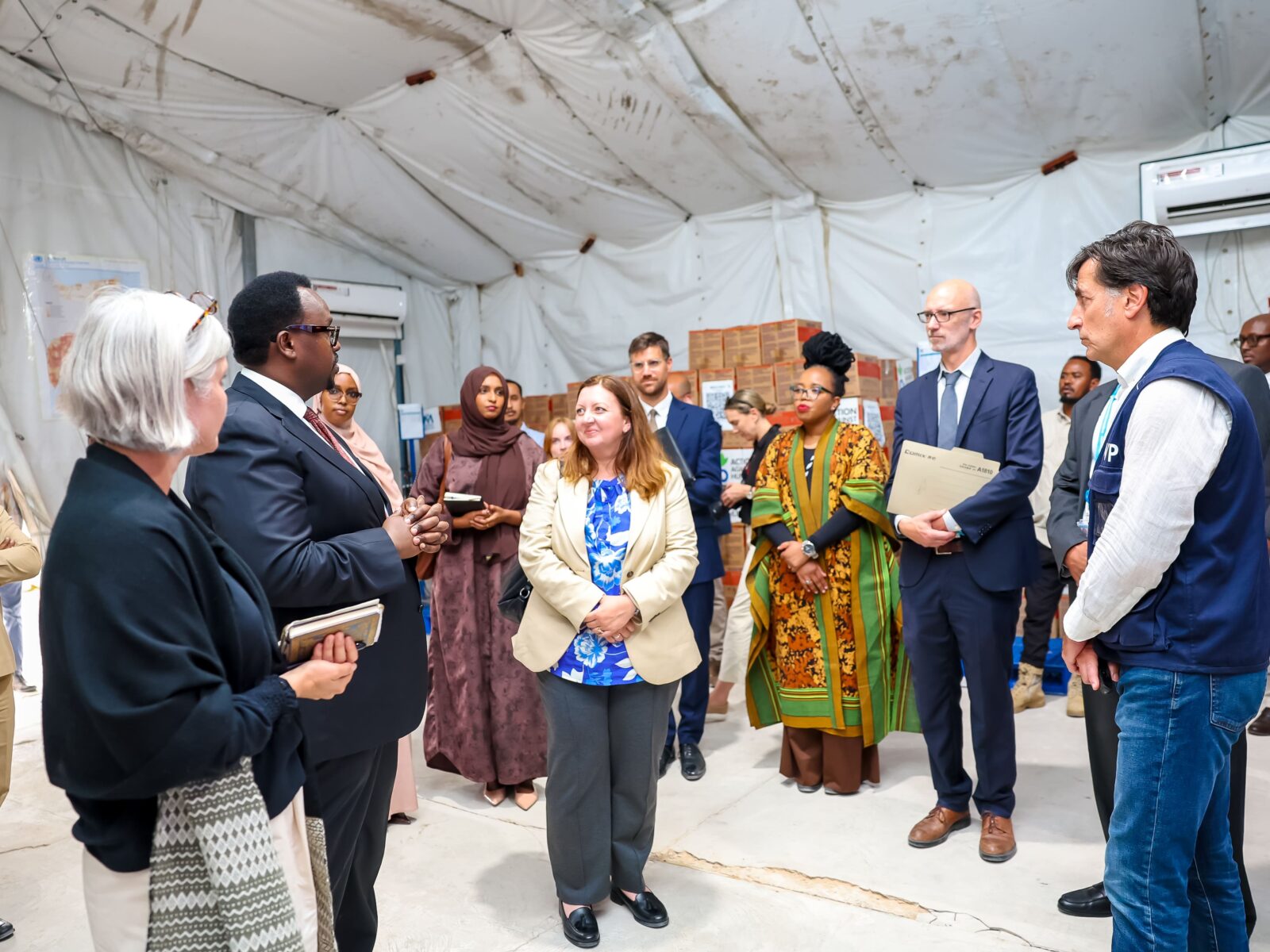
GOOBJOOG NEWS|MOGADISHU: Somalia’s Deputy Prime Minister Salah Ahmed Jama and the United Kingdom’s Minister for Development and Africa, Kirsty McNeill, have visited a World Food Programme warehouse in Mogadishu as the country grapples with a worsening drought and hunger crisis affecting millions of people.
During the visit on Wednesday, the officials were shown food and other humanitarian supplies destined for drought-affected families and briefed on WFP’s system for registering and verifying beneficiaries.
Under the system, biometric information is captured for each registered beneficiary, who is then issued a verified card recognised across participating United Nations agencies. The mechanism is designed to improve accountability and reduce duplication of assistance between humanitarian organisations.
Jama said some of the areas hardest hit by the current drought were among the most peaceful parts of Somalia, arguing that insecurity was not the principal factor behind the crisis in those locations.
He attributed the worsening conditions largely to successive weather shocks accumulated over several seasons, which have depleted household resources and undermined communities’ ability to recover.
The Deputy Prime Minister also said the Federal Government would formally launch the Jowhar storage project next month, part of efforts to strengthen Somalia’s capacity to store and manage food and humanitarian supplies.
McNeill’s visit to the WFP facility came during her first visit to Somalia as the UK Minister for Development and Africa. The UK said the visit was intended in part to assess how humanitarian support is reaching people affected by drought and food insecurity. The UK says its humanitarian and climate resilience assistance reached more than 950,000 people in Somalia last year.
The visit comes against the backdrop of a rapidly deteriorating food security situation. WFP says about six million people, roughly one-third of Somalia’s population, are currently facing crisis levels of hunger or worse, including nearly two million experiencing emergency levels of food insecurity.
Somalia is also experiencing one of the world’s most severe malnutrition crises. Nearly 1.88 million children under five are projected to suffer acute malnutrition during 2026, with about 493,000 expected to require treatment for severe acute malnutrition.
The crisis has been compounded by repeated climate shocks, displacement, rising food prices and a sharp decline in humanitarian funding. WFP says its current resources allow it to assist only about one in 10 people requiring support and that it needs $193.8 million to sustain lifesaving assistance for the most vulnerable through January 2027.
The agency has warned that families already weakened by drought could face further shocks later this year, with prolonged dry conditions expected through October followed by an elevated risk of flooding during the October-December Deyr season.
WFP has meanwhile launched its Somalia Country Strategic Plan for 2026-2030, which seeks to combine emergency food and nutrition assistance with longer-term efforts to strengthen resilience, self-reliance and government-led systems. The strategy places greater emphasis on digital verification, vulnerability-based targeting and stronger coordination of beneficiary data among humanitarian agencies as donor resources decline.