
Somali Gov’t Accuses Regional State Leadership of Al-Shabaab Links After Contested Election
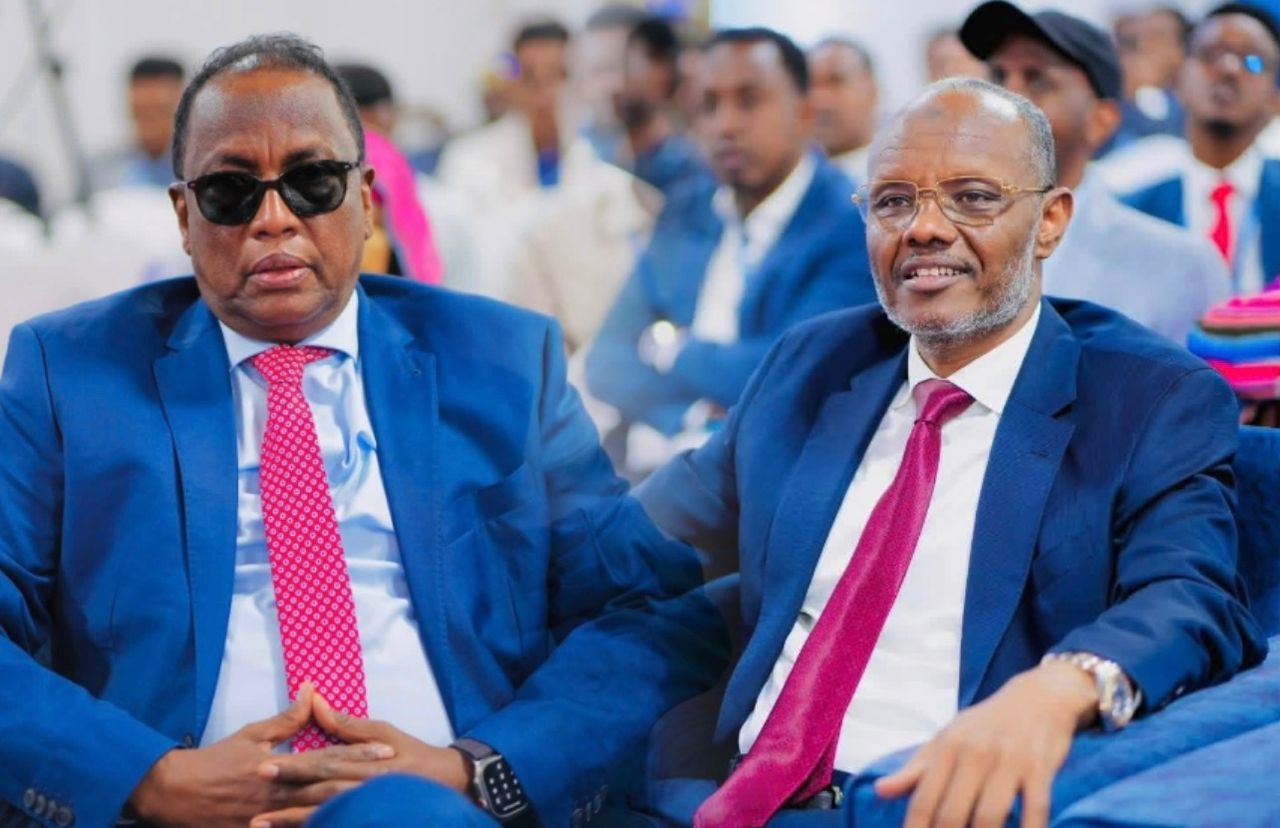
GOOBJOOG NEWS|MOGADISHU: The Federal Government of Somalia (FGS) has issued a strongly worded statement accusing South West State President Abdicasiis Hassan Mohamed Laftagareen and Speaker of the regional parliament Ali Said Fiqi of maintaining direct links with the militant group Al-Shabaab—an allegation that marks a significant escalation in the ongoing political standoff between Mogadishu and Baidoa.
The statement, released by the Ministry of Information, comes just days after Laftagareen’s controversial re-election on Friday, a process the federal government has already rejected as unlawful. The dispute reflects a deepening rift between the FGS and the South West administration over electoral legitimacy, governance, and control of regional political processes.
In its latest communication, the federal government alleged that Laftagareen and Speaker Fiqi are “directly connected” to Al-Shabaab and are acting on prior agreements with the group. It further accused the two leaders of spreading what it described as false information targeting international partners supporting the Somali National Army, claiming the intent was to shield Al-Shabaab elements weakened by recent military operations.
Such direct accusations—linking sitting senior regional officials to a designated terrorist organization—are highly unusual in Somalia’s political discourse and underscore the severity of the current breakdown in relations. While political tensions between federal and regional authorities are not new, public allegations of this magnitude represent a sharp and unprecedented turn, raising concerns about institutional trust and coordination in the fight against insurgency.
The timing is particularly sensitive given that large parts of Bay and Bakool regions—within South West State—remain key strongholds of Al-Shabaab. In this context, the accusations risk further complicating already fragile security coordination between federal and regional forces operating in these مناطق, potentially undermining joint operations and intelligence-sharing efforts critical to ongoing counterinsurgency campaigns.
Alongside the accusations, the government highlighted a recent military operation in Daynuunay, Bay region, where Somali National Army forces reportedly dismantled Al-Shabaab roadblocks and killed more than 20 fighters. The operation was presented as part of ongoing offensives aimed at degrading the group’s operational capacity in South West State.
The FGS reiterated that individuals found to be collaborating with extremist groups would be held accountable and reaffirmed its commitment to working with international partners supporting counterterrorism efforts.
The developments come at a critical moment as Somalia pushes toward broader electoral reforms and intensified security operations, with the dispute between Mogadishu and South West State now threatening to complicate both political cohesion and battlefield coordination.