
Somalia Unveils Youth Fund and National Centre Plans as Government Promises Jobs and Skills
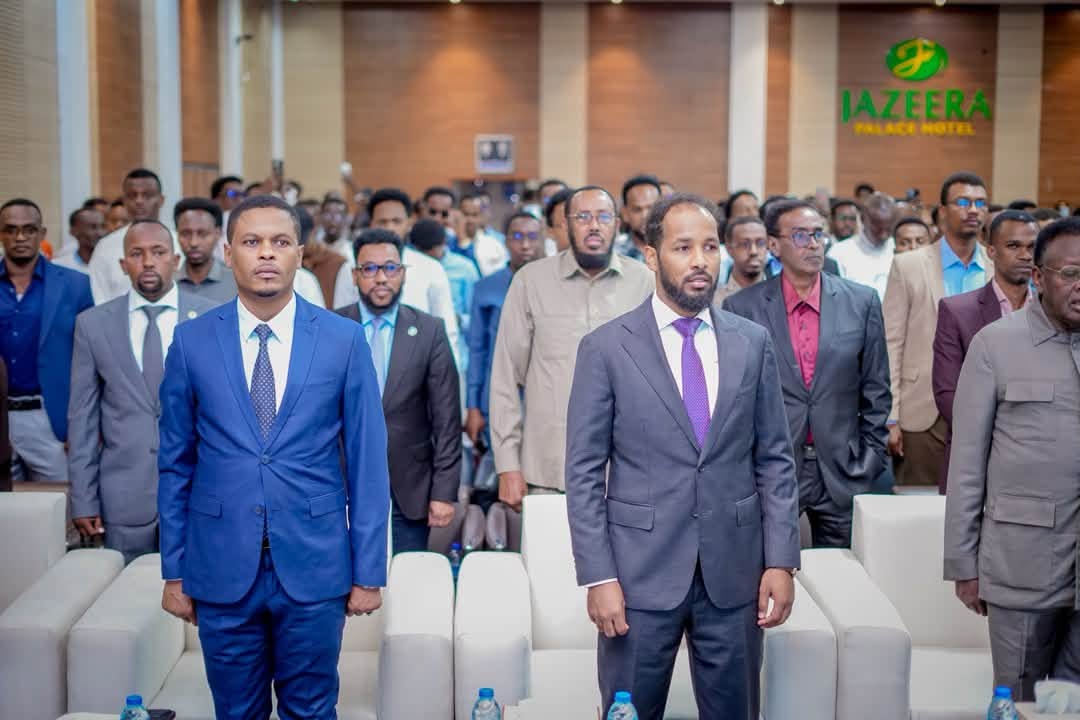
GOOBJOOG NEWS | MOGADISHU: Somalia has marked International Youth Day with government pledges to expand opportunities for young people through a proposed youth investment fund, skills training and the construction of a national youth centre in Mogadishu by the end of the year.
The two-day gathering at Jazeera Palace Hotel was organised by the Ministry of Youth and Sports under the theme “Different Contexts, Common Aspirations”, with support from the United Nations Population Fund (UNFPA) and the Korea International Cooperation Agency (KOICA).
Youth and Sports Minister Mohamed Abdikadir Ali said the theme reflected the realities facing young Somalis, who experience insecurity, unemployment and other pressures differently but share a common ambition of building a peaceful and prosperous country.
But the strongest commitments at the event came from the National Youth Council, which called for a shift in how the government views Somalia’s young population — from seeing them as leaders of tomorrow to treating them as participants in national development today.
National Youth Council Chairman Abdikafi Mahmoud said young Somalis had ideas and potential but often lacked access to capital, training and mentorship.
He announced plans to work with the Ministry of Youth and Sports to establish a Somali Youth Fund, which would provide investment programmes intended to support young entrepreneurs and create jobs.
He also pledged that a National Youth Centre would be built in Mogadishu before the end of 2026, funded through voluntary contributions rather than by seeking financial support from an external agency.
The centre is intended to serve young people from different parts of Somalia and provide a platform for training, engagement and youth development.
No financial figure was given for either the proposed youth fund or the construction of the centre, leaving implementation and funding among the key tests of the commitments made at the gathering.
Agriculture and Irrigation Minister Mohamed Abdi Hayir, known as Maareeye, offered one of the most direct assessments of the challenges facing Somali youth.
He said young people needed quality education, practical training, support for their ideas and an environment in which they could turn their skills into productive activities.
He acknowledged that Somali youth had not received such support consistently over the past three decades, saying the government bore part of the responsibility.
Yet he also pointed to what young Somalis had achieved despite those limitations.
Somali athletes have gained international recognition, particularly in distance running, while young entrepreneurs have built businesses and competed in African markets without extensive state support, he said.
The minister argued that providing young people with capital, training and the right environment could unlock far greater economic potential.
The gathering also highlighted the growing political importance of Somalia’s young population.
Mr Abdikafi said young people had formed a large share of those elected in recent local elections in Banaadir, South West and Galmudug, describing their participation as evidence that political space was opening for a new generation.
The comments come as Somalia continues its transition towards a more direct electoral system, with young voters expected to play an increasingly important role in determining political leadership.
For a country where a large proportion of the population is young, the ability to convert political participation into employment, education and economic opportunities remains a major challenge for the government.
The event also sought to give practical meaning to its theme of different circumstances and shared aspirations.
Two sign-language interpreters worked throughout the programme, alternating between speeches to ensure that deaf participants could follow the proceedings.
A young visually impaired artist, Abdirahman, also presented artwork depicting challenges facing Somali youth and his understanding of the society around him.
Youth Minister Mohamed Abdikadir described his participation as an example of the potential of young Somalis and argued that limitations should not determine what young people can contribute to the country.
The participation of people with disabilities gave the gathering a broader focus on inclusion, beyond the traditional discussions of youth employment and education.
The gathering ended with two major commitments: the creation of a Somali Youth Fund and the construction of a National Youth Centre in Mogadishu.
Both proposals could become important instruments for youth development if they secure adequate funding and are implemented effectively.
But the absence of a stated budget for the fund and the youth centre means that delivery will be the key measure of the government’s commitments.
For young Somalis facing unemployment, limited access to finance and skills gaps, the test will be whether the promises made during International Youth Day translate into training, investment, jobs and greater participation in national decision-making.
The Ministry of Youth and Sports said young people had been involved in shaping the two-day programme. The same generation will now have an opportunity to judge whether the commitments made in front of them are delivered.