
Uganda Signals Continued Military Presence in Somalia Beyond AUSSOM
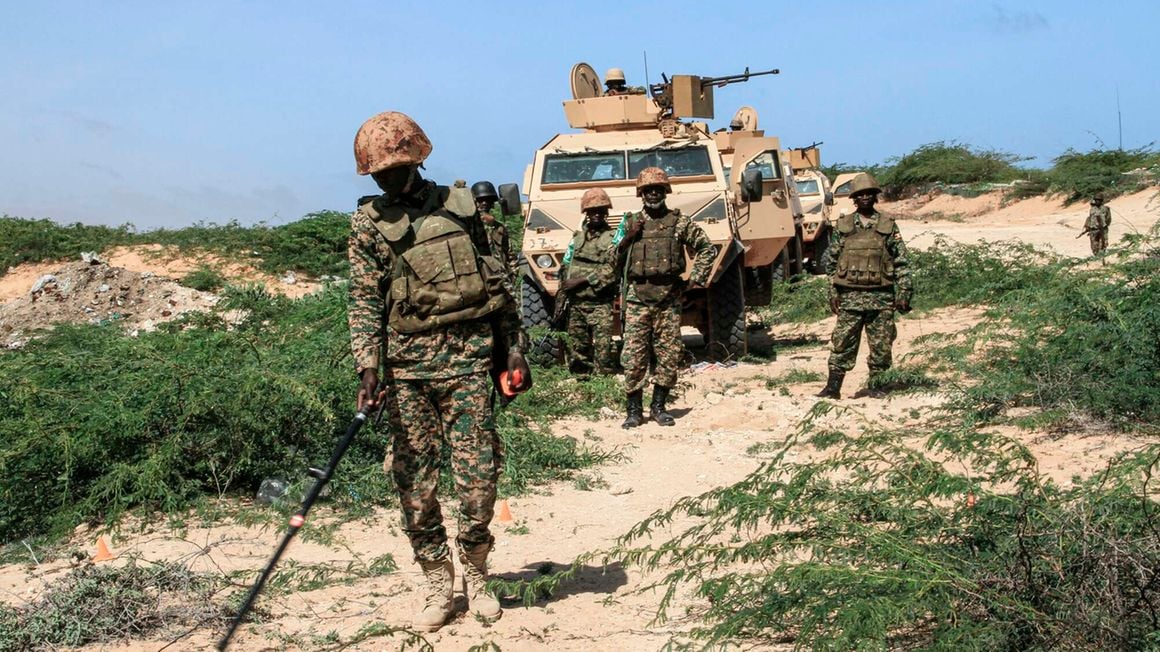
GOOBJOOG NEWS | KAMPALA: Uganda says it will keep troops in Somalia even if the African Union’s mission changes or ends in its current form, signalling that Kampala intends to maintain a security role in Somalia beyond the future of the African Union Support and Stabilisation Mission (AUSSOM).
Uganda’s Defence Minister Kiryowa Kiwanuka said some Ugandan forces would remain under a bilateral security agreement between Kampala and Mogadishu.
Uganda is the largest troop contributor to AUSSOM, with about 4,500 soldiers assigned to the mission. It also has additional troops deployed in Somalia under a separate bilateral arrangement, according to the information provided by Ugandan authorities. The AU’s approved AUSSOM deployment lists Uganda’s contribution at 4,500 troops.
Kiwanuka said the arrangement for Ugandan forces in Somalia could change, but stressed that Uganda would not withdraw completely.
FUNDING CRISIS
Uganda’s position comes as the future of AUSSOM faces uncertainty following a U.S. decision not to support continued United Nations logistical financing for the mission beyond December 31, 2026.
UNSOS provides critical logistical support to AUSSOM, including food, fuel, transportation, medical evacuation and communications.
The United States’ decision has raised concerns about whether AUSSOM can continue operating in its current form without an alternative source of predictable funding.
AUSSOM’s current UN authorisation runs until the end of 2026, although the mission’s longer-term concept envisages a phased transfer of security responsibilities to Somali forces.
ORDERLY TRANSITION
Somalia and the countries contributing troops to AUSSOM have called for any eventual withdrawal to be gradual, coordinated and linked to the ability of Somali forces to assume greater responsibility for national security.
That approach is intended to avoid a sudden security gap in areas where African Union forces continue to support Somali forces.
Uganda’s announcement suggests that, even if the AU mission’s structure or financing changes, bilateral security arrangements could provide another channel for foreign troops to remain in Somalia.
Uganda, Kenya, Ethiopia and Egypt are among the countries involved in Somalia’s current security arrangements, while Uganda has also reaffirmed its broader commitment to regional stability. Kampala hosted an extraordinary summit of AUSSOM troop-contributing countries in July, where sustaining Somalia’s stabilisation process was a central theme.
For Mogadishu, the challenge will be to manage any transition in a way that strengthens Somali forces while avoiding disruptions to security operations.
The developments also underline how closely Somalia’s security future is tied to the financing and organisation of international support, as the government works towards greater national ownership of security responsibilities.