
ICG Says Somalia’s Fight against Al Shabaab at Military Stalemate, Urges Political Strategy
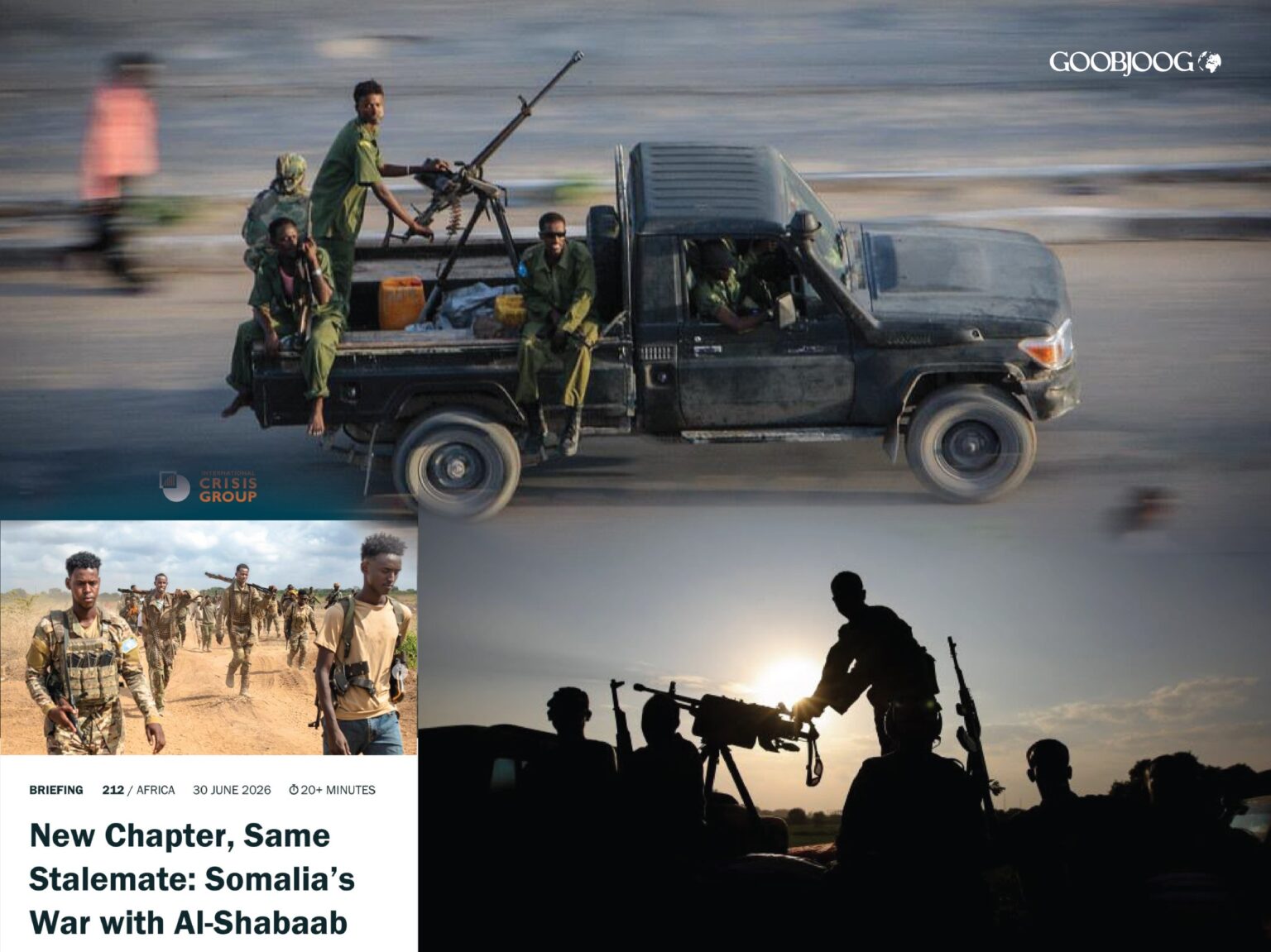
GOOBJOOG NEWS | MOGADISHU: Somalia’s war against Al-Shabaab has reached a military stalemate despite early battlefield gains, with the militant group regaining much of the territory it lost in recent years, according to a new report by the International Crisis Group (ICG).
The report, titled “New Chapter, Same Stalemate: Somalia’s War with Al-Shabaab” and published on June 30, says neither the federal government nor Al Shabaab appears capable of securing a decisive military victory, underscoring the need for broader political and institutional reforms alongside security operations.
The findings come as Somali forces, backed by the African Union Support and Stabilization Mission in Somalia (AUSSOM), continue counter-insurgency operations while the government pursues plans to assume greater responsibility for national security amid a gradual drawdown of international support.
ICG said the government’s offensive in 2022 and 2023, supported by local clan militias known as Macawiisley, initially drove Al Shabaab from large areas of central Somalia. However, it said many of those gains had proved difficult to sustain, with the group recapturing much of the lost territory by 2025.
According to the report, government forces have increasingly shifted their focus towards securing Mogadishu and other strategic locations rather than pursuing large-scale offensives, citing military fatigue, challenges in coordinating with clan militias and continued reliance on external security assistance.
The report also says Al Shabaab adapted its strategy following setbacks during the earlier government offensive. It said the group reshuffled senior commanders, recruited new fighters, expanded defensive positions to reduce the impact of drone strikes and sought new sources of weapons.
Beyond military changes, ICG said Al Shabaab appeared to have adjusted its approach to governance in areas under its control by easing some restrictions, reducing pressure on local communities and allowing greater humanitarian access in certain areas. The report suggests these measures may have helped the group strengthen its influence, although it says it remains unclear whether the changes represent a lasting policy shift or a tactical adjustment.
The Brussels-based organisation also highlighted political divisions as a major obstacle to Somalia’s counter-insurgency efforts, pointing to tensions between the federal government and some federal member states, as well as disputes over constitutional reforms and regional political issues, which it said had complicated efforts to build a unified national strategy.
On the military front, ICG said Somalia had expanded its security forces in recent years but continued to face challenges including limited training, troop attrition, administrative weaknesses and dependence on foreign funding and logistical support.
The report warns that uncertainty over future international financing for AUSSOM and broader security assistance could create additional risks if Somalia’s security institutions are not strengthened before external support is reduced.
Rather than relying solely on military operations, ICG recommends strengthening state institutions, improving military professionalism, enhancing cooperation between the federal government and regional administrations, and preparing conditions for eventual political dialogue.
Somalia has consistently ruled out direct negotiations with Al Shabaab unless the group renounces violence, while maintaining that military pressure remains central to its strategy. Government officials have repeatedly said operations against the group will continue alongside efforts to strengthen governance and deliver services in recovered areas.
Al Shabaab, an al Qaeda-linked group that has waged an insurgency in Somalia since 2007, continues to control parts of southern and central Somalia despite sustained military operations by Somali forces and international partners. The conflict has remained one of the Horn of Africa’s most persistent security challenges, with recurring attacks affecting civilians, security forces and government institutions.