
New Study Says Al-Shabaab Has Shifted To A ‘Long War’ Strategy As It Refines Battlefield Tactics
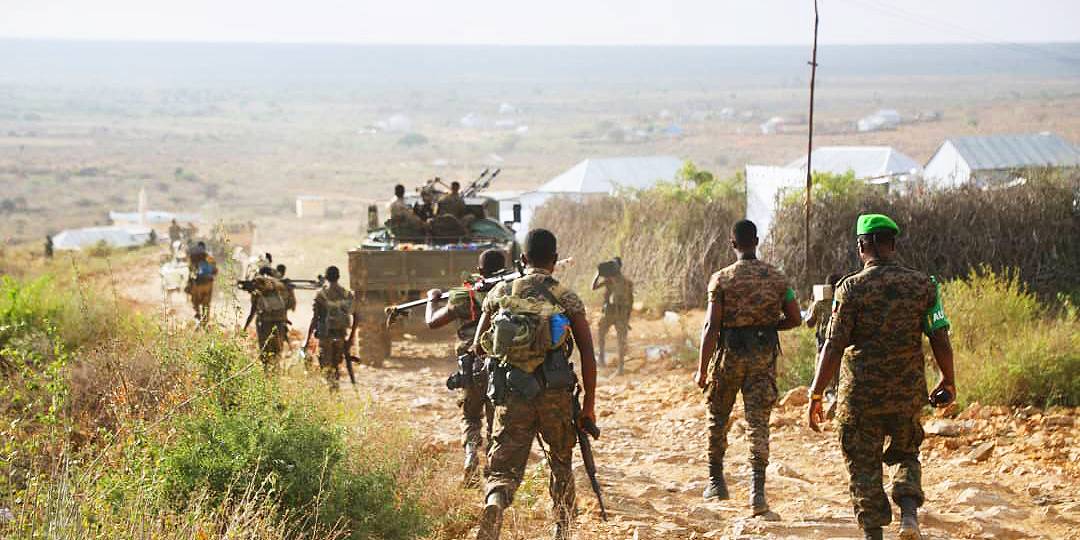
GOOBJOOG NEWS|MOGADISHU: Al-Shabaab has fundamentally altered the way it wages war, abandoning its earlier emphasis on holding territory in favour of a prolonged insurgency built on patience, intelligence and adaptability, according to a new study by the Saldhig Institute.
The report argues that the group’s battlefield evolution over the past five years has been shaped by sustained military pressure from Somali forces, African Union peace support missions and international partners, forcing it to rethink how it fights while preserving its long-term objective of survival.
Rather than seeking quick territorial victories, researchers say the militant group has embraced what they describe as a “long-war” strategy—avoiding costly confrontations, withdrawing when necessary and waiting for opportunities to exploit weaknesses among government forces before launching renewed offensives.
The study contends that Al-Shabaab’s greatest military strength today lies less in the size of its fighting force than in its ability to gather intelligence, plan meticulously and adapt rapidly to changing conditions.
Extensive Intelligence
According to the report, every major assault is preceded by extensive intelligence collection using informants, reconnaissance teams, surveillance and, increasingly, commercial technology. The information is then used to assess troop strength, defensive positions and the likelihood of success before commanders authorise an attack. Researchers say the group rarely launches major operations unless it believes the probability of success is overwhelmingly in its favour.
The report also highlights the central role played by Amniyat, Al-Shabaab’s intelligence apparatus, describing it as one of the organisation’s most critical institutions. Beyond gathering battlefield intelligence, the network is credited with infiltrating government institutions, monitoring communities and providing the information that underpins military planning and covert operations.
Researchers argue that Al-Shabaab has also become increasingly selective in its choice of targets. While the group was previously associated with large-scale attacks that frequently killed civilians, the study says it has increasingly concentrated attacks on military bases, security personnel and government infrastructure, reflecting a broader effort to weaken the state’s security capabilities while limiting actions that could alienate communities it hopes to influence.
Technology has become another defining feature of the group’s evolution.
The report says Al-Shabaab has integrated mobile communications, internet-based platforms and digital financial systems into its day-to-day operations, enabling commanders to communicate, move funds and coordinate activities across dispersed areas. It also notes that the group has experimented with commercially available drones for reconnaissance and potential military use, while continuing to seek more sophisticated capabilities.
Strategic Challenges
The institute links many of these adaptations to changing conditions on the battlefield.
Among the major turning points identified are the transition of the African Union mission from AMISOM to ATMIS and later AUSSOM, the Federal Government’s large-scale offensive launched in 2022, and intensified U.S. and Turkish air operations targeting Al-Shabaab leaders and infrastructure. Rather than weakening the movement outright, the report argues, these developments compelled it to modify its tactics by relying more heavily on guerrilla warfare, rapid raids and hit-and-run attacks.
The study further argues that the 2022 government offensive represented a significant strategic challenge because it combined military operations with mobilisation of local communities against the insurgency. Researchers say that approach forced Al-Shabaab to devote greater effort to intimidating local leaders, disrupting community mobilisation and waiting for alliances supporting government forces to weaken before attempting to regain lost ground.
Despite years of sustained military operations against the group, the institute concludes that Al-Shabaab has consistently demonstrated an ability to learn from setbacks and modify its methods. Understanding that process of adaptation, it argues, is essential for designing future counter-insurgency strategies.
The report suggests that defeating the group will require more than military superiority alone. It argues that security planners must anticipate how Al-Shabaab is likely to respond to pressure, rather than assuming battlefield losses will automatically translate into long-term strategic defeat.
Tomorrow’s final instalment examines how the study says Al-Shabaab has built parallel governance structures, strengthened community influence and adapted its political and organisational strategy beyond the battlefield.