
Somalia–Türkiye Oil Deal: From Seismic Surveys to Offshore Drilling
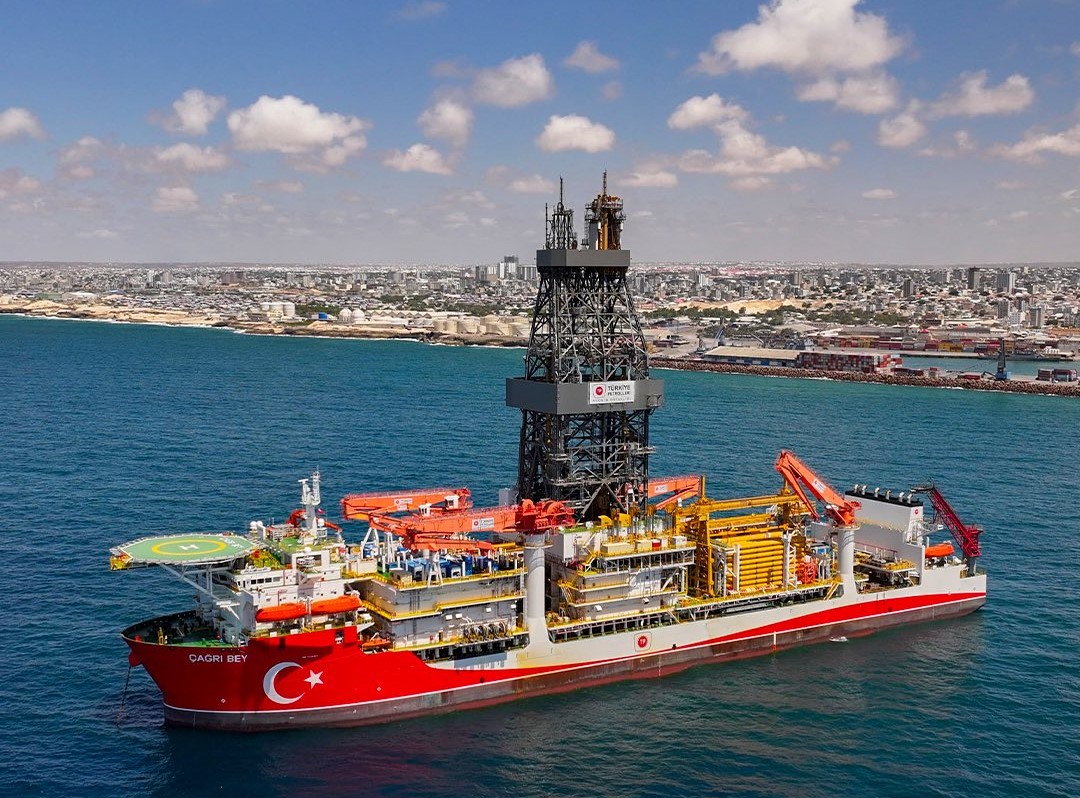
GOOBJOOG NEWS|MOGADISHU: Somalia’s offshore oil and gas programme has reached a critical milestone with the anticipated start of drilling by the Çağrı Bey drillship, marking the latest phase in a process that began with a bilateral agreement between Mogadishu and Ankara in 2024.
The first step came in February 2024 when the Federal Government of Somalia signed a defence and economic cooperation agreement with Türkiye, later ratified by parliament. This was followed by an energy protocol that paved the way for hydrocarbon exploration and eventual production activities offshore.
Production Sharing Agreements Finalised
In July 2024, Somalia formalised the partnership by awarding three offshore Production Sharing Agreements (PSAs) to the Turkish Petroleum Corporation. The licensed offshore blocks, located along the Indian Ocean coastline, each span approximately 5,000 square kilometres, bringing the total exploration area to about 15,000 square kilometres.
Seismic Surveys Map Offshore Potential
Following the award of the PSAs, Türkiye deployed its seismic research vessel Oruç Reis to Somali waters in October 2024 to begin subsurface mapping. The survey campaign lasted about 234 days, concluding in 2025 after collecting extensive geological data.
During this period, high-resolution three-dimensional seismic surveys were conducted across the offshore acreage, covering approximately 4,464 square kilometres. The data provided the first modern, detailed picture of Somalia’s offshore basins and helped identify geological structures considered favourable for hydrocarbon accumulation, particularly in areas off central Somalia.
While the findings pointed to promising prospects, seismic surveys alone cannot confirm the presence of oil or gas, making drilling the decisive next step.
Transition to Drilling Phase
With seismic data analysed and targets identified, Somalia has now moved into the drilling phase. The arrival of the Çağrı Bey drillship on Thursday signals the shift from exploration to physical testing of subsurface resources.
The vessel is expected to begin drilling in selected offshore blocks in the coming days, marking Somalia’s first attempt to verify offshore hydrocarbon reserves.
Oversight Concerns Emerge
Despite the progress, the process has drawn scrutiny from the Financial Governance Committee, hybrid Somali-international body established in early 2014 to strengthen financial governance and economic development. which has raised concerns about how the PSAs were awarded. The committee, in its 2024 report released in May 2025, echoing advice from the International Monetary Fund, warned that awarding contracts through direct negotiations without competitive bidding could expose the government to fiscal risks and limit its ability to secure favourable commercial terms.
The government has since signed several other PSAs: Coastline Exploration—7 PSAs for 8 blocks, Petro-Quest Africa (affiliated with Liberty Petroleum)—3 PSAs, and GulfSom Energy
(apparently affiliated with Gulf Petroleum)—3 PSAs.
The FGC has also highlighted concerns about institutional capacity and the need for stronger oversight mechanisms, including full scrutiny of agreements by the Inter-Ministerial Concessions Coordinating Committee.
A Pivotal Moment
As drilling begins, the outcome of the first wells will determine whether Somalia can transition from exploration into production. For now, the country stands at a pivotal moment, with both geological results and governance decisions set to shape the future of its energy sector.