
Xarardheere People Choose Ballots over Bullets
By Abdulkarim Abdulle
Three years ago, decisions in Xarardheere were dictated by terrorist members. Today, they are determined by the voices of its own people.
In January 2023, Somali forces supported by local defense forces liberated Xarardheere after 15 years of coercive Al-Shabaab rule. For many outside observers, it appeared to be another military victory, another town marked as “liberated” on a map. But for the people of Xarardheere, however, it meant something far greater.
It meant kids waking up without the shadow of armed extremists. It meant fishermen sailing into the Indian Ocean without paying illegal taxes to terrorists. It meant shopkeepers reopening businesses without extortion. It meant families daring to imagine a future beyond fear. Three years later, that future is taking shape under our eyes.
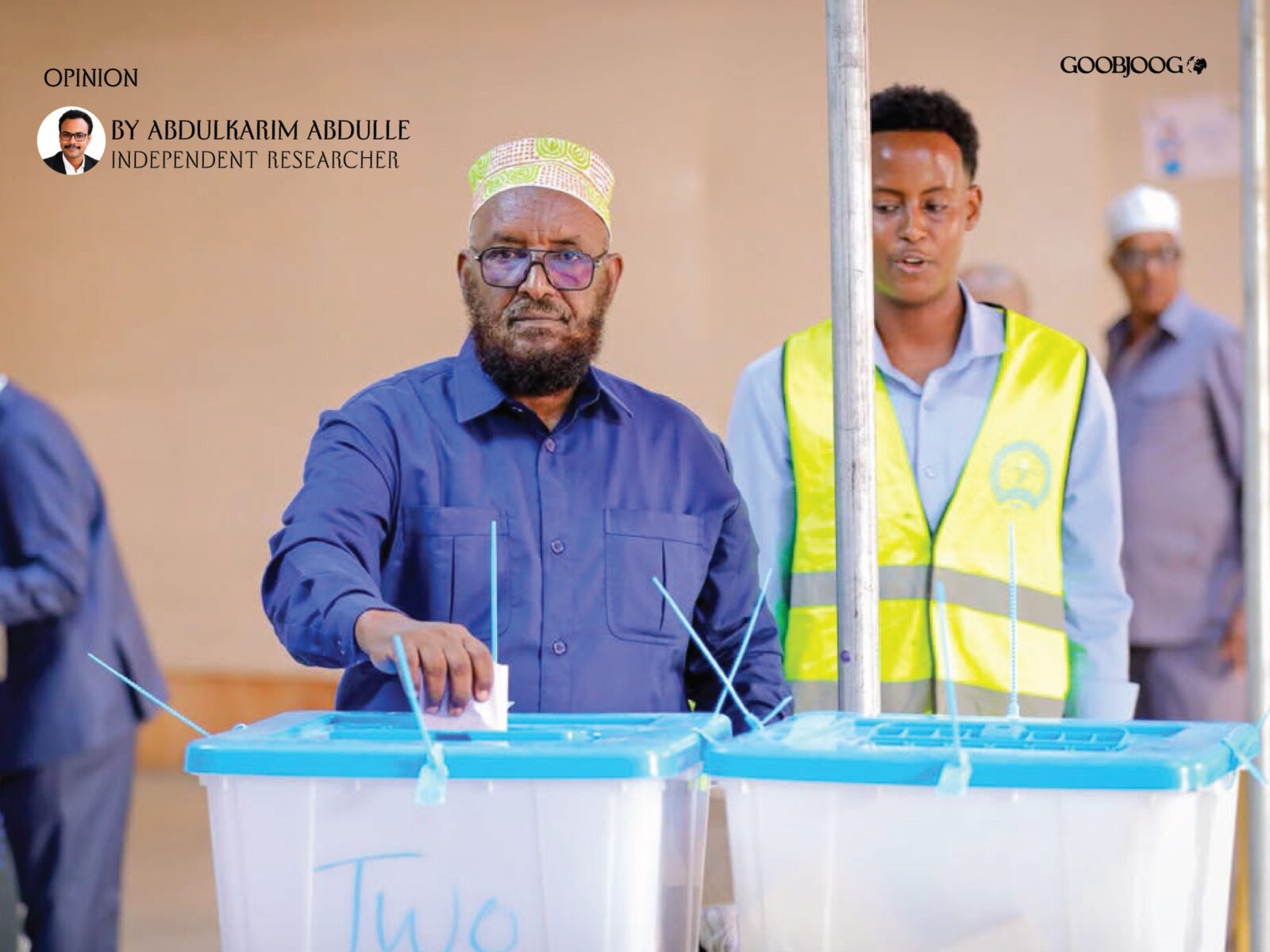
Today, the people of Xarardheere are electing representatives to their local council and the Galmudug State Parliament. It is an achievement that extends well beyond politics. It is proof that a community once governed by violence has reclaimed the right to govern itself. This is what victory over terrorism should ultimately look like.
For more than a decade, Xarardheere stood as one of Al-Shabaab’s most significant strongholds. It served as the group’s unfamiliar de facto capital city after Jilib, where their families used to live and their fighters came to rest. Its location along Somalia’s central coastline made it valuable to the group both militarily and economically.
Under the terrorist’s coercion, residents endured illegal taxation, arbitrary punishments, restrictions on movement, forced recruitment, and constant surveillance. Public life disappeared. Civic participation became impossible. Decisions affecting the community were imposed through intimidation rather than consent.
The absence of elections was not simply the absence of voting. It was the absence of choice. That changed on 16 January 2023. Thanks to the brave Somali security forces, and to the unbeaten local defense forces who sacrificed collectively for their town.
Yet every military success carries a human cost. Many Somali soldiers and local community members made the ultimate sacrifice so that their people could live in peace. Many left behind their families to defend their own towns. Civilians endured terrorist’s designed displacement, economic hardship, and years of uncertainty.
Their sacrifices should never be measured solely by territory recovered. They should also be measured by the lives rebuilt afterwards.
Counterterrorism is often judged through statistics. Analysts count militants killed, territories recovered, weapons seized, or attacks prevented. These indicators matter, but they tell only part of the story. The true measure of success is whether liberated communities regain confidence in legitimate institutions.
Can children return to school? Can markets and businesses reopen? Can local police maintain public rule and order? Can courts administer justice? Can citizens choose their leaders? For Xaraardheere, all those questions can now be answers with YES. Then, this means that military victory in Xarardheere has begun to evolve into strategic success. Xarardheere is becoming one of Somalia’s clearest examples of that transformation.
The election of local councils represents much more than an administrative political exercise. It signifies the restoration of the social contract between citizens and the state. Instead of living under coercion, residents now participate in shaping the future of their own community.
For me, Xarardheere’s transformation is deeply personal. I am proud to have played part in this remarkable journey.
I was involved in planning efforts that supported the town’s liberation, and I had the privilege of visiting Xarardheere right after it was freed. Standing in a town that had recently emerged from more than a decade of terrorist control was both humbling and inspiring. What struck me most was not the destruction that terrorists left behind, but the determination of its people to rebuild.
My contribution continued beyond the battlefield. I was involved in coordinating the stabilization programs that followed liberation, including projects supporting the construction of the local council headquarters, the police station, and a wider package of recovery initiatives worth approximately US$7 million. Those investments were never simply infrastructure projects. They were investments in legitimacy, public trust, and the return of government institutions.
Looking at Xarardheere today, seeing its people elect their own representatives, I cannot help but feel immense pride. Knowing that I contributed, however modestly, to that journey remains one of the greatest privileges of my professional career.
History demonstrates that terrorist organisations frequently target political transitions. Elections challenge their authority and expose the weakness of their claim to represent Islam and local traditions. As democratic institutions expand, extremists often respond through intimidation, assassinations, improvised explosive devices, and disinformation campaigns. Protecting these political gains therefore should remain our priority in the coming period.
The responsibility now falls upon Somali security institutions, regional leaders, community leaders, and citizens themselves. Stabilisation is not an event. It is a continuous process requiring security, justice, economic opportunity, reconciliation, and accountable governance.
The people of Xarardheere have already demonstrated extraordinary resilience. Now they deserve sustained national commitment. Their story also carries an important lesson for the rest of Somalia.
That is the story of Xarardheere. It is a story worth telling. More importantly, it is a story worth repeating across every liberated town in Somalia.
To the people of Xarardheere, I congratulate you on this historic achievement. This moment reflects your courage, resilience, and the sacrifices made by your community. Today, you have reclaimed your voice and the right to shape your own future. It is time to build stronger institutions, choose accountable leadership, and lasting prosperity for generations to come.
The author is an independent researcher in Somalia