
Kenya’s President Apologises to Northern Regions for Decades of Marginalisation in Madaraka Day Address
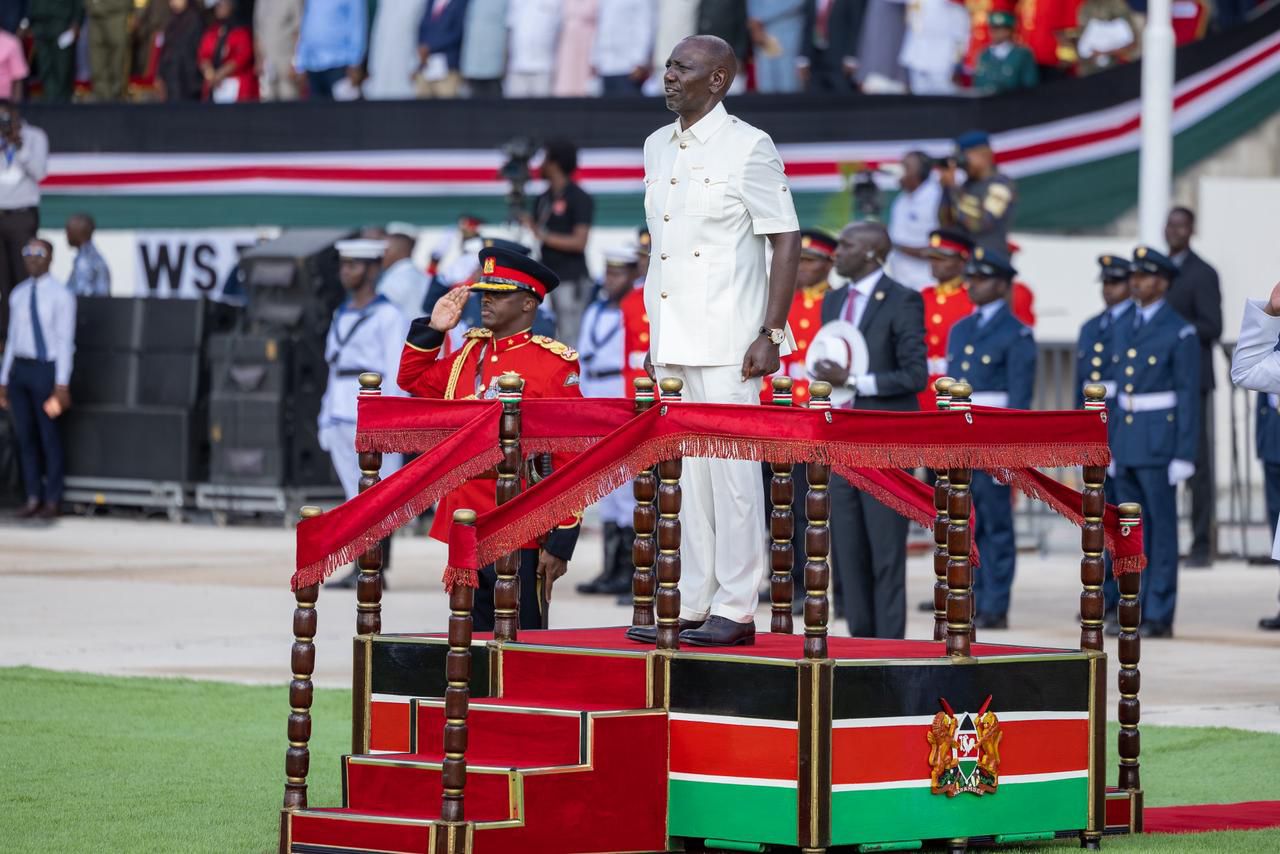
GOOBJOOG NEWS|WAJIR: President William Ruto used Kenya’s 63rd Madaraka Day celebrations in Wajir on Monday to issue a rare and direct apology to the people of Northern Kenya for decades of state-sanctioned marginalisation, in remarks that combined historical acknowledgement with a string of policy announcements tailored to the region.
“On behalf of the people of Kenya today, as I stand here as President and leader of our great nation, to the people of Northern Kenya, for this marginalisation, I want to apologise on behalf of the nation of Kenya. Poleni sana. It was never meant to be this way,” President Ruto told the crowd gathered for the national holiday.
The President pointed to Sessional Paper No. 10 of 1965 as a foundational document that entrenched regional inequality in Kenya. The policy, crafted in the early post-independence years under then-Finance Minister Tom Mboya, directed public investment and development resources toward areas deemed to have high economic potential, a framework that systematically left arid and semi-arid regions, including much of the north, without comparable infrastructure, services or opportunity for generations.
Stadium Renamed in Honour of Fallen Minister
Among the concrete announcements made in Wajir, President Ruto ordered the renaming of Wajir Stadium to Ahmed Khalif Stadium, in honour of the late Ahmed Khalif, who served as Labour Minister and died in a plane crash in 2003. The gesture was warmly received by residents and political leaders from the region, who have long called for public recognition of Khalif’s contribution to national public life.
Madrassa System to Be Mainstreamed
In an announcement with potentially far-reaching implications for education policy, President Ruto also directed that the madrassa system be mainstreamed into Kenya’s national education framework. Madrassa institutions have for decades served as the primary point of early childhood and religious education across Muslim-majority communities in Northern Kenya, the Coast, and other regions, yet have remained outside the formal government education system, leaving learners without recognised certificates or a clear pathway into public schools.
The directive, if implemented, would bring madrassa curriculum and teachers under a national framework, potentially unlocking government funding, standardised training and formal accreditation for hundreds of community-based Islamic learning centres.
Political Context
The choice of Wajir as the venue for this year’s Madaraka Day celebrations was itself a signal. Northern Kenya, which encompasses counties including Wajir, Mandera, Garissa, Marsabit and Turkana, delivered significant support to Ruto in the 2022 general election, forming part of the coalition that carried him to the presidency. With the 2027 election cycle drawing closer, the President has visibly intensified his engagement with the region.
Monday’s address wove together historical grievance, symbolic recognition and policy commitment in a manner clearly designed to consolidate and deepen that support. The apology over marginalisation, the honouring of a regional political figure through the stadium renaming, and the madrassa mainstreaming directive collectively address longstanding demands that communities in the north have raised through successive administrations without satisfactory response.