
Polls Body Unveils 35 Political Organisations for HirShabelle State Elections
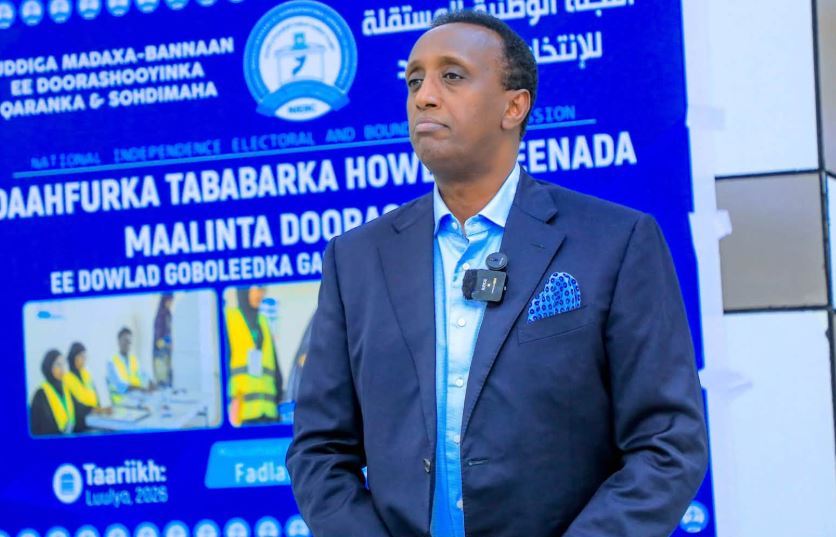
GOOBJOOG NEWS|JOWHAR: The National Independent Electoral and Boundaries Commission (NIEBC) has released the final list of 35 political organizations approved to contest the upcoming HirShabelle State parliamentary and local council elections, marking another step in the country’s transition to one-person, one-vote elections. The announcement comes as preparations intensify for the polls in the federal member state.
The list, published on Wednesday, includes both established and newly formed political organizations that will compete in elections for the HirShabelle House of Representatives and local councils.
The approved political organizations are:
- Qaransoor
- Waberi
- Barwaaqo
- Qaran
- Cadaaladda iyo Midnimadda Tiir
- Madalsan
- Qaranka ee Dimuqraadiyadda Ah
- Muwaadiniinta Soomaaliyeed
- Dimuqraadiga Soomaaliyeed
- Jilka Cusub
- Cadaaladda iyo Wadajirka
- Dadka Soomaaliyeed
- Nabadda iyo Cadaaladda
- Midnimada Bulshada Soomaaliyeed
- Iftiin Qaran
- Karaama
- Saab
- Qiimo Qaran
- Dan Shacab
- Dhalinyarada Soomaaliyeed
- Cadaaladda iyo Badbaadada Muraad
- Sincad
- Hoggaan Qaran
- Midnimada Shacabka
- Socod
- Dowlad Wanaaga Soomaaliyeed
- Haldoor
- Horyaal Qaran
- Dhalinyarada Talo Qaran
- Ramaas
- Danguud
- Towfiiq
- Badbaado Bulsho
- Dhaqaajaa Soomaaliyeed
- Shaqaalaha Soomaaliyeed
The electoral commission said the publication of the list is part of the ongoing preparations for the HirShabelle elections, which will be conducted under Somalia’s direct voting system. The process forms part of broader electoral reforms being implemented by the Federal Government and the NIEBC across several federal member states.
The HirShabelle elections are expected to be among a series of state-level polls organized by the commission as Somalia advances its transition toward universal suffrage after decades of indirect elections. Political stakeholders are now expected to proceed with the next phases of the electoral process in accordance with the timetable issued by the commission.