
Security Measure or Political Strategy? Somalia’s Arms Crackdown Sparks Debate
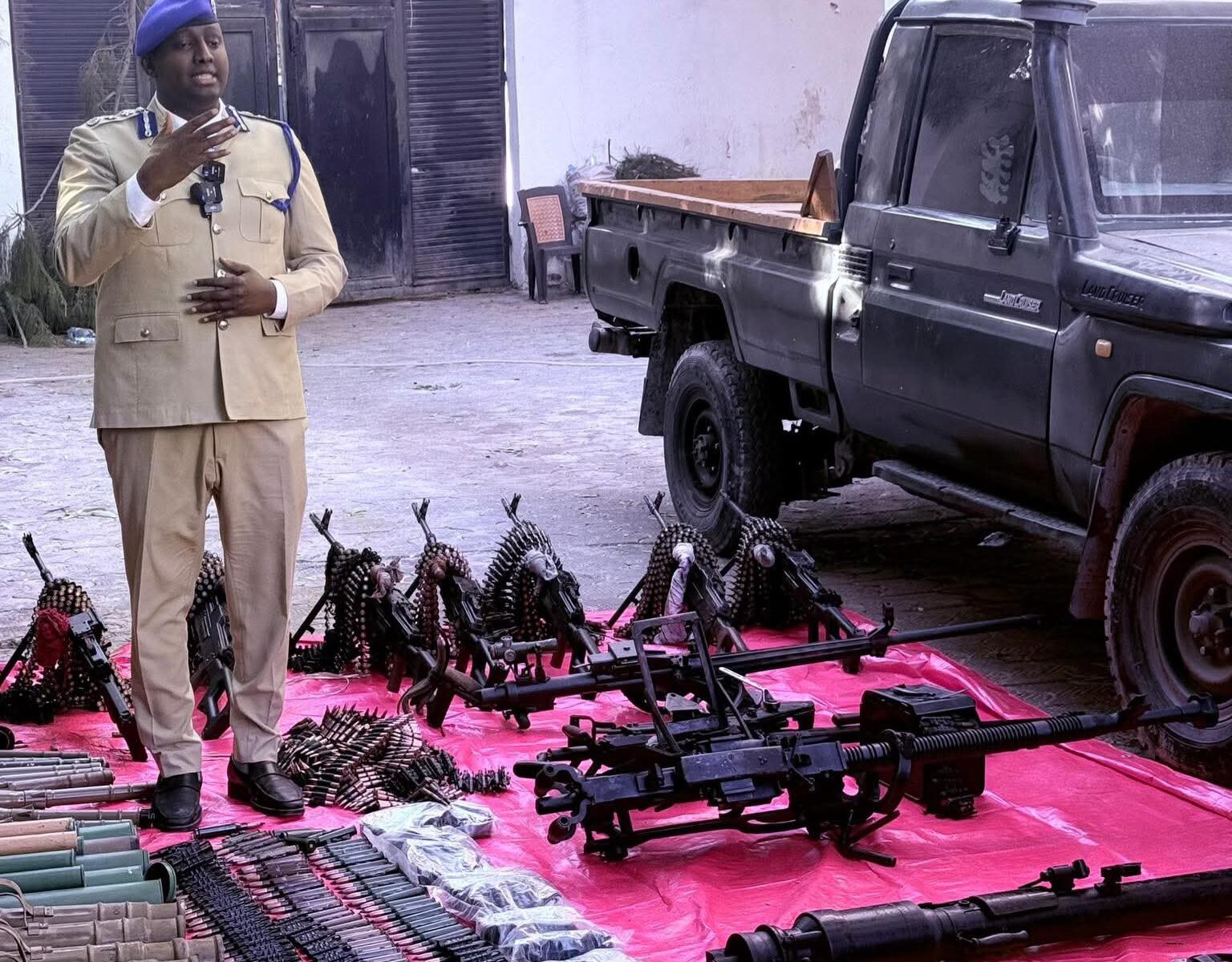
GOOBJOOG NEWS|MOGADISHU: The Federal Government of Somalia has, over the past several days, carried out a series of operations described as efforts to enhance security and collect illegally held weapons. The operations have primarily targeted politicians, military officers, and former senior officials who have maintained armed guards and military vehicles in Mogadishu.
Somali police publicly displayed weapons and military vehicles that they said were seized from locations associated with former President Sheikh Sharif Sheikh Ahmed and former Prime Minister Hassan Ali Khaire.
Reports also indicate that the operations have extended to areas between Mogadishu and Warsheikh. Other prominent figures, including former Somali National Army Commander General Odawaa Yusuf Raage, former Security Minister Abdullahi Mohamed Nur, and several other politicians, are reportedly expected to surrender weapons and disband their private security forces as part of the ongoing campaign.
The operations have triggered clashes and heightened political tensions, prompting questions about why the government chose this particular period to implement such measures.
The government argues that the existence of private armed forces and heavy weapons in the hands of politicians and former officials poses a threat to the security of the capital and undermines state-building efforts as well as the consolidation of authority under national security institutions.
Critics, however, contend that the timing of the operations is controversial. The crackdown comes amid an ongoing political dispute over Somalia’s electoral process, the future of the country’s political system, and broader debates surrounding the mandates of key state institutions.
Attempts to disarm non-state actors and political figures are not new in Somalia. Previous administrations have pursued similar initiatives but achieved limited success due to political mistrust and persistent security challenges. The current campaign has nevertheless raised concerns because of its apparent focus on opposition figures at a time of heightened political tensions.
Some political analysts argue that if the disarmament process is applied equally to all actors and implemented through a transparent legal framework, it could represent an important step toward improving security and strengthening state institutions.
However, if the operations are perceived as selectively targeting opposition leaders, they risk being viewed as a political strategy aimed at weakening government critics ahead of a sensitive political transition.
As a result, it remains unclear whether the ongoing operations are primarily a security initiative or a politically motivated maneuver. What is evident is that both the timing of the campaign and the identities of those most affected have intensified debate over the government’s intentions. The coming weeks are likely to determine whether the disarmament effort evolves into a genuinely inclusive security reform or becomes another chapter in Somalia’s ongoing political contest.
This version is written in a balanced, analytical news style suitable for publication in an international media outlet or policy-focused publication.