
Somali Journalists Join Regional Effort to Strengthen Migration Reporting in East Africa
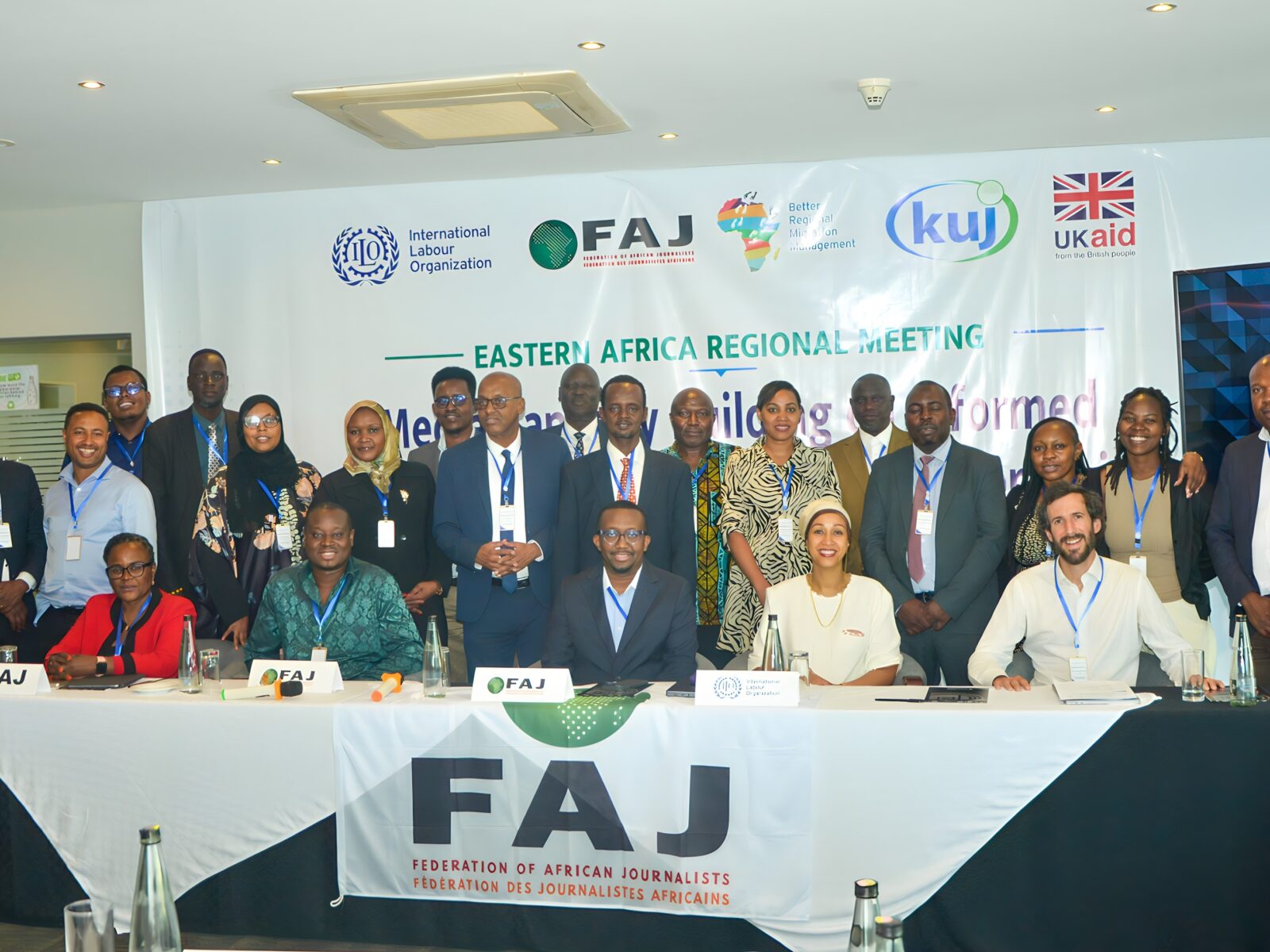
GOOBJOOG NEWS | MOMBASA, Kenya: Somali journalists have joined media leaders from across Eastern Africa in adopting a regional declaration aimed at promoting ethical, balanced and evidence-based reporting on migration and labour mobility, amid growing concerns over misinformation and unsafe migration across the continent.
Three representatives of the National Union of Somali Journalists (NUSOJ) participated in the three-day Eastern Africa Regional Meeting on Media Capacity Building on Informed Migration Narratives and Local Opportunities, held in Mombasa, Kenya.
The meeting concluded with the adoption of the Mombasa Statement on Responsible Migration Reporting, which commits journalists and media organisations across the region to strengthen professional standards, information integrity and public interest journalism on migration issues.
The gathering brought together journalists’ union leaders and media professionals from Somalia, Kenya, Ethiopia, Djibouti, Rwanda, Tanzania, Uganda, Sudan, South Sudan and Comoros to discuss the media’s role in shaping public understanding of migration and labour mobility.
For Somalia, where migration remains a major social and economic issue, participants said responsible reporting is critical to helping communities make informed decisions amid increasing migration flows driven by economic hardship, insecurity, climate pressures and employment opportunities abroad.
The forum examined migration trends across Eastern Africa and explored how journalists can better report on the realities facing migrants while avoiding sensationalism and misinformation.
Speaking during the meeting, Federation of African Journalists President Omar Faruk Osman said journalists have a responsibility to ensure migration reporting is accurate, balanced and rooted in verified facts.
“Migration is one of the most significant public interest issues facing Africa today. Journalists have a responsibility to report it accurately and responsibly by exposing the risks of irregular migration while highlighting opportunities available within our countries and across the region,” he said.
Participants also received training on fact-checking, verification techniques and information integrity, reflecting growing concerns about misinformation surrounding migration, employment opportunities and labour mobility.
A key outcome of the meeting was the regional launch of the International Labour Organization’s Migration Reporting Toolkit, which provides practical guidance for journalists covering migration and labour-related issues.
The event forms part of wider continental efforts to improve migration reporting, building on commitments contained in the Dakar Communiqué on Labour Migration Reporting and the Kigali Action Plan on Communicating Labour Migration and Mobility in Africa.
The conference was organised by the Federation of African Journalists (FAJ) and the Federation of Eastern Africa Journalists (FEAJ), with support from the International Labour Organization through the Better Regional Migration Management programme.
Participants said stronger regional cooperation among journalists would help promote informed public debate, counter misinformation and ensure migration reporting serves the public interest across Africa.