
Somalia Approves 2026–2029 Constitutional Implementation Plan, Sets 12-Month Priority Agenda
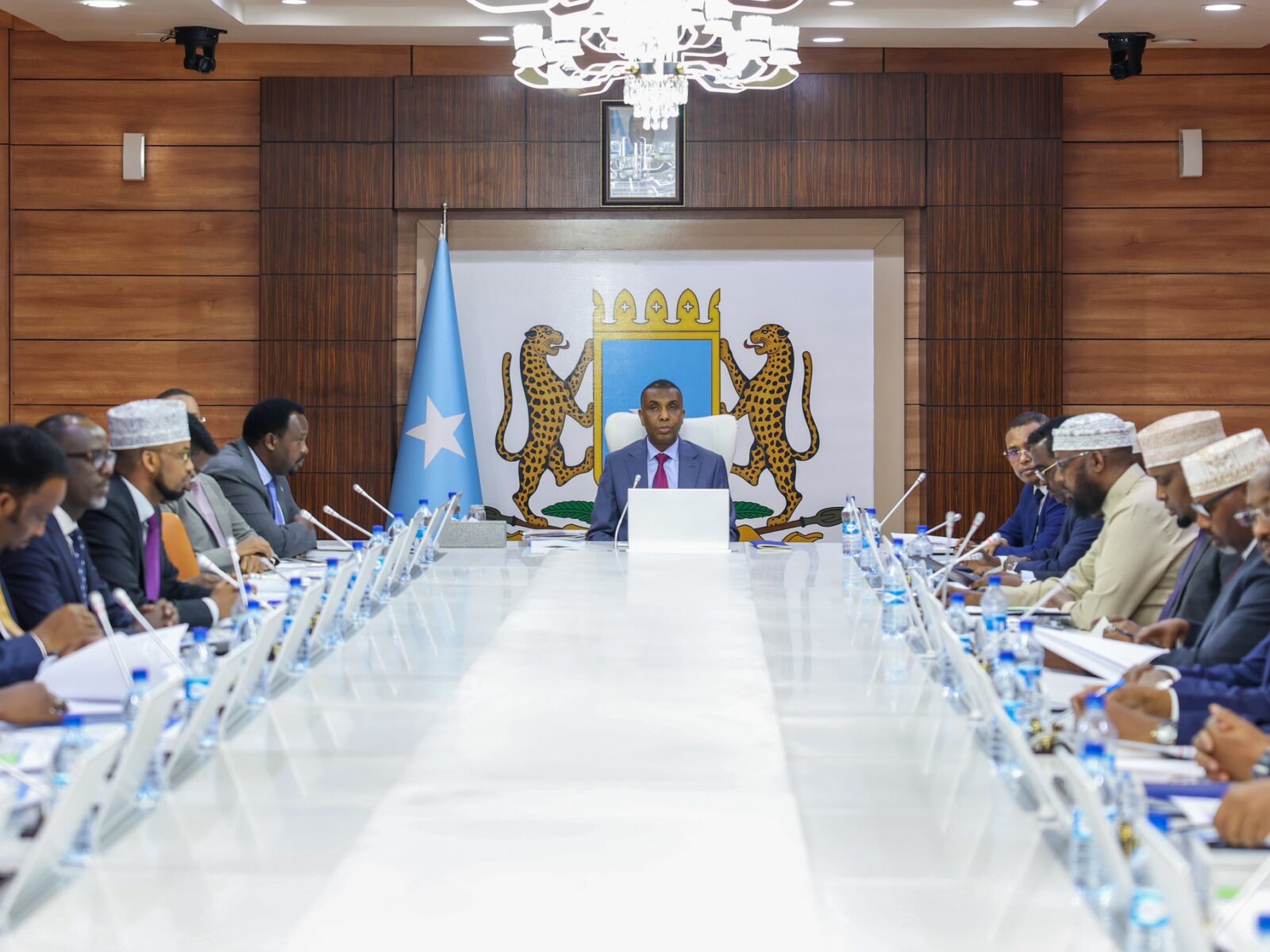
GOOBJOOG NEWS|MOGADISHU: The Federal Government of Somalia on Sunday approved a roadmap for the implementation of the country’s Constitution covering the period between 2026 and 2029, while also outlining a set of priority constitutional tasks to be undertaken over the next 12 months.
During a cabinet meeting chaired by Prime Minister Hamza Abdi Barre, the Ministry of Justice and Constitutional Affairs presented the implementation framework, timeline, and technical procedures for enforcing the Constitution of the Federal Republic of Somalia.
According to the ministry, the plan seeks to ensure that all constitutional provisions are fully implemented within the constitutional timeframe running from 2026 to 2029.
Prime Minister Hamza stated that the Constitution became legally effective from the day it was signed by the President and officially published, but noted that the technical implementation process — particularly issues related to governance and administration — would require time as stipulated within the Constitution itself.
A report presented by the Ministry of Justice said the cabinet would soon receive a resolution identifying priority constitutional tasks to be undertaken over the next 12 months, taking into account the country’s current circumstances and institutional needs.
The report noted that the planned priorities include the establishment and operationalization of key national bodies and commissions required for state functions, including the Judicial Service Council and the National Revenue Authority.
The cabinet also received briefings on the recent one-person-one-vote local elections held in South West State, the role played by the national media during the polls, and ongoing election-related consultations led by the President.
In diplomatic appointments, the Council of Ministers approved the promotion of Mohamed Rabic Yusuf, currently serving as Deputy Permanent Representative of Somalia to the United Nations, to the rank of Ambassador, making him Somalia’s second ambassador at the UN mission.
The cabinet further approved several policies, agreements, and regulations described as important for Somalia’s national development. These included the National Sports Development Policy, regulations on the reactivation and unification of Somalia’s national social security system, an investment protection and promotion agreement between Somalia and Saudi Arabia, a renewed education cooperation agreement between Somalia and Turkey, and regulations governing district councils in the Banaadir region.